
Predicting Learner Performance: Bridging Data Mining and Semantic Ontologies
Predicting Learner Performance Using Data-Mining Techniques and Ontology
The paper proposes a hybrid methodology using Educational Data Mining (EDM) and Semantic Web technologies to predict student performance. By analyzing interactions with Learning Management Systems (LMS) and Facebook groups, it employs the Random Forest algorithm and SWRL-enabled Ontologies to classify learners as "Pass" or "Fail."
TL;DR
This research tackles the persistent challenge of student attrition in e-learning by combining the predictive power of Data Mining with the structural intelligence of Ontologies. By analyzing a hybrid dataset of LMS activity and Facebook interactions, the authors developed a system that predicts student success with over 91% accuracy, providing a roadmap for proactive pedagogical intervention.
Problem & Motivation: The "Blind Spot" in E-Learning
Despite the flexibility of online learning, instructors often operate in a "data-vacuum," unable to see when a student is drifting toward failure until it is too late. Prior works typically focused on either formal grades or basic system logs (LMS 1.0).
The authors argue that E-learning 2.0 (Social) and 3.0 (Semantic) hold the key. The missing link is the integration of "Social Presence"—the informal learning that happens on platforms like Facebook—with formal academic metrics, structured in a way that machines can reason about automatically.
Methodology: A Two-Phase Hybrid Architecture
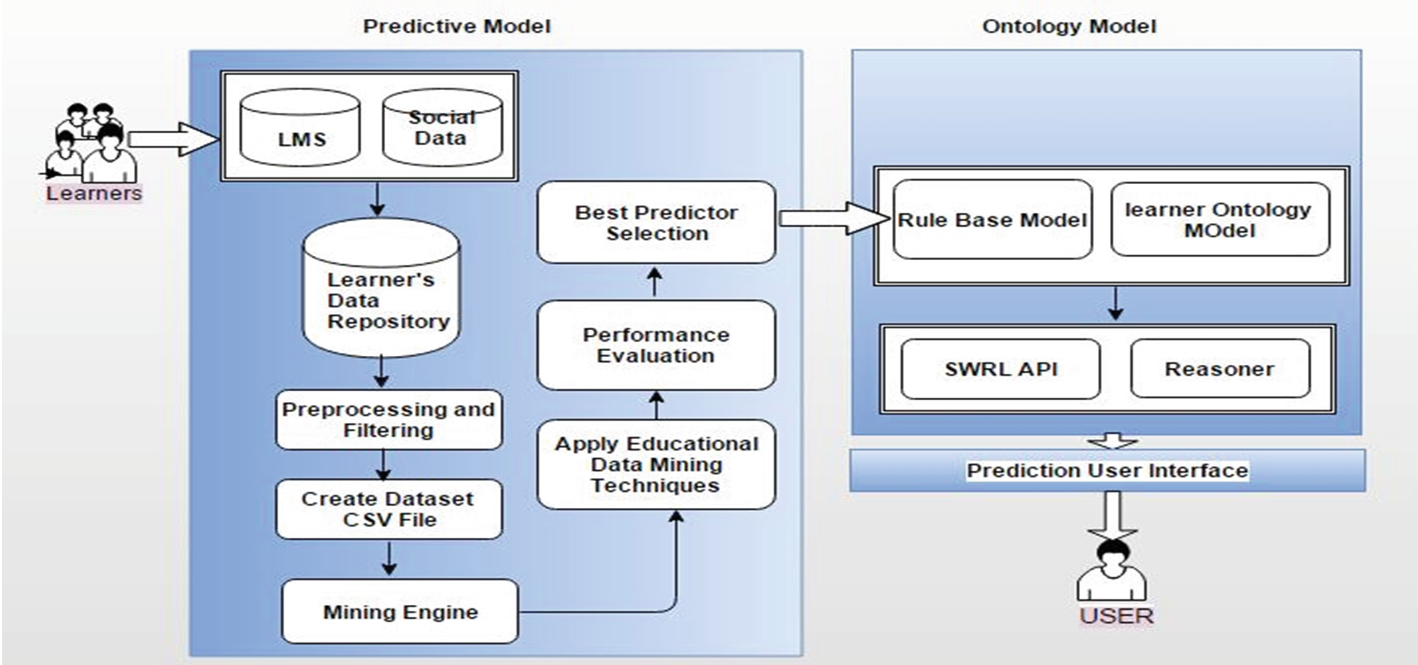
The proposed framework operates in two distinct tiers to transform raw data into actionable knowledge:
Phase 1: The Predictive Engine
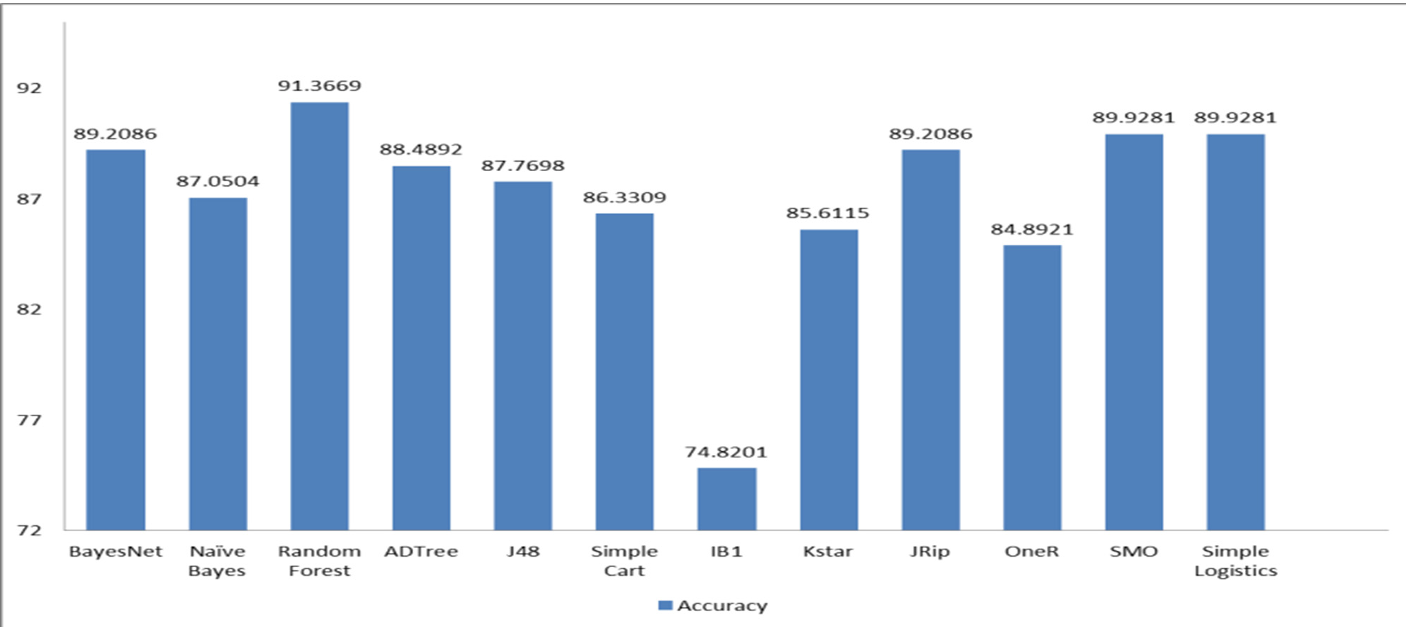
The researchers tested 12 different classification algorithms across five families (Functions, Bayes, Trees, Rules, and Lazy Classifiers). This exhaustive benchmarking ensures that the rules extracted for the next phase are based on the most robust statistical patterns.
Phase 2: The Semantic Inference Layer
Once the rules (e.g., "If Midterm > 10 and Facebook comments > 2, then Pass") are identified, they are encoded into OWL (Web Ontology Language) and SWRL (Semantic Web Rule Language).
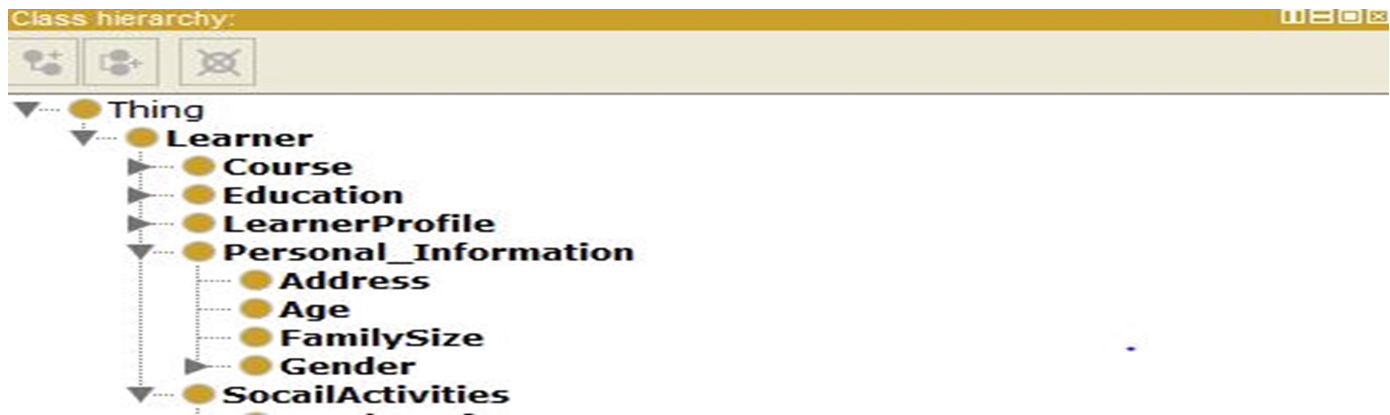
Why use Ontologies? Unlike static databases, an ontology allows the system to "understand" relationships between entities (like Learner, Grade, and Social Activity) and apply logic-based reasoning to discover new insights about student status without manual human intervention.
Experiments & Results: The Power of Random Forest
The study utilized a dataset of 140 learners with variables ranging from demographic data to social media engagement.
- The Winner: Random Forest achieved an accuracy of 91.36%.
- The Insight: The success of Random Forest stems from its ensemble nature—combining multiple decision trees to mitigate individual model biases.
- Key Drivers: The most significant predictors weren't just grades; Social engagement (comments/likes) and study time were critical features in identifying at-risk students.
| Algorithm | Accuracy | Precision | F-Measure |
|---|---|---|---|
| Random Forest | 91.36% | 0.915 | 0.912 |
| Simple Logistics | 89.92% | 0.900 | 0.900 |
| Bayes Net | 89.20% | 0.893 | 0.892 |
Critical Analysis & Conclusion
Takeaway
The integration of Social Network Data captures the "informal" learning process that traditional LMS logs miss. By mapping these findings into an Ontology, the authors have moved e-learning from descriptive analytics (what happened?) to prescriptive analytics (what should we do?).
Limitations & Future Work
While the accuracy is high, the sample size (n=140) is relatively small. The authors also note that future iterations must move beyond "quantity" of social interaction to "quality" (sentiment analysis). Distinguishing between a student asking a helpful question vs. a student expressing frustration would add a crucial layer of nuance to the predictive model.
Ultimately, this work proves that the "Semantic Web" is not just a theoretical concept—it is a practical tool for building the next generation of intelligent, personalized educational environments.