
IBP: Bridging the Gap Between Legal Argumentation and Outcome Prediction
Predicting Outcomes of Case-based Legal Arguments
This paper introduces IBP (Issue-Based Prediction), a hybrid legal reasoning algorithm that combines an abstract domain model with Case-Based Reasoning (CBR). Applied to trade secret law, IBP achieves a SOTA accuracy of 91.4%, significantly outperforming traditional machine learning models like Naive Bayes and C4.5.
TL;DR
For decades, AI in the legal field was split into two camps: systems that could argue (using logic) and systems that could predict (using statistics). IBP (Issue-Based Prediction) merges these worlds. By combining a logical model of legal issues with a Case-Based Reasoning (CBR) engine, it achieves over 91% accuracy in predicting trade secret misappropriation cases while—crucially—explaining its "verdict" in a way a lawyer would actually understand.
The Motivation: Why Legal Prediction is Hard
Law isn't just a numbers game. Traditional machine learning models treat legal cases as a "bag of features," assigning weights to facts to predict an outcome. However, this approach fails for two reasons:
- Context Sensitivity: A fact that is devastating in one case might be irrelevant in another because of the specific legal issue at play.
- The "Why" Matters: A statistical probability is useless in court. Lawyers need a normative explanation—why does this specific precedent apply here?
Existing systems like HYPO and CATO were great at making arguments but often "abstained" from predicting an actual winner. IBP was designed to close this gap by using a domain model to guide the search for evidence.
Methodology: Logic Meets Evidence
The core of IBP is its three-step process:
- Issue Identification: Instead of looking at 26 legal factors at once, IBP uses a domain model (essentially a logic tree) to identify which high-level issues are triggered (e.g., Was the information valuable? Did the defendant use improper means?).
- Factor-Based Analysis: For each issue, IBP looks at the relevant factors. If all factors point to the plaintiff, it predicts a win for that issue.
- Conflict Resolution (The CBR Core): When factors favor both sides, IBP employs three sophisticated techniques:
- Theory-Testing: It queries the database for cases with the exact same conflicting factors to see how courts historically resolved the tension.
- Explain-Away: If a contradictory case is found, IBP looks for "Knock-out (KO) Factors" (like the info being publicly known) to "explain away" that precedent as irrelevant.
- Broaden-Query: If no perfect match exists, it "drops" certain pro-plaintiff factors to see if the plaintiff still wins in a weaker scenario (an a-fortiori argument).
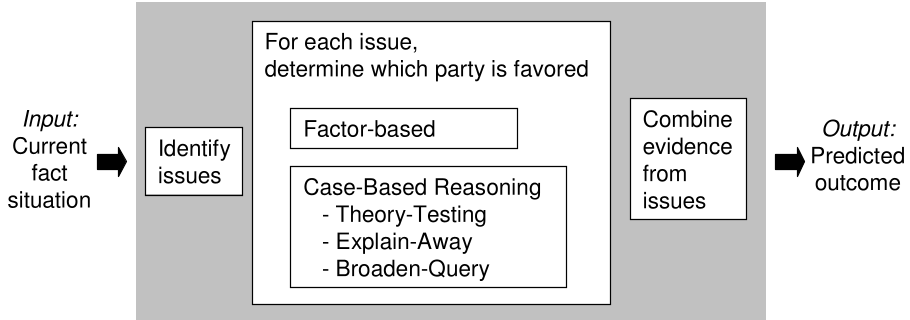 Figure 1: The architecture of IBP integrating domain models and CBR.
Experimental Results: Setting the Bar
In a head-to-head comparison with 186 legal cases, IBP showed clear dominance over standard machine learning algorithms:
- IBP Accuracy: 91.4%
- Naive Bayes: 86.5%
- C4.5 (Decision Trees): 84.9%
- HYPO-BUC: 68.3% (due to high abstention rates)
Beyond the numbers, the Ablation Study revealed a vital insight: IBP's domain model acts as a safety net. Without the CBR component, the system stayed correct but became far less "decisive," abstaining from 20% more cases. The combination of logic (the model) and experience (the cases) is what makes the system powerful.
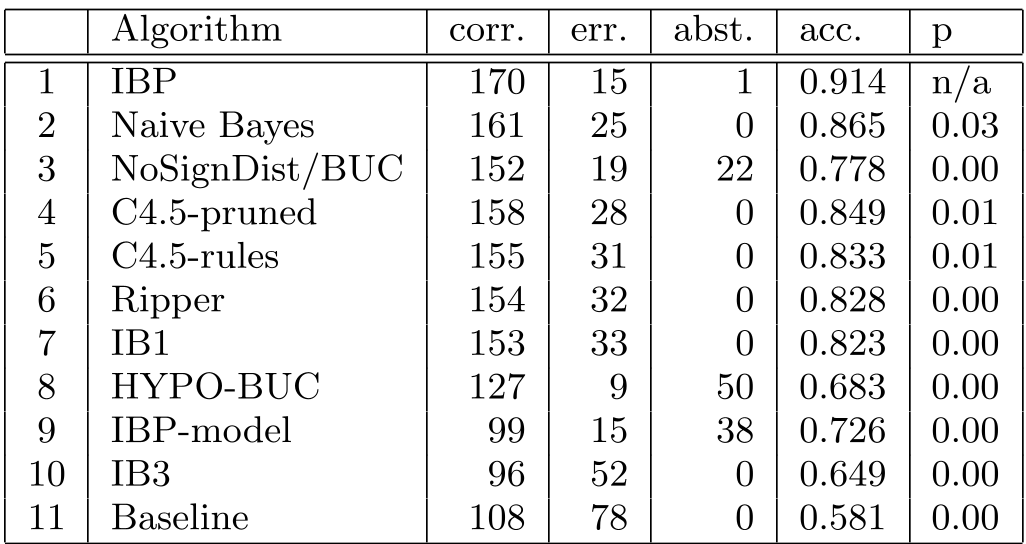 Figure 2: Comparative performance of IBP against ML baselines.
Depth Insight: The "Anomalous" Case
The authors' analysis of IBP’s failures is perhaps the most fascinating part of the paper. They identified "hard" cases where courts made "peculiar" decisions—sometimes referred to as being "yellow-flagged" in legal databases (meaning subsequent courts disagreed).
For example, in Franke v. Wiletschek, the judge ruled for the plaintiff simply because the defendant’s behavior was "outrageous," even though the legal requirements for a trade secret weren't technically met. These cases represent the "noise" in the legal system that pure logic or pure statistics can rarely capture perfectly.
Conclusion and Future Outlook
IBP proves that legal AI doesn't have to be a "black box." By structuring empirical data within a normative framework, we can build tools that don't just guess who will win but explain why based on precedent. For future developers in the age of LLMs, IBP provides a roadmap: use the LLM to extract the "factors," but use a logic-driven CBR engine like IBP to perform the final reasoning.