
Decoding the Silhouette: How Predictable Are Your Reddit Habits?
Predicting User-Interactions on Reddit
This paper investigates the predictability of individual user behaviors on Reddit by tracking 186 users over a year, capturing 339,270 fine-grained interactions. The researchers developed a personalized modeling approach using AdaBoost and various linguistic/contextual features to predict specific actions such as browsing, upvoting, and downvoting.
TL;DR
Researchers from the University of Notre Dame have cracked the code on "fine-grained" user behavior on Reddit. By tracking over 330,000 interactions ranging from silent clicks to active upvotes, they demonstrated that our "browsing" and "voting" habits are not random. Using a combination of algorithmic bias features and semantic analysis of post titles, their models can predict a user's next move with surprising accuracy, often outperforming random benchmarks by over 20x in precision.
The "Lurker" Problem and the Visibility Trap
In the world of social media research, we usually only see the "loud" users—those who comment and post. However, the vast majority are "lurkers" who consume content without leaving a trace in public datasets. Existing research often ignores these passive interactions, yet platforms rely on them to determine what goes viral.
Furthermore, we face the Ranking Bias problem: do you click a post because it’s good, or just because it’s at the top of your feed? This study tackles these mysteries by going sub-surface, tracking every click through a dedicated browser extension.
Methodology: Mapping the User's Mind
The researchers didn't just look at what was clicked; they looked at the context of the click. Their methodology splits into three distinct pillars:
- Algorithmic Biases: They measured the "Rank Bias" (position on page), "Score Bias" (current upvote count), and "Recency" (time since posting).
- Linguistic Features: Using the Flesch Reading Ease score to see if simple, punchy titles drive more engagement than complex ones.
- Semantic Interactivity: This is the "secret sauce." They used GloVe word embeddings to represent post titles in a 300-dimensional vector space. By training a Multi-Layer Perceptron (MLP), they could identify which "topics" or "keywords" specifically triggered an individual user to upvote versus just browsing.
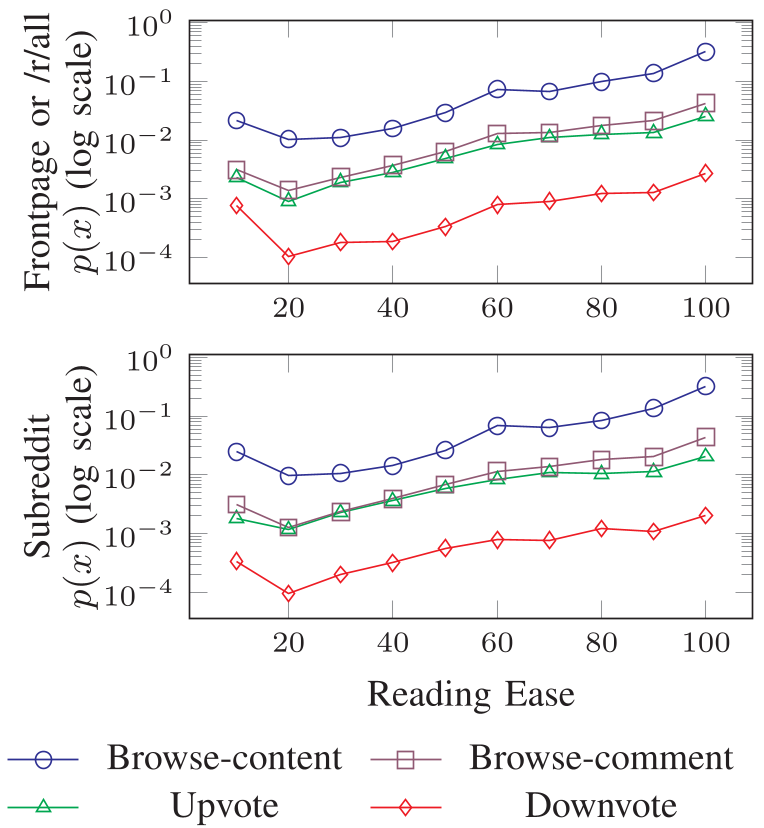 Fig 1: The model achieves high AUC across all interaction types, proving that browsing behavior is as predictable as voting behavior.
Key Insights: Why We Click
The study revealed several counter-intuitive findings about how we navigate Reddit:
- The Frontpage vs. Subreddits: Surprisingly, Rank Bias is weaker on the frontpage. Users are willing to scroll further down /r/all, likely because the content density and quality are perceived as higher.
- Simplicity Wins: There is a direct correlation between high "Readability" and high interaction. If a title is easier to parse, users are significantly more likely to engage.
- The Power of Context: The most informative features for prediction were Post Rank, Semantic Scores, and Subreddit Size. Title length, interestingly, mattered the least.
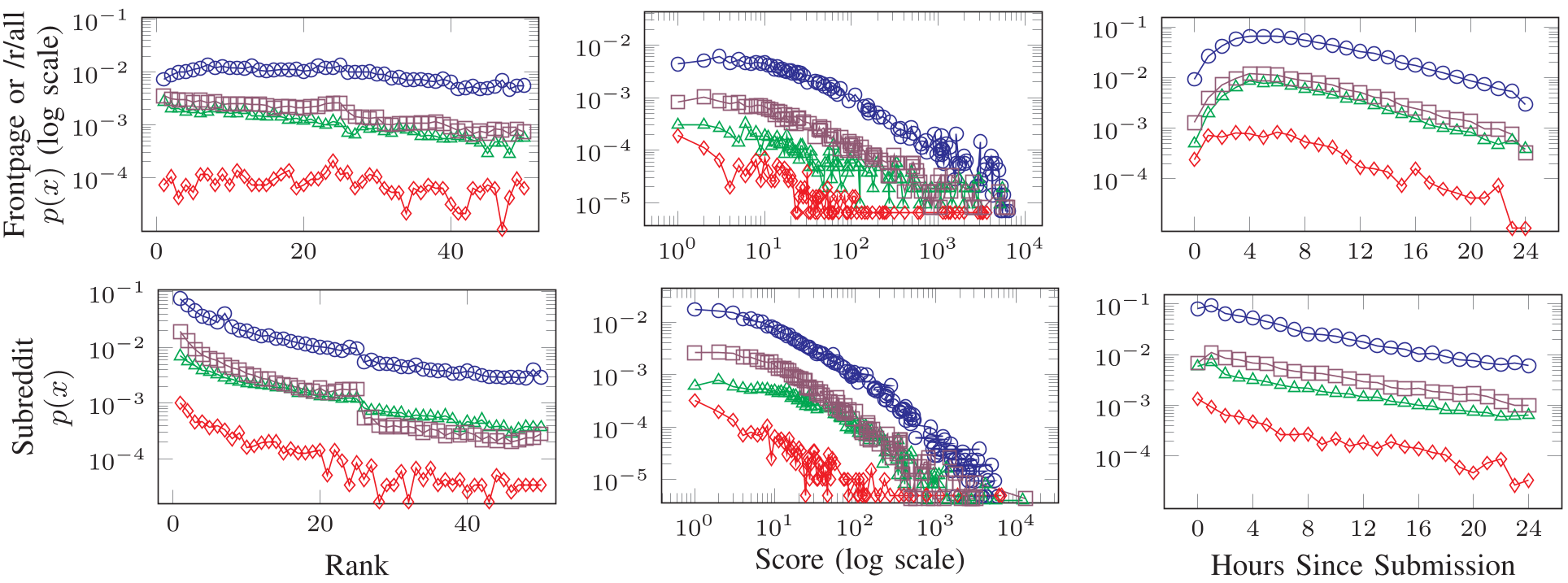 Fig 2: Distribution of interactions showing the "long-tail" nature of post scores and the rapid decay of engagement over time.
Critical Analysis & The Future of Curation
This work highlights a critical reality: Social media platforms are feedback loops.
While the researchers proved that simple models can predict individual actions, this also raises concerns about "Filter Bubbles." If a model can predict that you only upvote short, easy-to-read content about specific topics, and the algorithm feeds you exactly that, the diversity of information collapses.
Limitations: The study relies on a self-selected group of users who opted-in to be tracked, which may introduce a "participation bias." Furthermore, while the model is accurate, it primarily uses shallow features. Integrating deeper LLM-based understanding of the content linked in the posts (not just the titles) could be the next frontier in interaction prediction.
Conclusion
The takeaway for developers and researchers is clear: fine-grained tracking reveals a level of behavioral consistency that public APIs miss. By understanding the interplay between structural biases (rank/score) and personal semantic preferences, we can build recommendation systems that are more intuitive—or more aware of the biases they perpetuate.