
From Social Bios to Video Likes: Bridging the Cold-Start Gap via Knowledge Bases
Predicting User Likes in Online Media Based on Conceptualized Social Network Profiles
The paper introduces a cross-platform recommendation framework that predicts user video preferences on YouTube by leveraging social network profiles from Google+. The core method involves "conceptualizing" unstructured user self-descriptions into structured interest vectors using the Freebase knowledge base, significantly outperforms traditional bag-of-words approaches.
TL;DR
Researchers have developed a framework to predict what videos a user will "Like" on YouTube by looking at their Google+ social profile. By transforming messy, short self-descriptions into structured "Interest Vectors" using Freebase, they achieved an 8% boost in precision, effectively tackling the notorious Cold-Start problem where new users have no watch history.
The "Cold-Start" Wall in Recommendations
Recommendation engines are the heartbeat of modern media, but they have a fundamental weakness: they are "behavior-hungry." If you are a new user with zero clicks, Collaborative Filtering has nothing to work with. This is the Cold-Start problem.
While many researchers try to fix this by looking at your "friends" or basic demographics (age/gender), this paper argues that we are overlooking a goldmine: the user description. That short blurb where you describe yourself is a concentrated window into your soul—but it's historically been hard for machines to "understand" because it's unstructured and linguistically diverse.
Methodology: The Power of Conceptualization
The authors' "Secret Sauce" is moving beyond the Bag-of-Words (BoW) model. In BoW, "Football" and "Soccer" are treated as totally different things. To fix this, they use a process called Conceptualization.
1. The Knowledge Base Bridge
By using Freebase, the system maps words in a profile to specific entities and domains.
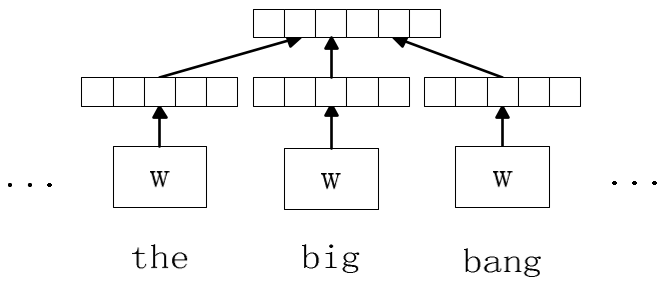
- Step 1: Segment the bio into words and phrases (up to 4-grams).
- Step 2: Search for these in Freebase to find associated "topics" and their weights.
- Step 3: Fuse these into a fixed-length Interest Vector.
2. The Hybrid Prediction Framework
The final prediction isn't just based on the bio. It’s a weighted combination of three signals:
- (Popularity): What is trending on YouTube anyway? (e.g., Music is always popular).
- (Demographics): What do other people your age/gender like?
- (Conceptualized Interest): What does your unique bio suggest about your specific tastes?
Experimental Battleground: Google+ and YouTube
The study utilized a real-world dataset of 20,956 users who linked their Google+ and YouTube accounts. This allowed the researchers to use the Google+ profile as the "Input" and the actual YouTube "Likes" as the "Ground Truth."
Key Insights from Results:
- Music Dominates: In YouTube's ecosystem, "Music" is the titan of categories. Any model that ignores platform-wide popularity performs significantly worse.
- Semantics > Demographics: The weights for the "Interest Vector" were consistently higher than demographic weights, proving that what you say about yourself is a better predictor than how old you are.
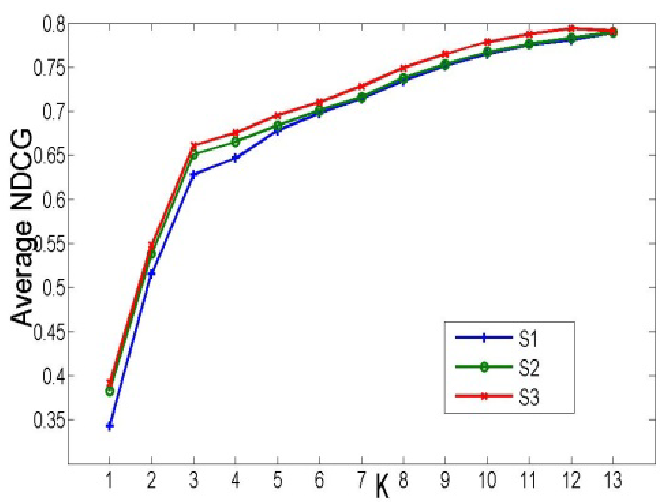
- The Precision Jump: Strategy S3 (using Freebase) outperformed S2 (simple Bag-of-Words), proving that semantic understanding is key to unlocking the value of short texts.
Critical Analysis & Future Outlook
This work highlights a critical shift in recommendation systems: moving from statistical correlation (users who liked X also liked Y) to semantic understanding (this user is a "Sports Enthusiast," let's find sports content).
Limitations:
- Knowledge Base Dependency: The model's "IQ" is limited by the coverage of Freebase. If a user uses slang or very new terms not yet in the knowledge base, the mapping fails.
- Static Interests: The model assumes a static profile, whereas user interests evolve over time.
The Road Ahead: In the era of Large Language Models (LLMs), the "Conceptualization" step could be even more powerful. Instead of entity linking, we could use latent embeddings from models like GPT-4 or Llama-3 to capture the "vibe" of a social profile, potentially pushing that 8% improvement even higher.