
Bridging the SLA Gap: Predictors for Smart Cloud Resource Management
Prediction of Job Resource Requirements for Deadline Schedulers to Manage High-Level SLAs on the Cloud
The paper introduces a hybrid prediction system for Cloud providers to translate high-level Service Level Agreements (SLAs), specifically job deadlines, into fine-grained resource requirements (CPU share and memory). By combining a fast Analytical Predictor (AP) with an Adaptive Machine Learning-based Self-Adjusting Predictor (SAP), the system achieves state-of-the-art performance in resource estimation for batch jobs.
TL;DR
Cloud providers face a "lost in translation" problem: users want deadlines, but hardware needs MHz. This paper presents a novel hybrid prediction system that uses Machine Learning to translate job deadlines into precise CPU and memory allocations, achieving errors as low as 11% and enabling much smarter job scheduling.
The "Translation" Pain Point in Cloud Computing
Current cloud infrastructures are designed for IT experts. If you want to run a job, you typically have to guess how many CPU cores or how much RAM you need. If you guess too low, you miss your deadline; if you guess too high, you waste money.
The authors identify a massive gap: Service-Level Metrics (deadlines) vs. Resource-Level Metrics (CPU/Memory). Most providers currently over-provision—allocating entire physical servers to small tasks—just to avoid violating SLAs. This is the equivalent of using a semi-truck to deliver a single envelope because you're afraid a bike might be too slow.
Methodology: The Dual-Predictor Engine
The core innovation lies in the Sensing and Adjusting architecture, split into two distinct modules to handle the "cold start" and "long run" phases of a cloud system.
1. The Analytical Predictor (AP)
When a new application arrives, the system has no data. The AP uses a reference execution time () and simple physics: if you double the CPU share, you (theoretically) halve the execution time. While basic, it provides a safety net for the system before the ML models are trained.
2. The Self-Adjusting Predictor (SAP)
This is where the "intelligence" lives. The authors tested several ML algorithms, including M5P (Model Trees) and Bagging.
- CPU Sensitivity: The system accounts for input data size, recognizing that CPU requirements scale proportionally with task complexity.
- Memory Complexity: Unlike CPU, adding more RAM doesn't always make a job faster—it only prevents "swapping" issues. The SAP uses Bagging with REPTree to handle this non-linear performance cliff.
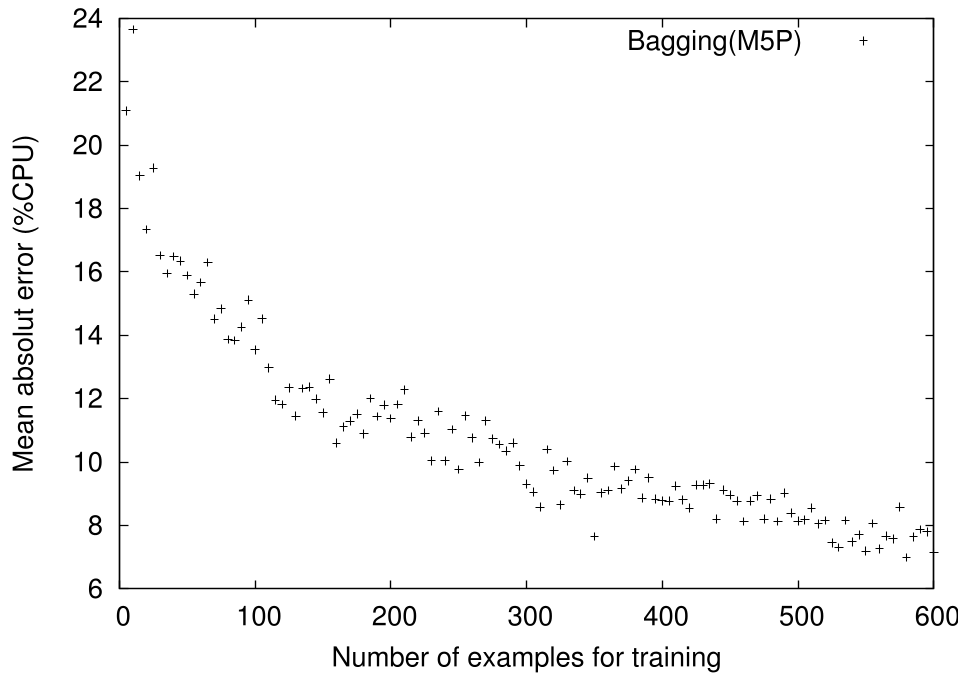 Fig 1: Learning curves showing that the SAP reaches high accuracy with as few as 100-500 training examples.
Experimental Performance: Cutting through the Noise
The researchers evaluated the system using the Java Grande Benchmarks and real-world traces from Grid’5000.
Key Metrics:
- CPU Accuracy: Using Bagging + M5P, the relative error was dropped to 11%.
- Memory Accuracy: Achieved 17% relative error.
- Scheduling Efficiency: By knowing exactly what a job needs, the scheduler can perform Early Rejection. If the system knows a job cannot possibly meet its deadline with available resources, it rejects it immediately, saving those resources for other tasks that can succeed.
 Table 1: Detailed performance of different ML algorithms across CPU, Memory, and Time predictions.
Critical Insight: Why This Matters
The fundamental value of this work isn't just the 11% error rate—it's the shift in perspective. By moving the burden of resource estimation from the user to the provider, we enable:
- Lower Entry Barrier: Non-experts can use the cloud effectively.
- Higher Profitability: Providers can pack more jobs into the same hardware (higher density) without breaking promises.
- Elasticity: Utilizing the dynamic nature of Virtual Machines (Xen/KVM) to resize resource slices on-the-fly based on SAP predictions.
Conclusion & Limitations
While highly effective for CPU and memory-intensive batch jobs, the current model does not yet account for I/O intensive tasks or complex multi-phase web applications. However, as an architectural blueprint, this paper proves that ML-based "SLA-to-Hardware" translation is the future of autonomous cloud orchestration.
The next frontier? Integrating this into live middleware like OpenStack or Kubernetes to manage microservices with the same precision.