
The Wisdom of Crowds: Why Prediction Markets are the Future of Decision Making
Prediction markets as a vital part of collective intelligence
This paper explores the mechanics of "Prediction Markets" as a practical implementation of collective intelligence. It synthesizes existing research to identify how crowdsourcing and consensus functions can outperform individual experts in forecasting future events.
TL;DR
Predicting the future is a high-stakes gamble where "experts" often fail. This paper argues that Prediction Markets—virtual environments where participants trade on the likelihood of future events—are the most effective tool for collective intelligence. By leveraging diversity and specialized consensus functions, these markets can consistently outperform the world's smartest individuals.
Contextualizing the Intelligence Landscape
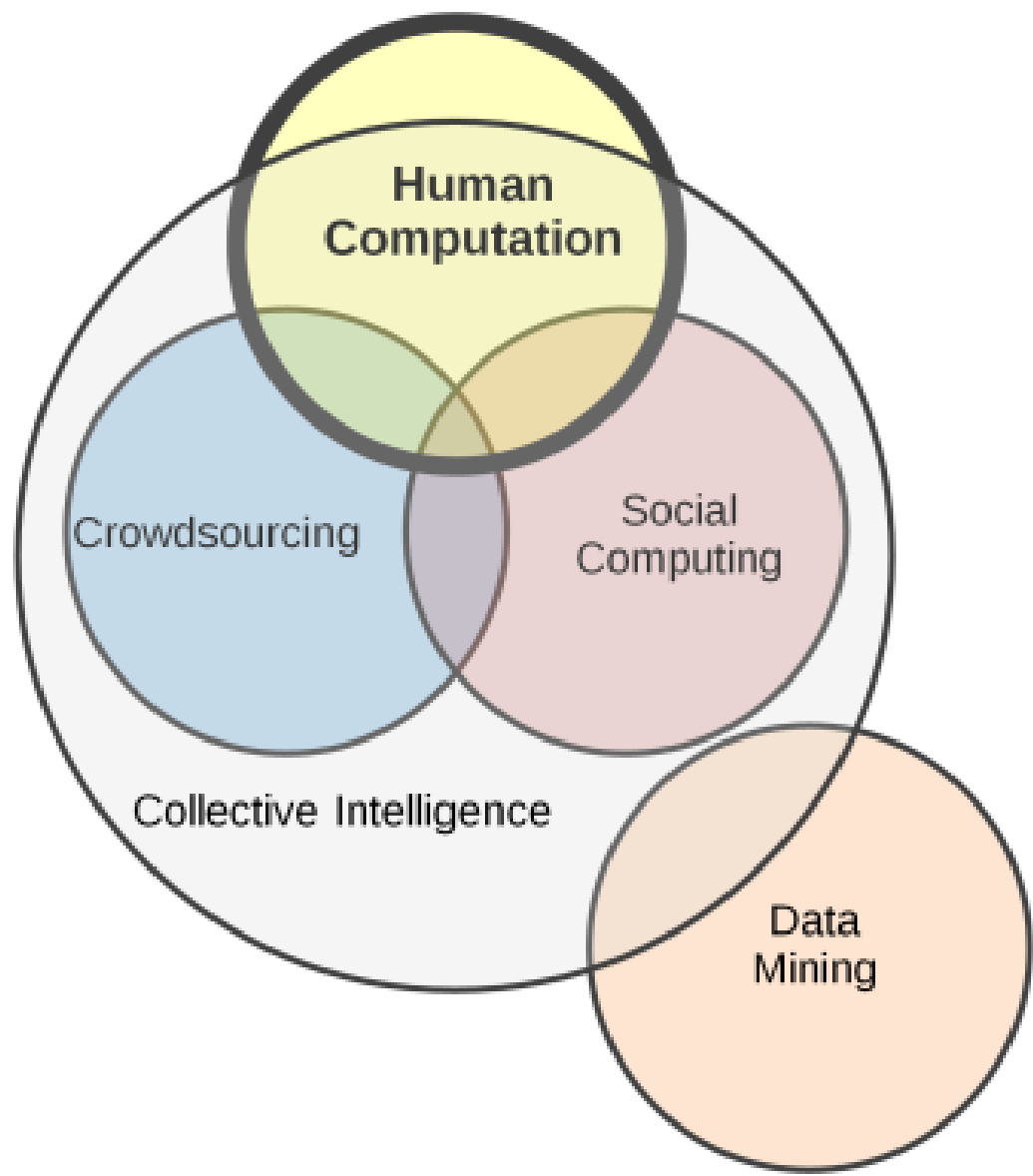
Collective intelligence isn't just about "many people"; it's a structural phenomenon. The paper classifies this field into four distinct categories:
- Human Computation: Solving tasks computers can't yet handle.
- Crowdsourcing: Outsourcing tasks to an undefined large group (where Prediction Markets live).
- Social Computing: Mediating social behaviors through technology.
- Data Mining: Extracting patterns from human-generated data (e.g., Google’s PageRank).
The Problem: Why Experts Fail
We often hang on every word from tech "visionaries," yet their intuition is frequently flawed. The paper highlights a fundamental truth: A collective's decision capability is at least as good as its best member and almost always better than its average member.
The core challenge identified is Error Minimization. Why do some crowds fail while others succeed? The authors point to the "Noise Trader" problem—uninformed participants who distort market prices—and the lack of "Inconsistency," which counter-intuitively is a requirement for high-quality outcomes.
Methodology: The Science of Consensus
The paper posits that for a prediction market to work, it must satisfy five principles: Incentive, Indicator (Price), Improvement, Independence, and Crowd Size.
The Inconsistency Paradox
One of the most striking insights is that higher inconsistency (diversity of opinion) leads to better collective knowledge. While it makes reaching a consensus harder, the resulting decision is mathematically closer to the truth. To manage this, the author outlines 10 postulates for a robust "Consensus Function," including:
- Unanimity: If everyone agrees, that's the consensus.
- 1-Optimality: Minimizing the sum of distances between the consensus and individual opinions.
- Minority Rewards: Rewarding those who are right when the majority is wrong—this prevents "herding" and encourages the sharing of rare, valuable information.
Humans vs. Machines: The Hybrid Frontier
Can AI agents replace humans in these markets? The paper notes that while AI agents (like Neural Networks) are cheaper and more scalable, they rarely outperform humans in complex social contexts alone. However, Hybrid Groups (Human + AI) are the "SOTA" (State of the Art) for prediction, offering a superior balance between sensitivity and specificity.
Experimental Insights
- Expert vs. Crowd: In "Who Wants to Be a Millionaire," the crowd was correct 91% of the time, compared to experts at only 65%.
- Factor Correlation: Individual IQ is a weak predictor of group success. Instead, social sensitivity and the equality of conversational turn-taking are the true drivers of "Group IQ."
Critical Analysis & Conclusion
This paper serves as a vital blueprint for organizations moving toward decentralized decision-making. The real value lies in the mathematical formalization of diversity.
Takeaway for the Future: We must stop looking for a "Single Source of Truth" and instead build systems that incentivize "Useful Dissent." The growth of Decentralized Prediction Markets (like those on blockchain) will likely further remove the need for trusted centers, but they must solve the problem of Outcome Manipulation by arbiters.
Limitations: The paper notes that when a task becomes too complex or the crowd is entirely unfamiliar with the subject, accuracy drops. Collective intelligence is not a magic wand; it requires a baseline of participant competence.