
Stroke Risk Prediction: Why Your Work-Life Balance Might Be as Critical as Your Diet
Prediction of Stroke Risk Factors for Better Pre-emptive Healthcare: A Public-Survey-Based Approach
2020-11-09
Summary
Problem
Method
Results
Takeaways
Abstract
This research develops a non-invasive predictive model for cardiovascular stroke risk using machine learning on the BRFSS public survey dataset. Utilizing a Gradient Boosting Machine (GBM) architecture, the study achieves an AUC of 0.71 based exclusively on self-reported behavioral features.
## TL;DR
Predicting stroke risk usually requires blood tests and clinical visits. However, new research from KIIT Deemed to be University proves that **Machine Learning (GBM)** can predict stroke risk with an **AUC of 0.71** using nothing but survey data. The study reveals a surprising insight: the number of children in your house and your weekly work hours are among the top predictors, highlighting the heavy impact of "Work-Life Balance" on cardiovascular health.
## The Motivation: Moving Beyond Clinical Data
The United States spends over $34 billion annually on stroke-related costs. While clinical risk factors (like hypertension or cholesterol) are well-known, they require invasive testing. The authors of this paper argue for **pre-emptive healthcare**: identifying risk through "negotiable" behaviors—things an individual can change without spending money on medical services.
The challenge? Public health surveys like the **Behavioral Risk Factor Surveillance System (BRFSS)** are messy. They have massive "Class Imbalance" (many more healthy people than stroke survivors) and rely on subjective self-reporting.
## Methodology: The Power of Gradient Boosting
To navigate this complexity, the researchers chose the **Gradient Boosting Machine (GBM)**. Unlike Random Forests which focus on reducing variance, GBM is designed to reduce **bias** by iteratively correcting the errors of previous "weak learners" (decision trees).
### Key Technical Steps:
1. **Feature Selection**: Focused on 15 purely behavioral traits (e.g., fruit intake, smoking status, sleep time, work hours).
2. **Addressing Imbalance**: The original dataset was heavily skewed. The team used **downsampling** to adjust the ratio of stroke to non-stroke cases to 1:4.74.
3. **Calibration**: Since downsampling distorts the true probability distribution, they applied **Platt Scaling** to ensure the model's confidence scores reflect real-world risks.
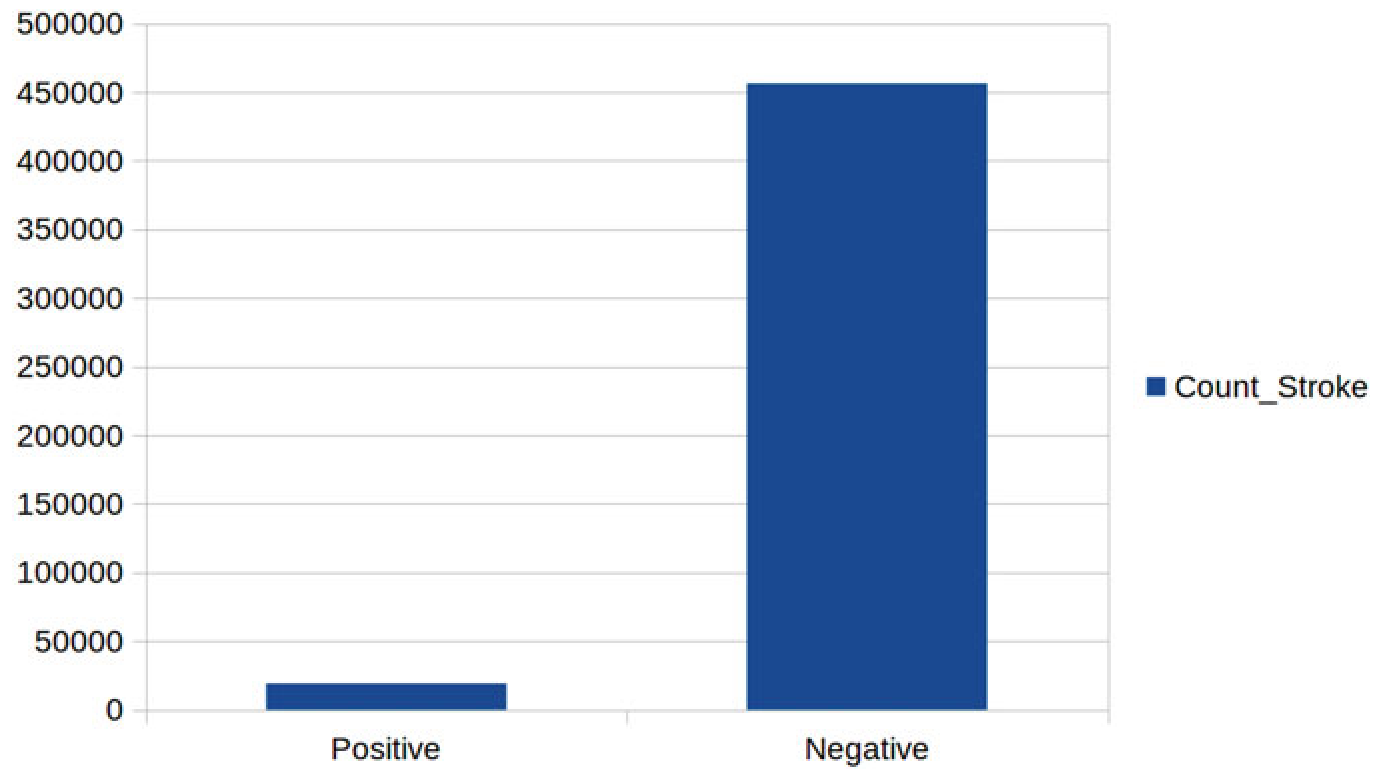
*Fig 1: The label count highlights the extreme class imbalance that the researchers had to overcome.*
## Experiments and Results
The model achieved an **AUC of 0.71**. While a single behavior (like smoking) only provides an AUC of ~0.60, the combination of 15 behavioral features significantly boosts predictive power.
### The "Hidden" Risk Factors
The most fascinating part of the study is the **Variable Importance** ranking. While physical activity was the #1 predictor, the results showed:
* **X.CHLDCNT (Number of children)**: Ranked #2.
* **SCNTWRK1 (Weekly work hours)**: Ranked #5.
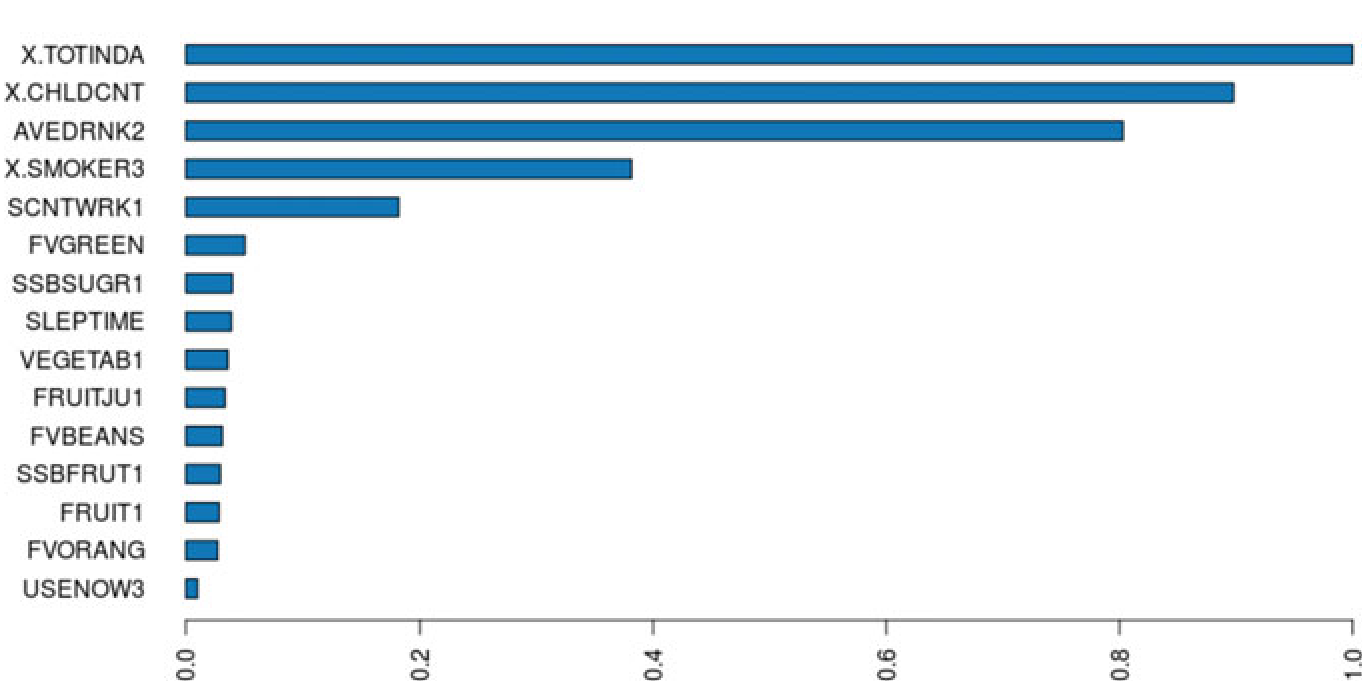
*Fig 2: GBM Variable Importance—showing how domestic and work-life factors outrank some traditional dietary habits.*
The inclusion of child count suggests that the "hidden responsibilities" of household management and the resulting stress play a massive role in long-term health, perhaps even more so than specific dietary choices like sugar intake.
## Critical Analysis & Conclusion
This research shifts the focus of stroke prevention from the clinic to the household. It proves that ML can turn public surveys into powerful diagnostic tools.
### Takeaways:
* **For Individuals**: Maintaining a healthy work-life balance and sharing household responsibilities aren't just "lifestyle choices"—they are clinical necessities for stroke prevention.
* **Professional Insight**: The success of the GBM here, despite the "noisy" nature of survey data, validates the use of ensemble learning for socio-behavioral health analytics.
### Limitations:
The study relies on self-reported data, which is prone to memory bias. The team acknowledges that achieving a higher AUC would likely require merging this behavioral data with actual clinical records.
**Future Work**: The authors suggest using **LIME (Local Interpretable Model-agnostic Explanations)** to dive deeper into *why* certain individuals are flagged as high risk despite appearing healthy on paper.