
Beyond the Bestseller: Uncovering Hidden Gems with Machine Learning and Data Visualization
Predictive Analysis and Data Visualization Approach for Decision Processes in Marketing Strategies: A Case of Study
This paper introduces a clustering-driven marketing strategy for online entertainment platforms, specifically applied to Goodreads. It utilizes K-Means clustering and supervised learning models (like SVM) to identify "hidden gems"—books with high average ratings but low visibility—facilitating a more diverse and equitable recommender system.
TL;DR
In a world where Amazon and Netflix algorithms often trap us in "echo chambers" of popular content, this research proposes a way out. By using K-Means clustering and SVM classification on Goodreads data, the authors developed a method to identify high-quality books that are currently "invisible" to the masses. The result? A blueprint for a fairer recommendation engine that boosts emerging authors and keeps readers engaged.
Background: The Popularity Trap
Most modern recommendation systems are built on Collaborative Filtering. While effective, it has a fatal flaw: it is inherently biased toward popularity. If a book is already famous (like those by Stephen King), it gets recommended more, creating a feedback loop that buries high-quality debut authors. This paper moves the needle by focusing on the "visibility vs. quality" gap.
Problem & Motivation
The publishing industry faces a massive challenge. E-books have lowered entry barriers, but they have also created a "noise" problem. On platforms like Goodreads, authors need to reach a "critical mass" of readers to become visible.
The authors' insight was simple: High rating High visibility. By identifying books that possess the former but lack the latter, marketing teams can manually or algorithmically intervene to "boost" these titles, diversifying the user experience.
Methodology: The Two-Step Approach
The researchers utilized a dataset of over 11,000 book records, focusing on three key metrics: average_rating, ratings_count, and text_reviews_count.
1. Segmentation via K-Means
Using the Silhouette Coefficient, the authors determined that the data naturally falls into 7 clusters.
- Cluster 3: The Blockbusters (High ratings, High visibility - eg. Harry Potter).
- Cluster 6: The Hidden Gems (High ratings, Medium/Low visibility). This is the "target cluster" for innovation.
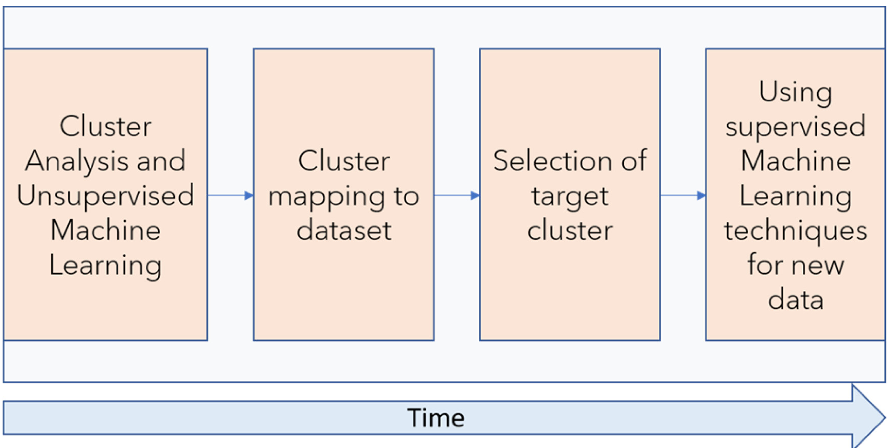 Figure 1: The system workflow from data massing to promotional strategy.
2. Predictive Benchmarking
Once the clusters were established, the authors needed a way to classify new books that enter the platform. They compared four heavy-hitters: Random Forest (RF), Support Vector Machines (SVM), KNN, and XGBoost.
Results: SVM Takes the Crown
The experimental results were conclusive. When using 10-fold cross-validation, Support Vector Machines (SVM) emerged as the most robust model for this specific dataset.
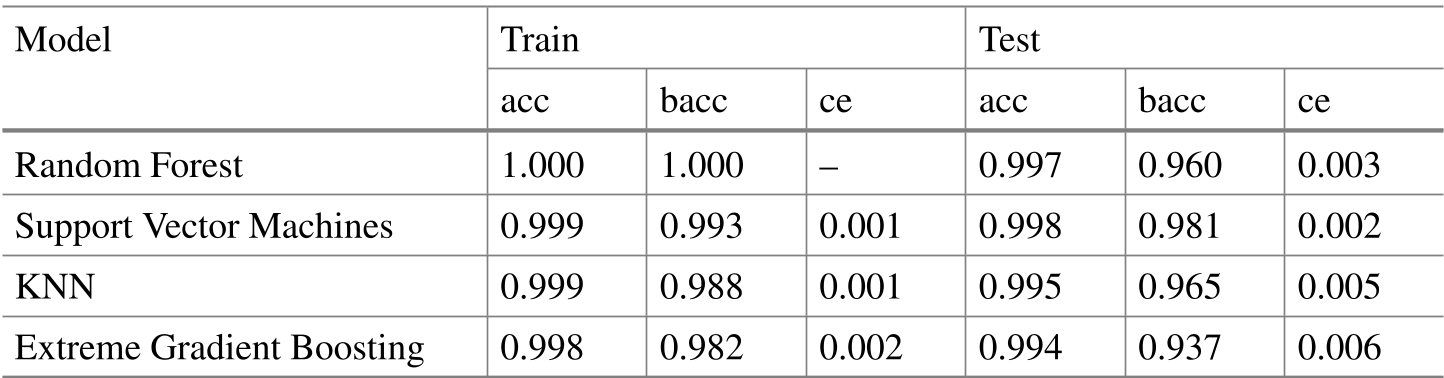 Table 1: Performance metrics for the four predictive models.
While Random Forest showed a perfect "1.0" on the training set (suggesting slight overfitting), SVM maintained a superior Balanced Accuracy of 98.1% on the test set, making it the ideal choice for real-time library maintenance.
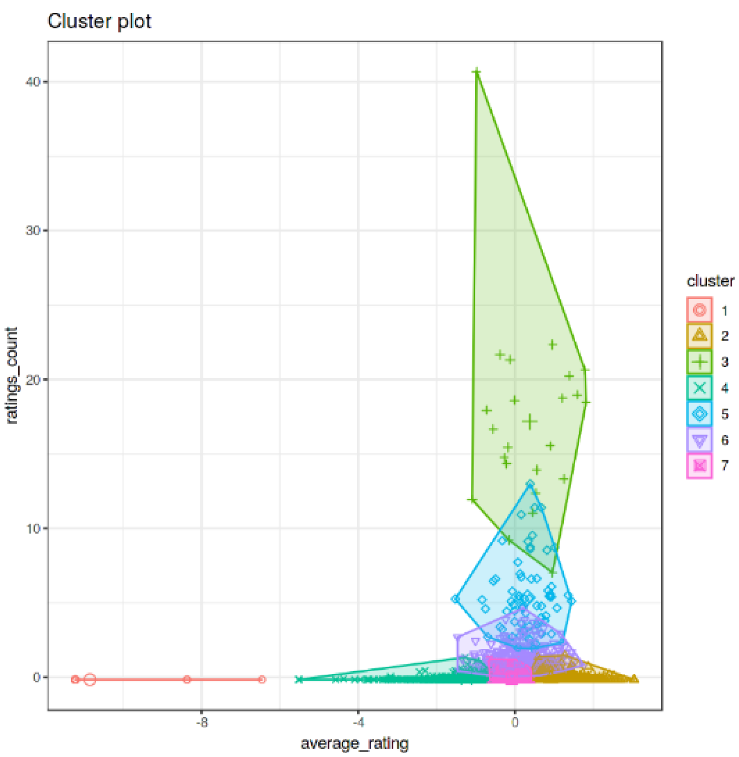 Figure 2: Identifying the target cluster (Cluster 6) for marketing strategies.
Deep Insight: Why This Matters for the Industry
This isn't just about organizing a library; it's about Strategic Conversion.
- For Authors: It provides a pathway to escape the "zero-review" limbo.
- For Users: It cures "recommendation fatigue" by introducing genuinely high-quality content they haven't seen before.
- For Investors: More diverse content leads to higher "Time Spent on Platform" and better user retention.
Conclusion & Future Outlook
The study proves that predictive analytics can do more than just follow trends—it can create them by highlighting excellence.
Limitations: The current model relies on static metadata. Future Work: The authors suggest a Hybrid Recommender System that integrates this cluster-based prioritization with real-time user-behavior tracking to minimize "recommendation dissatisfaction."
By combining the "physics" of data clustering with the "art" of marketing, platforms like Goodreads can transform from simple databases into active engines of literary discovery.