
Predictive Analytics in Banking: Escaping the Default Trap with Ensemble Learning
Predictive analytics for loan default in banking sector using machine learning techniques
This paper presents a comparative study of machine learning techniques for early loan default prediction using a massive dataset of 2.95 million observations from an Egyptian public bank. It evaluates statistical, AI, and ensemble methods, identifying Random Forest and Gradient Boosted Trees (GBT) as the top-performing models via the Apache Spark big data framework.
Executive Summary
TL;DR: This research tackles the critical challenge of bank loan default prediction by benchmarking traditional statistical models against advanced ensemble machine learning. Utilizing a massive dataset of ~3 million records and the Apache Spark ecosystem, the study demonstrates that Random Forest and Gradient Boosted Trees offer a definitive performance edge, achieving over 91% accuracy and superior precision compared to standard Neural Networks or Logistic Regression.
Positioning: This work serves as a practical validation of Big Data frameworks (Spark) applied to regional banking sectors (Egypt), proving that ensemble methods are the current SOTA (State Of The Art) for binary credit classification.
Problem & Motivation: The High Cost of Misclassification
In the banking sector, a "False Negative" (predicting a defaulter will pay) is significantly more expensive than a "False Positive" (denying a good customer). Traditional models like Logistic Regression often lack the Inductive Bias necessary to capture the complex, non-linear interactions between a customer's age, loan amount, and installment arrears. As datasets grow into the millions, these legacy models hit a performance ceiling. The authors' intuition was that Ensemble Learning—the "wisdom of the crowd" for algorithms—could break this ceiling by aggregating the strengths of multiple decision boundaries.
Methodology: Scaling Intelligence with Apache Spark
The researchers implemented a robust five-stage pipeline: Data Understanding, Preparation, Loading, Modelling, and Evaluation. Given the volume of nearly 3,000,000 observations, they utilized Apache Spark on a high-memory cloud server to handle feature normalization and standardization.
The core of the methodology lies in the comparison between:
- Statistical Models: K-NN and Logistic Regression.
- AI Models: Feed-forward Neural Networks with Sigmoid hidden layers and Softmax outputs.
- Ensemble Models: Random Forest (Bagging) and GBDT (Boosting).
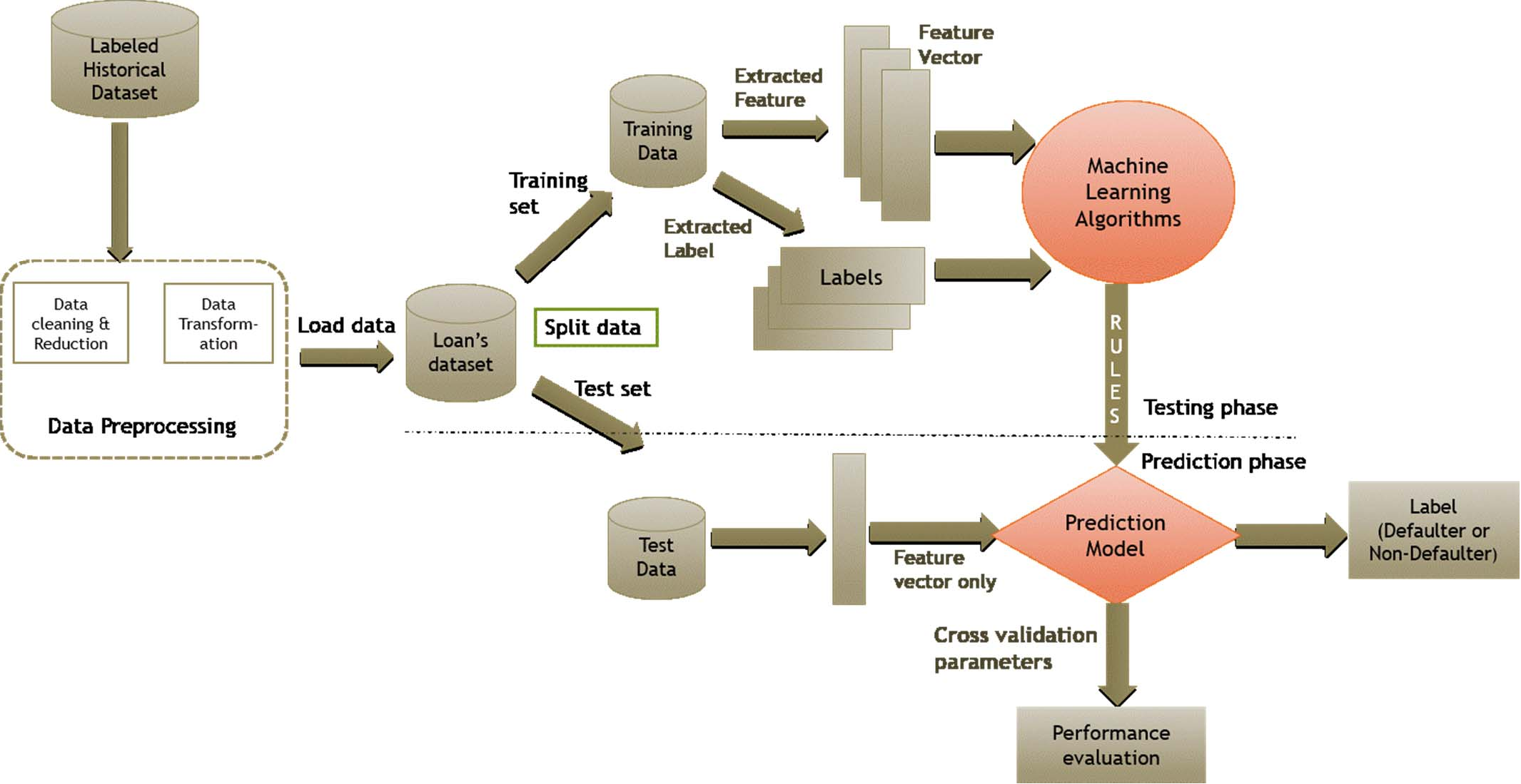 Fig 1: The proposed systematic workflow from raw database extraction to metric-based evaluation.
Experimental Results: The Triumph of the Ensemble
The results provide a clear hierarchy of performance. While Neural Networks achieved a respectable accuracy, they suffered from lower precision in this specific tabular data context.
Key Performance Highlights:
- Accuracy: Gradient Boosted Trees led the pack at 91.9%.
- Precision/Sensitivity: Random Forest showcased an incredible 95.83% precision and 99.9% sensitivity, making it the most reliable model for identifying actual "good" customers without missing potential defaulters.
- The Baseline Gap: Decision Trees, acting as a single learner, yielded a "Miss Rate" of 67.1%, whereas Random Forest reduced the Miss Rate to effectively 0% in this experiment.
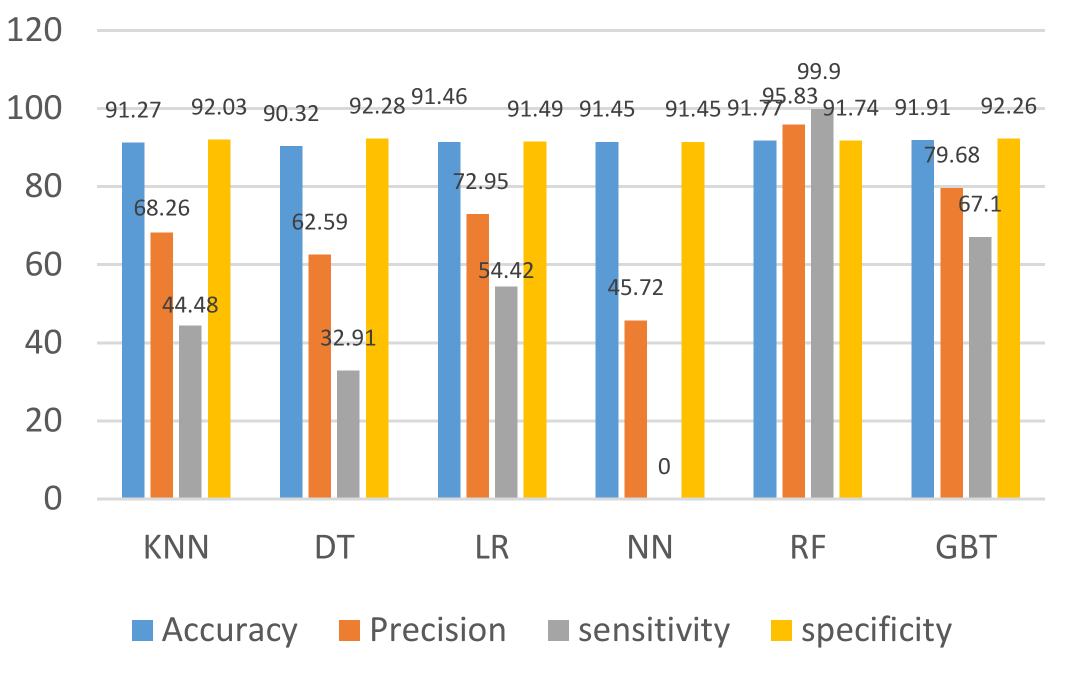 Fig 2: Comparative analysis across Accuracy, Precision, Sensitivity, and Specificity.
Critical Analysis & Conclusion
Takeaway
The study confirms that for structured, tabular banking data, Tree-based Ensembles still reign supreme over deep learning. The ability of Random Forest to handle high-dimensional feature spaces and GBDT to iteratively reduce residuals makes them indispensable for financial risk management.
Limitations & Future Work
One notable limitation is the reliance on Batch Data—historical snapshots that may not reflect sudden economic shifts. The authors correctly point toward Stream Processing and Deep Learning for Sentiment Analysis (e.g., analyzing customer calls) as the next frontier. Moving from "what happened" to "what is being said" will allow banks to predict defaults even earlier in the customer lifecycle.
Keywords: Credit Scoring, Machine Learning, Apache Spark, Random Forest, GBDT, Financial Risk.