
Intelligent Seizure Forecasting: Integrating IoT and Machine Learning for Cerebral Palsy Care
Predictive analytics & modeling for modern health care system for cerebral palsy patients
The paper presents an IoT-enabled predictive analytics framework for early seizure detection in Cerebral Palsy (CP) patients using multi-channel EEG signals. By integrating signal processing techniques like FFT, PCA, and ICA with machine learning algorithms (SVM, KNN, and Linear Regression), the system identifies preictal states approximately 65 seconds before seizure onset.
TL;DR
This research introduces a modern healthcare framework for Cerebral Palsy patients that predicts epileptic seizures before they happen. By combining 16-channel EEG signal analysis with IoT cloud architecture, the system identifies "preictal" (pre-seizure) brain patterns approximately 65 seconds in advance, allowing for remote alerts and medical intervention.
Motivation: The Challenge of Unpredictable Seizures
For patients with Cerebral Palsy and comorbid epilepsy, seizures are not just medical emergencies—they are barriers to independence. The core problem lies in the stochastic nature of brain waves. Traditional diagnostics are often retrospective (analyzing what happened after the fit) rather than prospective.
The authors identify two critical gaps:
- Signal Complexity: EEG data is noisy and varies significantly between individuals.
- Monitoring Gaps: Existing high-accuracy models are often confined to hospital-grade equipment, lacking the "anywhere-anytime" capability of the Internet of Things (IoT).
Methodology: From Scalp to Cloud
The proposed system utilizes a sophisticated pipeline to transform raw electrical brain activity into actionable alerts.
1. Signal Preprocessing & Artifact Removal
Raw EEG data is notoriously "dirty," containing muscle movements and eye blinks. The authors employ Independent Component Analysis (ICA) and Principal Component Analysis (PCA) to "de-noise" the 16-channel input.
2. Frequency Decomposition (The FFT Link)
To understand the brain's state, the signal is broken down into specific frequency bands:
- Delta (< 4 Hz)
- Theta (4-8 Hz)
- Alpha (8-12 Hz)
- Beta (12-30 Hz)
The researchers used Fast Fourier Transform (FFT) with a Hanning Window to convert time-domain signals into a frequency representation, making it easier to spot the hyper-synchrony of neurons that precedes a seizure.
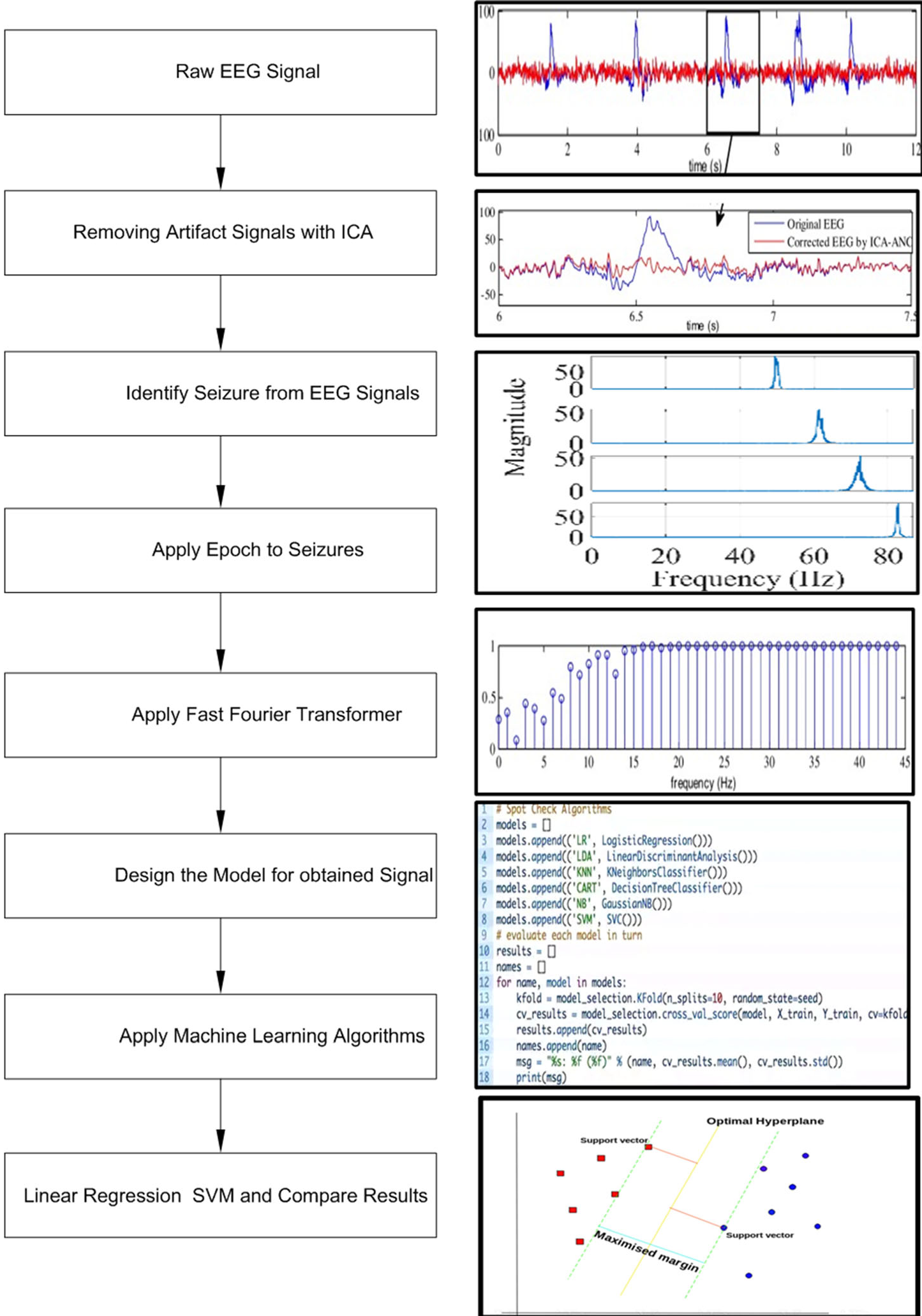 Figure 1: The proposed Machine Learning workflow from data acquisition to cloud integration.
Experiments and Results
The study utilized the CHB–MIT scalp EEG database, involving 29 patients and nearly 1,000 hours of recordings.
Key Findings:
- The Prediction Horizon: The "preictal" state (the warning phase) becomes detectable roughly 65 seconds before the actual seizure.
- Algorithm Performance: While KNN and SVM were tested, Logistic Regression and SVM showed the most stable performance across different brain regions (Frontal, Temporal, Parietal).
- IoT Utility: The analyzed data is integrated with a Raspbian-OS based framework, allowing the system to store details in the cloud and alert doctors or relatives if heart rate or brain signals deviate from the norm.
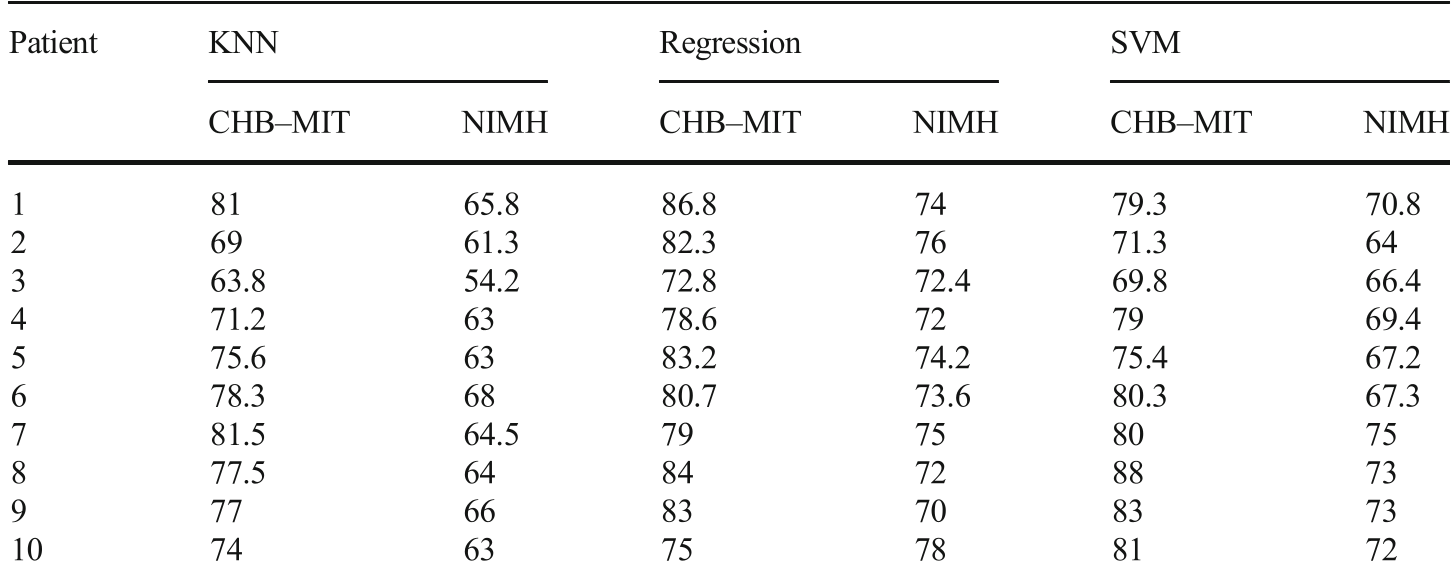 Table 1: Accuracy comparison between KNN, Regression, and SVM across different datasets.
Deep Insight: Why This Works
The success of this method lies in Feature Selection Study. Not all EEG features are equal; the authors found that "chaos and coherence" feature sets (Feature sets 9, 3, and 7 in their study) provided much higher predictive power than raw amplitude measures.
By focusing on the spectral envelope through Linear Predictive Coding (LPC) and Auto-Regressive modeling, the system compresses high-dimensional EEG data into a format that IoT devices can process without significant latency.
Conclusion and Future Outlook
The study proves that predictive marks exist in the EEG signal long before the physical manifestation of a seizure.
Future Work:
- Wearable Integration: Moving from a 16-channel stationary system to a wearable "gadget."
- Deep Learning: Implementing Reinforcement Learning or RNNs to adapt to a patient’s unique EEG "signature" over time, further reducing False Positive Rates.
This work bridges the gap between complex signal processing theory and the practical need for remote, life-saving healthcare monitoring for the intellectually disabled.