
The Digital Ego: How Facebook Feeds the Adolescent "Personal Fable"
Exploring predictors and consequences of Personal Fable ideation on Facebook
This research investigates the relationship between Facebook use and the "Personal Fable" developmental construct (feelings of uniqueness and invulnerability) among adolescents. Using American and Dutch samples, it establishes a mediation model where Facebook use increases Personal Fable ideation, which in turn drives higher social media activity.
TL;DR
Is social media fundamentally changing how teenagers see themselves? This research explores the Personal Fable—a developmental stage where adolescents feel uniquely important and invulnerable. The study finds that high Facebook usage reinforces these feelings through a "digital stage" effect, though surprisingly, this sense of invulnerability doesn't necessarily lead to more "risky" secrets being shared—it leads to a drive for constant social visibility.
Problems in the Digital Mirror
Adolescents have always struggled with egocentrism, but social networking sites (SNS) like Facebook have turned the internal "Imaginary Audience" into a literal, quantifiable one. Prior research often lumped risky online behavior into personality traits like narcissism.
However, this paper argues that we must look at developmental mechanics. The problem isn't just "who" the teen is, but "where" they are in their cognitive growth. How does the constant cycle of comparing, rehearsing, and posting (Behavioral Rehearsal) amplify the belief that one is the protagonist of a unique, invincible story?
Methodology: From Rehearsal to Fable
The researchers conducted two major studies across the US and the Netherlands to test a specific psychological pipeline:
- Time on Facebook leads to...
- Behavioral Rehearsal (planning posts to fit in) and Imaginary Audience (thinking everyone is watching), which eventually creates...
- Personal Fable (feeling special and untouchable).
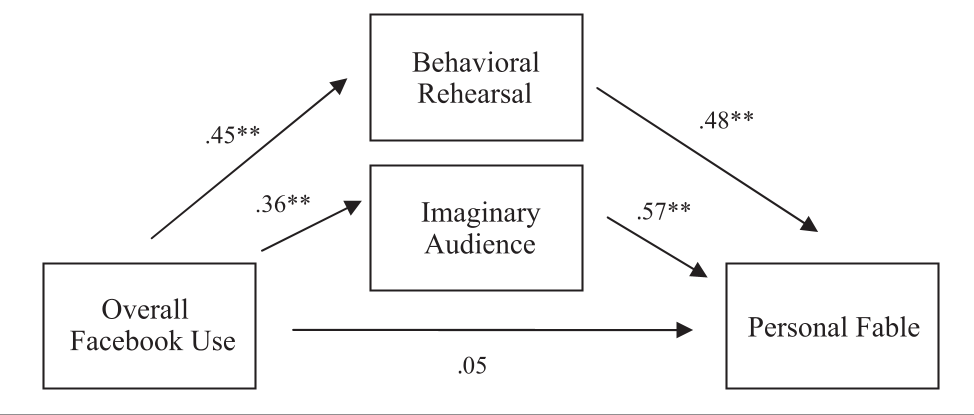
The authors used bootstrapping mediation analysis to prove that Facebook doesn't just "make" kids feel special; it provides the tools (comparisons and feedback loops) that build the fable.
Key Results: Activity is Not Always Risk
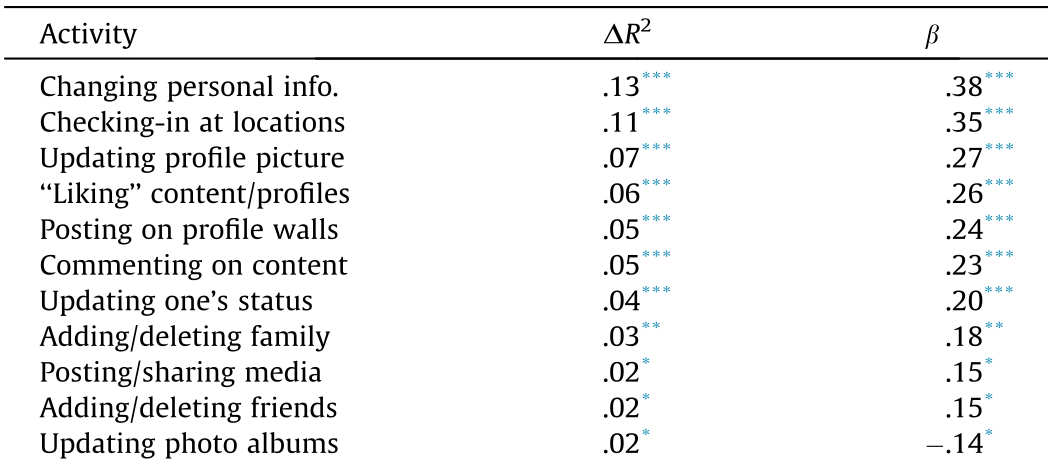
The findings from Study 1 demonstrated a powerful link between the Personal Fable and 11 distinct Facebook activities. Those with high "Fable" scores were significantly more likely to update their status, change profile pictures, and "check-in" at locations.
The Counter-Intuitive Twist: In Study 2, the researchers expected that being high in "Personal Fable" (feeling invulnerable) would lead to problematic self-disclosure (sharing secrets or dangerous info). It did not.
Instead, the data suggests that once a teen reaches the "Personal Fable" stage, they transition from "trying to fit in" to "maintaining status." They post frequently to stay at the top of the newsfeed, but they are savvy enough to avoid posts that might damage their "leader" reputation.
Critical Insight & Conclusion
This paper offers a sophisticated shift in how we view adolescent digital safety.
- The Risk Window: The most "dangerous" phase for a teenager online isn't actually when they feel invulnerable (Personal Fable), but earlier, when they are obsessed with the Imaginary Audience. In that stage, the need to fit in outweighs the desire to protect one's status.
- Future Impact: As platforms move toward more "fleeting" content (like Stories), the cycle of Behavioral Rehearsal may accelerate, potentially elongating these developmental phases well into emerging adulthood.
Takeaway: If we want to protect teens online, we shouldn't just talk about "privacy"—we need to address the underlying psychological need to be "seen" by the audience they've constructed in their heads.