
PREEMPT: Repurposing Debug Hardware to Neutralize Malware with Zero Latency
PREEMPT: PReempting Malware by Examining Embedded Processor Traces
This paper introduces PREEMPT, a hardware-based malware detection technique that repurposes the Embedded Trace Buffer (ETB) found in modern processors for security monitoring. By combining hardware-level signal traces with machine learning classifiers (KNN, RF, DT, NN), the method achieves a high malware detection accuracy (up to 94.6% True Positive rate) with minimal latency and zero performance overhead.
TL;DR
PREEMPT is a novel hardware security framework that transforms the Embedded Trace Buffer (ETB)—a standard tool for silicon debugging—into a real-time malware detector. By feeding internal processor signal traces into machine learning models, it achieves over 94% detection accuracy and a 1% false positive rate, all while maintaining zero performance overhead and protecting the system within hundreds of clock cycles.
The "Cat-and-Mouse" Game of Malware Detection
For decades, security has been a software-level battle. However, software-based Anti-Virus (AVS) is inherently flawed: it lives in the same memory space it tries to protect, making it vulnerable to the very malware it seeks to destroy.
The hardware community previously attempted to solve this using Hardware Performance Counters (HPCs). While a step in the right direction, HPCs are "clunky" for security; they require frequent system interrupts to read, causing a ~5% performance hit, and they provides a "low-resolution" view of processor activity, leading to unacceptably high false-positive rates (often around 15%).
The Insight: Hidden Gold in Debug Traces
The authors of PREEMPT realized that modern chips already contain a high-fidelity monitoring system: the Embedded Trace Buffer (ETB).
- High Resolution: Unlike HPCs, ETBs capture signal values every single cycle.
- Zero Overhead: They operate in the background during functional mode without pausing the CPU.
- Security by Isolation: It is significantly harder for software-based malware to "hack" into the physical trace circuitry of a processor.
Methodology: From Silicon Traces to Intelligence
The PREEMPT workflow involves a sophisticated pipeline of signal selection and machine learning.
1. Signal Selection & Extraction
Using the SigSET tool, the researchers identified 128 critical signals from the Cache Processor Crossbar (CPX) of an OpenSPARC T1 processor. These signals capture the essence of what the CPU is doing—specifically Load Returns (data being pulled into cache) and Instruction Fills (code being prepared for execution).
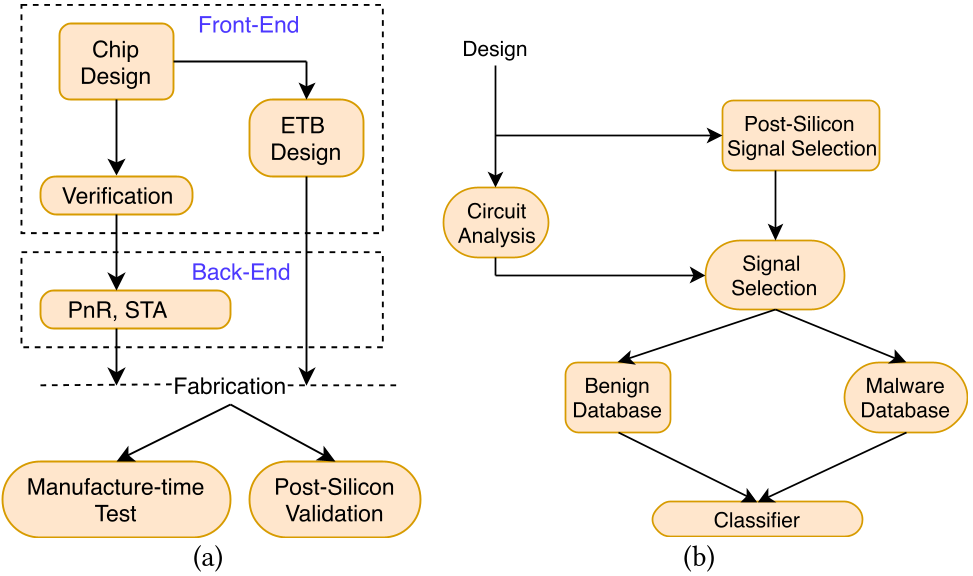 Figure 1: Overview of the PREEMPT methodology, from signal selection to ML classification.
2. The Machine Learning Engine
The raw 128-bit traces are converted into feature vectors and fed into four distinct classifiers:
- K-Nearest Neighbors (KNN): Proved to be the most effective.
- Random Forest (RF)
- Decision Trees (DT)
- Neural Networks (NN)
Experimental Results: Precision and Speed
The researchers tested PREEMPT using real-world IoT malware families like Gafgyt and Mirai.
- Superior Accuracy: The KNN classifier reached a TP of 94.6% with an FP rate of 1.0%. This outperforms previous HPC-based SOTA methods by a factor of 10 in terms of false positives.
- Extreme Low Latency: Most malware was spotted within 100 clock cycles. In the world of 2GHz processors, that is a detection time of 50 nanoseconds—long before the malware can cause meaningful damage or expand its footprint.
- Resilience: PREEMPT successfully identified malicious traces even when malware was running in the background alongside benign SPEC benchmarks (e.g., "hmmer").
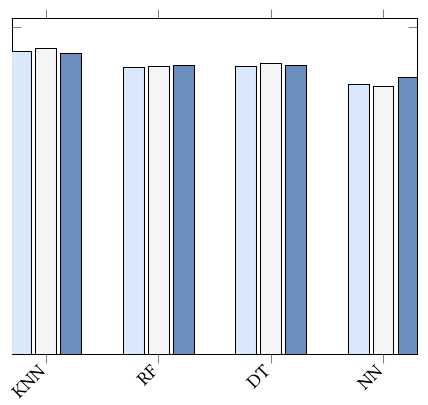 Figure 2: Performance comparison across different ML classifiers. Note the exceptionally low False Positive (Red) for KNN and RF.
Deep Insight: Why It Works
The success of PREEMPT is best visualized through t-SNE (t-distributed Stochastic Neighbor Embedding). As shown in the figure below, malware traces cluster into distinct "islands" in the feature space, while benign software spans a much broader, different manifold. This confirms that malware, regardless of its obfuscation, exhibits unique "hardware signatures" in how it moves data between the cache and the core.
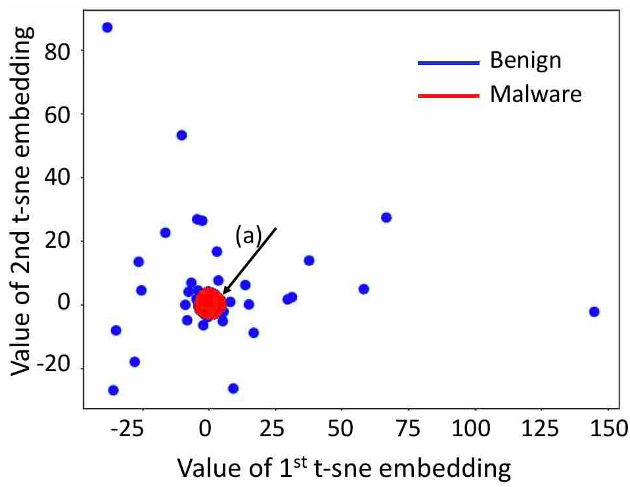 Figure 3: t-SNE plot showing the clear separation between Malware clusters (dense) and Benign traces.
Conclusion & Future Outlook
PREEMPT offers a compelling vision for the future of "Self-Securing" hardware. By re-using existing debug traces, manufacturers can implement a high-security layer with:
- Zero Silicon Area Overhead (uses existing ETBs).
- Zero Performance Penalty.
- Low Latency Protection.
While the current study focused on Linux-based IoT malware, the underlying principle—that software behavior leaves an indelible, detectable footprint on hardware signals—is likely applicable to rootkits, ransomware, and side-channel attacks across Windows, Android, and beyond.