
UDM: Boosting Mobile Social Network QoE with User-Aware Dynamic Pre-fetching
Pre-fetching Webpages on Mobile Social Network: User-Aware Dynamic Markov Chain
This paper introduces the User-aware Dynamic Markov (UDM) model, a novel pre-fetching framework for Mobile Social Networks (MSN). It achieves high prediction accuracy (72%) and flow coverage (45%) by incorporating personalized user matrices and time-variant decay factors to mitigate latency in mobile environments.
TL;DR
The User-aware Dynamic Markov (UDM) model addresses the high latency of Mobile Social Networks (MSN) by predicting and pre-loading the next likely webpage. By separating "Heavy" (VIP) users from "Ordinary" users and applying time-variant decay factors to transition weights, UDM achieves a 72% prediction accuracy, far surpassing traditional static Markov models.
Background: The Latency Challenge in MSNs
In the era of mobile internet, user experience (QoE) is synonymous with speed. However, Mobile Social Networks present a unique challenge: unlike static portals, MSNs are highly dynamic, personalized, and exhibit extreme polarization in user behavior.
Traditional pre-fetching mechanisms fail here because:
- Lack of User Awareness: They treat all users the same, ignoring the distinct patterns of VIPs.
- State Explosion: Real-time social webs have infinite specific URLs; models must focus on "Key-path" pages to remain computationally feasible.
- Time-Invariance: User interests shift rapidly, but old models require expensive re-training to adapt.
Methodology: The UDM Architecture
The UDM model represents a paradigm shift by treating pre-fetching as a personalized, dynamic probability problem. Its structure is defined by the six-tuple <X, A, λ, U, α, ε>.
1. Key-Path Extraction
To solve the complexity of infinite URLs, the authors propose a "Key-path" algorithm. It traverses a site’s structure (e.g., Home -> Games -> Hot Lists) to identify landmark pages that act as gateways to specific functions.
2. Dual-Matrix Strategy
- Matrix A (Global Transitions): Stores weights of transitions between key pages for the general population.
- Matrix U (User-Aware): A specific matrix for "Heavy Users" (VIPs) that records their individual click history, allowing for highly personalized predictions.
3. Dynamic Evolution via Decay Factors
The model avoids static obsolescence through two parameters:
- (System Decay): Gradually reduces the weight of old global transitions daily.
- (User Decay): Attenuates individual user history after each session, ensuring the model prioritizes recent interests.
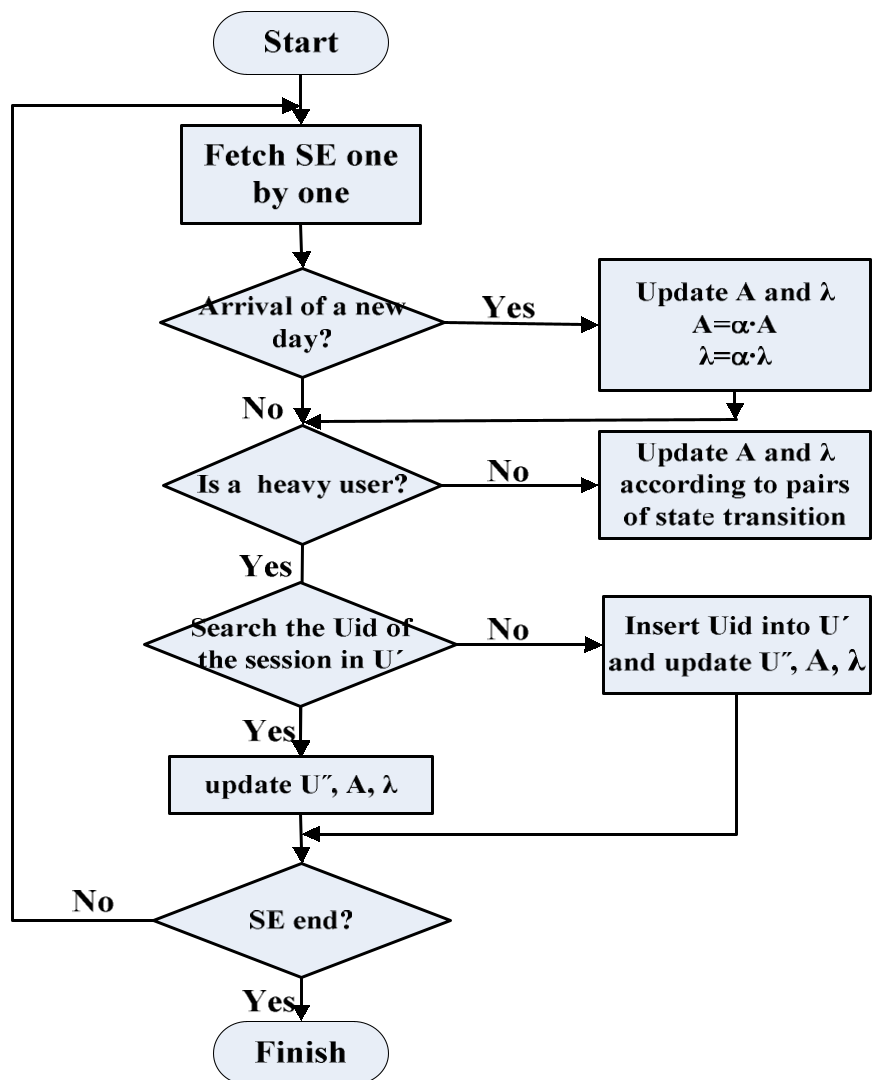 Figure 1: The training flow highlights the conditional logic between Heavy and Ordinary users.
Experiments: Superior Accuracy and Coverage
Using a massive dataset of 350 GB (443 million records) from a WAP gateway in China, the authors compared UDM against Traditional and Dynamic Markov baselines.
Key Findings:
- Accuracy (PA): UDM reaches 72% accuracy as it learns user behavior over time, while traditional models plateau at 45%.
- Flow Coverage (FC): UDM covers 45% of the total traffic flow, meaning nearly half of the data consumed is pre-fetched correctly, drastically reducing perceived latency.
- Session Length Sensitivity: The model performs best on session lengths under 10 clicks. For extremely "addicted" users with very long sessions, the effectiveness of the user-aware matrix slightly declines due to noise.
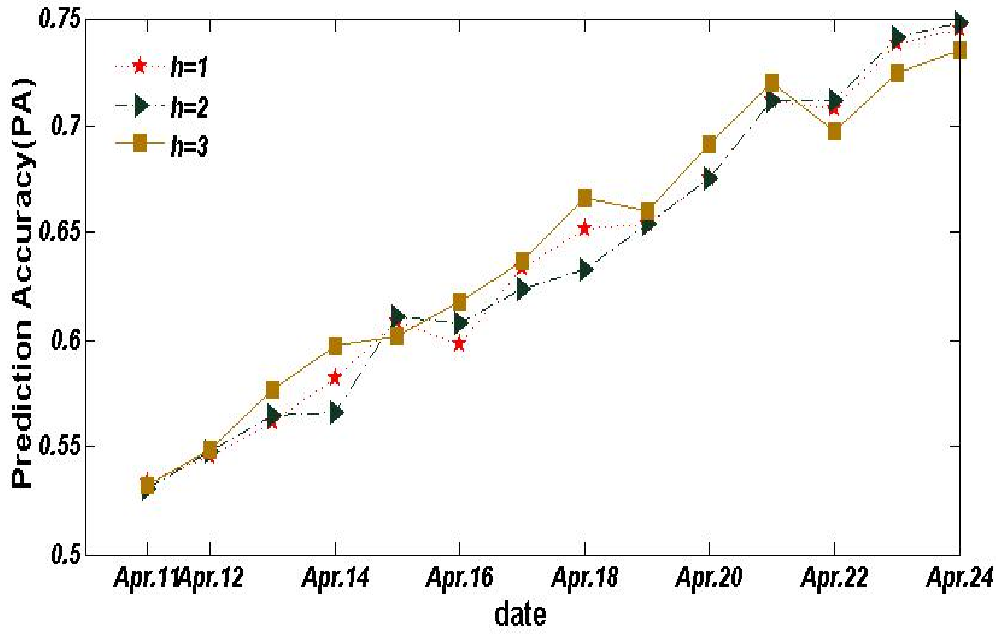 Figure 2: PA comparison showing the significant leap UDM takes over time.
Critical Insight: Why it Works
The success of UDM lies in its Inductive Bias. It assumes that while the general flow of a website is stable (Matrix A), individual high-value users have "signature" movements (Matrix U). By mathematically combining these via V(t) = Z(t-1) * A * U_i^T, the model effectively filters global probabilities through a personalized lens.
Conclusion
The UDM model proves that personalizing the "last mile" of content delivery is not just about algorithms, but about understanding user hierarchy and temporal relevance. While deep learning has since taken over many prediction tasks, the UDM's use of decay factors and user classification remains a computationally efficient cornerstone for real-time mobile systems.
Limitations: The model relies on a predefined set of key-path pages. In future work, an automated, self-learning key-path detection system using graph neural networks could further enhance its robustness in rapidly changing web architectures.