
Preserving Linguistic Gold: Navigating Volatility with Cloud Models
Preserve Discovered Linguistic Patterns Valid in Volatility Data Environment
This paper introduces a validity preservation technique for Linguistic Patterns in volatile data environments using the Cloud Model. By combining linguistic representation with a Genetic Algorithm (GA)-based parameter refreshing mechanism, the authors ensure that discovered stock market patterns remain accurate as data distributions shift over time.
TL;DR
Financial data is notoriously volatile, often rendering static mining models obsolete overnight. This paper proposes a framework to extract Linguistic Patterns that are human-readable and, crucially, self-refreshing. By using the Cloud Model to map numbers to concepts and a Genetic Algorithm-inspired approach to update these mappings, the authors demonstrate how to maintain predictive accuracy in the face of shifting market regimes like the 1997 Asian Financial Crisis.
The "Linguistic" Bridge and the Volatility Gap
In financial analysis, experts rarely say "If the index rises by 2.34% and volume is 24.5M..." Instead, they use linguistic terms: "If the rise is positive and volume is heavy, then the tendency is up."
While linguistic patterns are intuitive, they face a fatal flaw in volatile environments: Concept Drift. What was considered "heavy volume" in a quiet 1996 market becomes "normal" or even "weak" during the high-activity periods of late 1997. When the mapping of Data Concept breaks, the entire predictive pattern collapses.
Methodology: The Cloud Model & Dynamic Refreshing
1. The Cloud Model as a Representation Tool
To bridge the gap between precise numbers and fuzzy human concepts, the authors employ the Cloud Model. Unlike traditional fuzzy sets, a "Cloud" is defined by three parameters:
- Expected Value (): The center of the linguistic concept.
- Entropy (): The spread or "granularity" of the concept.
- Deviation (): The randomness/thickness of the cloud's boundary.
The membership degree is modeled by a Gaussian-like curve:
2. The Refreshing Mechanism
When the data environment shifts, the values of and must be updated. The paper introduces a multi-objective fitness function to evaluate how well a linguistic term fits new data:
- Fitness : Ensures the cloud is symmetric and correctly covers the densest parts of the new data distribution.
- Fitness : Minimizes redundancy/overlap between neighboring terms (e.g., ensuring "weak" and "moderate" remain distinct).
- Fitness : Ensures maximum coverage of the available data points.
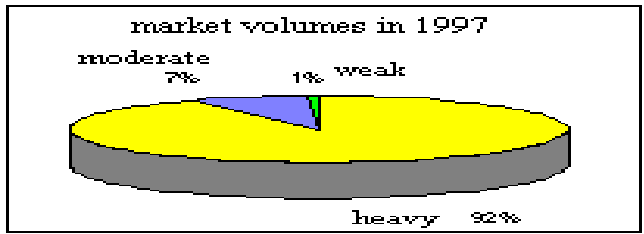 Fig 1: Illustrating how static linguistic terms become outdated (mismatched to data) and lead to invalid patterns.
Experimental Validation: The 1997 HSI Test
The authors tested their approach on the Hong Kong Stock Exchange (HKSE).
-
The Failure of Static Patterns: Using definitions from 1996, a linguistic pattern predicted a 92% "up" tendency for 1997. However, 1997 saw a massive market crash. The reason? The definition of "Heavy Volume" from 1996 was so low compared to 1997's massive trading that every day looked like a "Heavy Volume" day, triggering false positives.
-
** The Success of Refreshed Patterns**: By applying the refreshing algorithm, the parameters for "Volume" were shifted dynamically for different months in 1997.
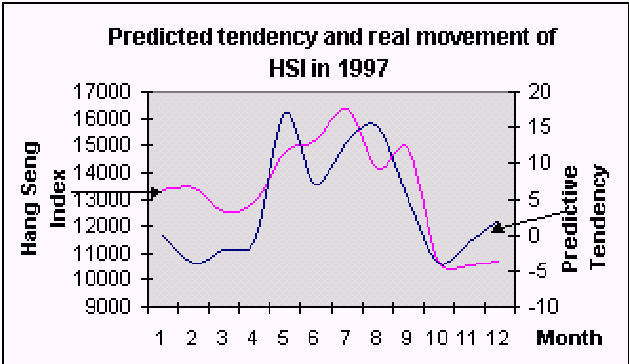 Fig 2: Comparison between predictive tendency and real movement. The refreshed pattern (dotted/solid lines) successfully tracks the market's volatility.
Critical Insight & Future Outlook
This work highlights a critical truth in AI: Logic is often more stable than Data Grounding. The logic "Heavy Volume + Positive Gain = Bullish" might hold true for decades, but the numerical definition of "Heavy" changes every year.
Takeaways for Modern AI:
- Decoupling: Separating high-level reasoning (Linguistic Patterns) from low-level perception (Cloud Model parameters) makes systems more robust.
- Adaptive Grounding: Future LLMs or Neuro-symbolic systems could benefit from similar "refreshing" layers to ensure their symbolic reasoning stays grounded in shifting real-world data distributions.
Limitations: The paper relies on a GA-based approach which may be computationally expensive for high-frequency trading. Furthermore, it assumes the structure of the linguistic pattern remains correct, which may not always be true in unprecedented black-swan events.