
Preserving the "Taste of Home": How HCI Bridges Generations in Taiwanese Food Heritage
How to Preserve Taiwanese Cultural Food Heritage Through Everyday HCI: A Proposal for Mobile Implementation
This paper proposes a mobile HCI (Human-Computer Interaction) framework specifically designed to preserve Taiwanese food heritage by enabling intergenerational recipe recording. It introduces a context-aware mobile application tailored for the elderly, aimed at documenting family recipes and the cultural narratives attached to them.
TL;DR
Food is more than sustenance in Taiwan; it is a repository of political, social, and family history. This paper introduces an HCI framework and a mobile application prototype designed to help the elderly record family recipes and their "moral lessons" through simplified interfaces, ensuring that the unique flavors of Taiwanese identity aren't lost to time.
The "Cultural Amnesia" of the Dinner Table
Taiwan’s history—from Aboriginal roots to Post-WWII migrations—has created a complex culinary landscape. However, a significant gap exists: while the elderly hold the secrets to "signature dishes," the younger generation often lacks the skills or records to reproduce them. Existing social media platforms are often too cluttered or privacy-invasive for older users, leading to a loss of what the authors call "food heritage."
User Insights: The Elderly and the Young
The research highlighted a poignant contradiction:
- The Elderly: Proud of their "family taste" but rarely write recipes down because they underestimate the historical value.
- The Young: Deeply miss home-cooked meals but lack the technical "know-how" to recreate them.
- The Barrier: Cognitive decline in older age makes standard complex mobile UIs frustrating, reducing their willingness to engage with digital preservation.
Methodology: Designing for the Aging Mind
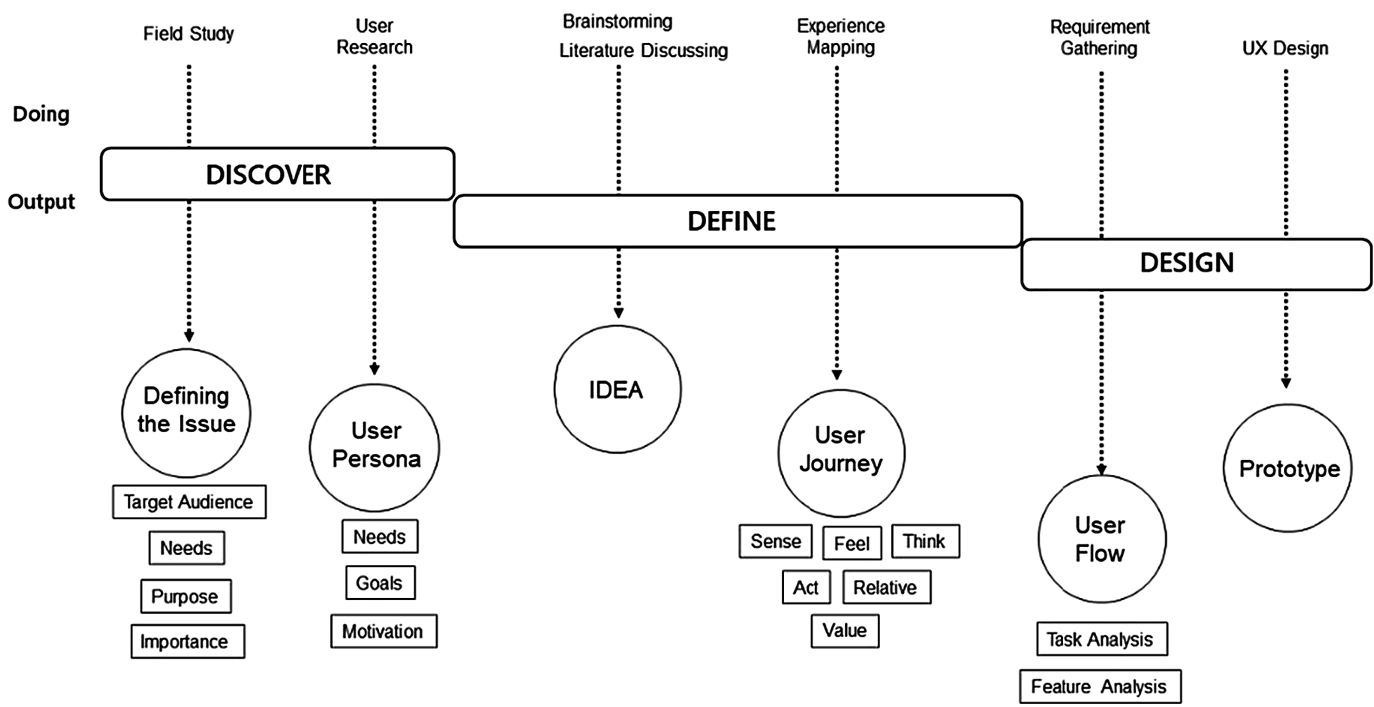
The authors don't just build an app; they apply Cognitive Psychology to interface design. By recognizing that working memory and motor precision decline with age, they proposed a design centered on:
- Fluency and Flexibility: Making the navigation intuitive.
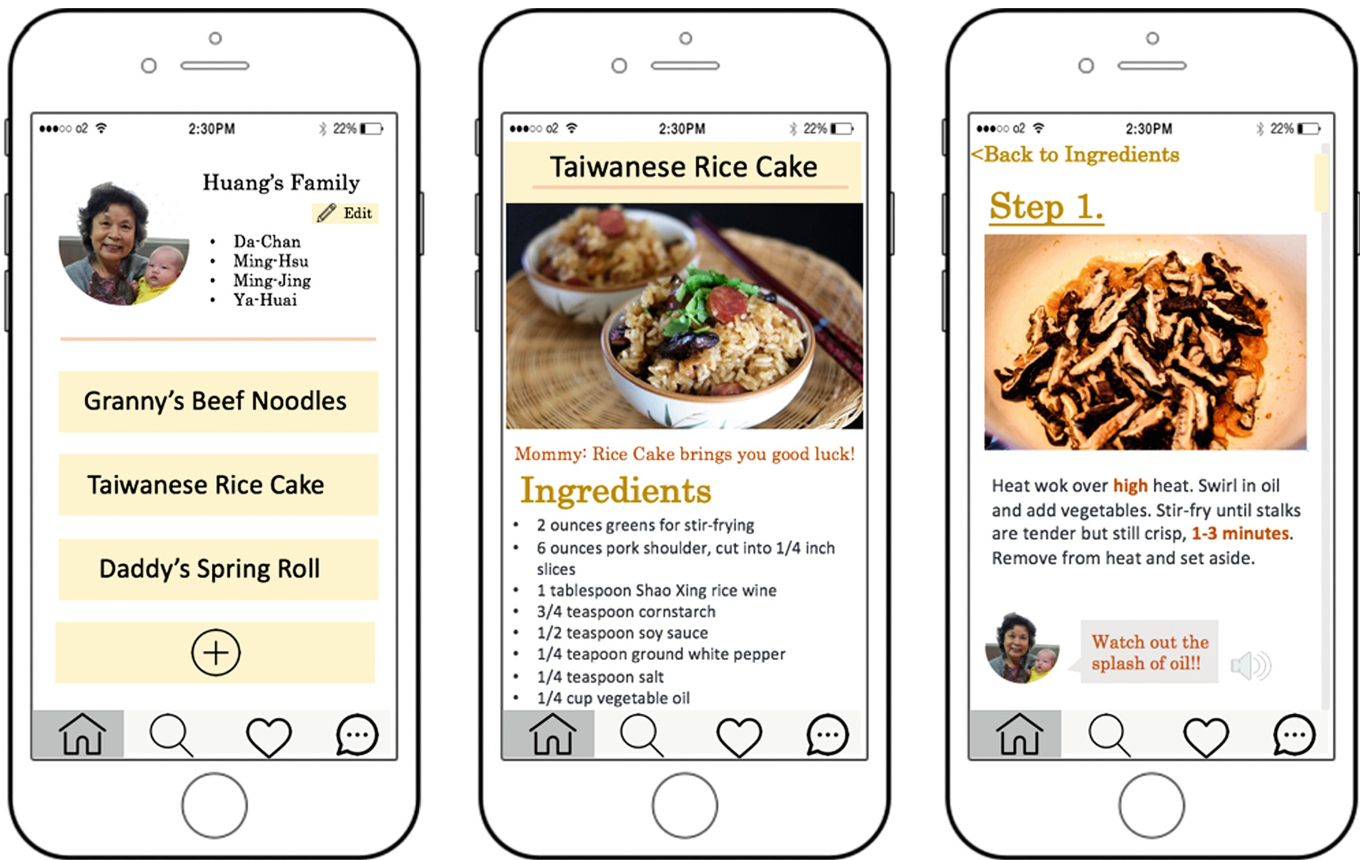
- The "Family Letter": A specialized feature for recording voice messages so that the meaning of the dish (e.g., why dumplings look like gold nuggets) is preserved alongside the ingredients.
- Minimalist UI: Reducing the interface to three primary functional buttons to decrease cognitive load.
From Tainan Rice Cakes to Digital Diaries
The paper cites the 2000 Inaugural Banquet and the history of Tainan Style Rice Cakes (originally food for laborers/soldiers) to illustrate why food is a vehicle for history. Their prototype allows users to categorize these records not just as "data," but as "places" in a family history blog.
Key Experimental Findings
- Cultural Identity: 100% of participants agreed that home-cooked tastes are "irreplaceable."
- Intergenerational Bond: The "Family Letter" function acted as a trigger for emotional connection, though the authors noted that "read but unreplied" messages (40%) remain a challenge for digital family dynamics.
Critical Insight & Conclusion
This work stands at the intersection of Digital Humanities and HCI. It moves beyond the utilitarian "recipe app" toward a "Celebratory Technology."
The Takeaway: For developers and researchers, the lesson is clear: when designing for cultural heritage, the technical "how-to" (the recipe) is secondary to the "why" (the history and emotion). By lowering the technical barrier for the elderly, we can unlock a vast, unrecorded archive of human culture.
Limitations: The study is qualitative and small-scale (30 participants). Future work should address high "no-reply" rates in family messaging and the technical challenges of speech-to-text accuracy for elderly dialects.