
PRINGL: Decoupling Incentive Logic from Crowdsourcing Platforms
PRINGL – A domain-specific language for incentive management in crowdsourcing
PRINGL is a novel Domain-Specific Language (DSL) designed to program and manage complex incentive strategies in socio-technical and crowdsourcing systems. It introduces a hybrid visual-textual programming model that decouples incentive logic from underlying platforms, enabling the reuse of proven rewarding mechanisms across diverse collaborative environments.
TL;DR
PRINGL is a Domain-Specific Language (DSL) that shifts incentive management from "hard-coded scripts" to a modular, reusable, and visual programming paradigm. By abstracting worker data and rewarding actions, it allows experts to design complex motivation strategies (like "Rotating Presidency" or "Peer Voting") that are portable across different socio-technical systems.
The "Hard-Coded" Bottleneck in Social Computing
Modern crowdsourcing has evolved from simple micro-tasks (like image tagging) to complex, expert-driven collaborations. However, the logic used to motivate these workers remains stuck in the past. Currently, if a manager wants to change a bonus structure or introduce a peer-review reward, they often need a software engineer to modify the platform's core code. This lack of flexibility creates "Incentive Silos" where successful motivational strategies cannot be easily ported from one project to another.
Methodology: The Anatomy of PRINGL
The core innovation of PRINGL lies in its hybrid nature. It recognizes that while high-level strategy should be visual and intuitive, the low-level execution involves specific data queries.
1. The Abstraction Interlayer
PRINGL doesn't talk to the crowdsourcing database directly. It operates on an Abstraction Interlayer (specifically the PRINC framework). This layer provides a unified "RMod" (Resource Model) that represents workers as nodes in a graph, making the actual platform (Llama, MTurk, or a bespoke system) irrelevant to the incentive designer.
2. Core Building Blocks
The language is composed of four primary complex elements:
- WorkerFilters: Narrow down the crowd (e.g., "Find the top 10% of workers by effort in the last 3 months").
- IncentiveLogic: The "brains" or predicates (e.g., "Is the current worker's output 2x the team average?").
- RewardingActions: The "muscles" (e.g., "Promote to manager" or "Issue a 10% bonus").
- IncentiveMechanisms: The "containers" that link filters to actions.
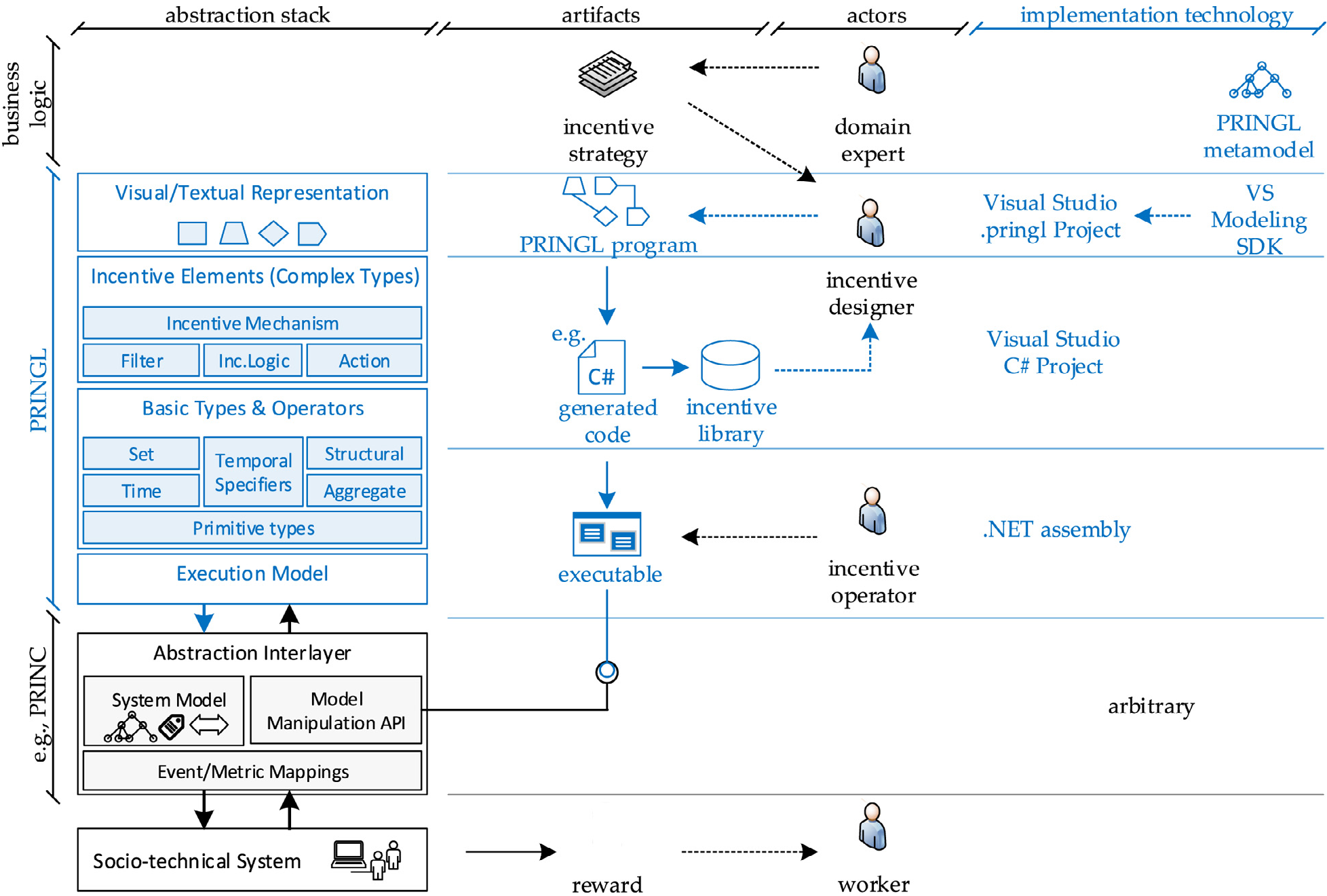 Figure 1: PRINGL's Operational Context showing the interaction between Designers, Operators, and the Abstraction Interlayer.
Case Study: The Rotating Presidency
To prove that PRINGL can handle more than just "Pay-per-Click," the authors modeled a Rotating Presidency scheme. In this scenario, the best worker in a team is promoted to manager for the next iteration, but they are barred from the position if they have already served for k consecutive terms.
This involves:
- A Composite Filter to identify the current manager and the "Second Best" worker.
- A Structural Rewarding Action that re-chains the management relationships in the graph model.
- Temporal Specifiers to track iteration history.
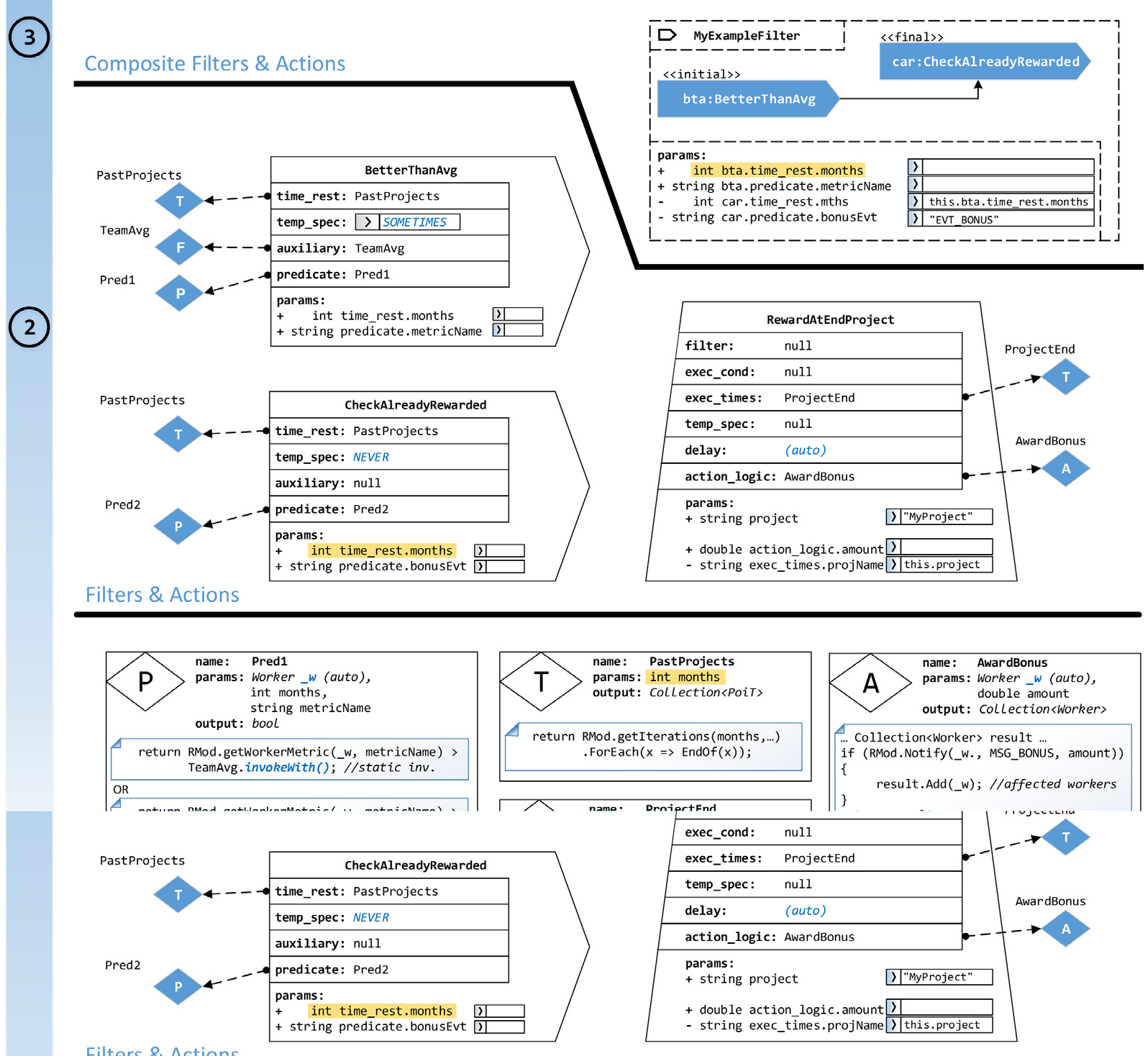 Figure 2: Visual modeling of Example 3, demonstrating how internal parameters are propagated to a high-level UI for operators.
Experimental Validation
The authors evaluated PRINGL against 5 realistic scenarios, mapping them to established incentive categories like Psychological Incentives and Deferred Compensation.
- Reusability: In Example 4 (Rankings), they showed that a new incentive could be created by simply "copy-pasting" the mechanism from Example 3 and swapping a single filtering component.
- Feasibility: They built a full IDE plugin for Visual Studio that compiles these visual models directly into executable C# code.
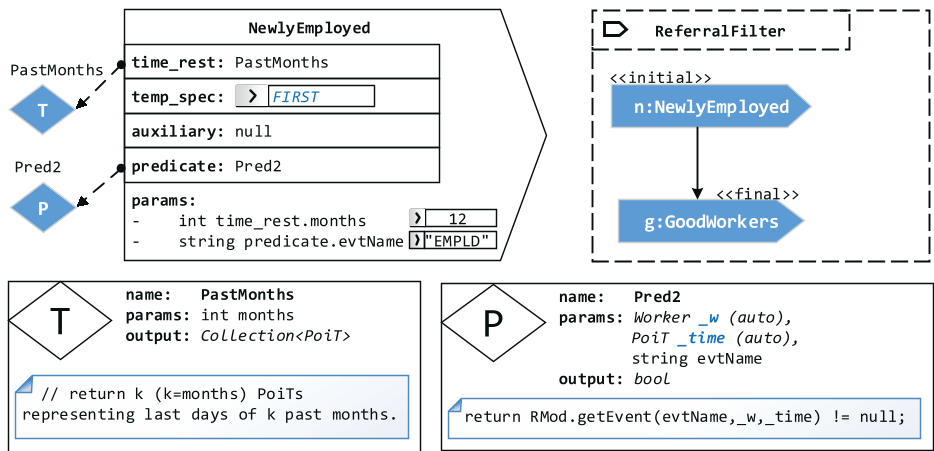 Table 1: Coverage of various incentive categories and evaluation methods by PRINGL examples.
Critical Insight: Why This Matters
The true value of PRINGL isn't just "easier programming." It is the Externalization of Incentive Management. By making incentives a standalone service, we can finally achieve Reputation Transfer. If worker behavior is managed by a standard language, a worker's "Elite Status" on one platform could theoretically be recognized by another, creating a more cohesive global digital labor market.
Conclusion
PRINGL successfully bridges the gap between high-level management theory and low-level system implementation. While it currently requires an abstraction interlayer like PRINC, its contribution to the "Social Computing" stack is significant, moving us closer to a future where human motivation is as programmable as the software it supports.