
Privacy Analysis in Microblogging: The Tug-of-War Between Connectivity and Control
4660_Privacy Analysis on Microblogging Online Social Networks A Survey.
Summary
Problem
Method
Results
Takeaways
This paper presents a comprehensive survey and comparative analysis of 24 Online Social Networks (OSNs), specifically focusing on microblogging services. It introduces a multi-dimensional taxonomy—covering architecture, storage, encryption, and privacy controls—to evaluate 12 deployed systems (e.g., Twitter, Mastodon precursors) and 12 academic proposals (e.g., Safebook, PeerSon).
## TL;DR
This survey dissects the landscape of Online Social Networks (OSNs), comparing industry giants like Facebook and Twitter with academic privacy-preserving protocols. It highlights a critical systemic flaw: most popular platforms are designed for data extraction, whereas privacy-centric alternatives struggle with usability and mass adoption.
## The Core Conflict: The Privacy Paradox
In the modern digital era, users face a "Privacy Paradox." We claim to value our privacy, yet we willingly surrender our location, relationships, and daily thoughts to centralized authorities. The paper identifies two primary threat vectors:
1. **User-Related Threats**: Intentional or accidental disclosure to other users (e.g., "Please Rob Me" scanning Twitter feeds).
2. **System Provider-Related Threats**: Data mining by the platform itself for advertising, or vulnerability to government-mandated censorship.
## Methodology: Benchmarking the Social Landscape
The authors use a rigorous framework to evaluate both **Deployed Systems** (Twitter, Diaspora, Gab) and **Academic Proposals** (PeerSon, Safebook, DECENT).
### 1. Architectural Taxonomy
* **Centralized**: Easy to maintain, but creates a "God view" for the provider.
* **Federated (e.g., Diaspora, GNU Social)**: Data is spread across many servers (pods), reducing central risk but requiring server-admin trust.
* **Fully Decentralized (e.g., Twister)**: Peer-to-peer (P2P) structures with no central authority, offering the highest level of censorship resistance.
### 2. The "Privacy vs. Usability" Trade-off
The survey maps how features like "Replies," "Mentions," and "Follow Interests" correlate with privacy risks. For instance, a "Search" function is essential for usability but allows adversaries to crawl and correlate user preferences.
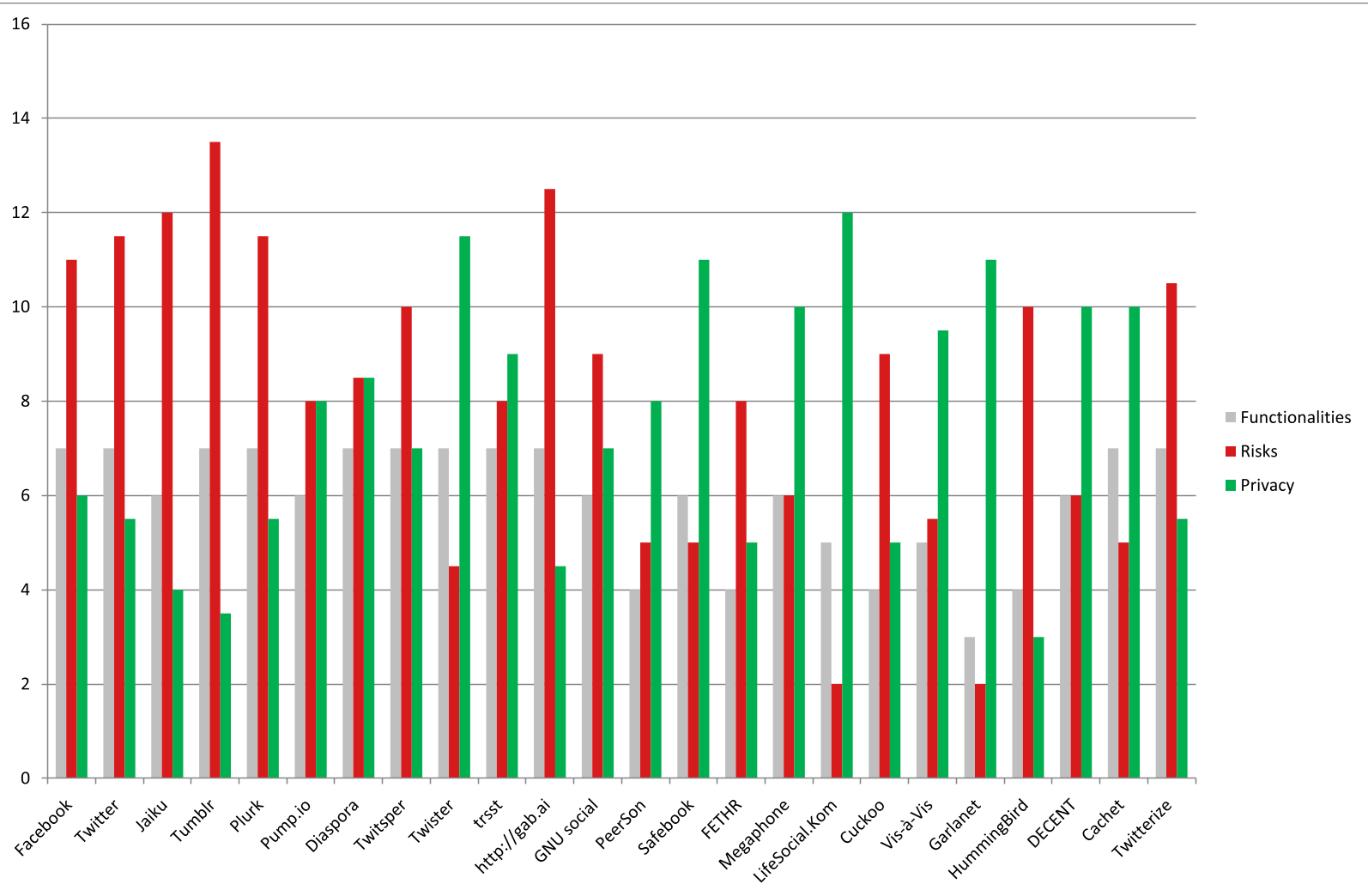
*Figure 1: Comparison of privacy protection techniques vs. functionalities offered. Note how academic proposals often sacrifice features for security.*
## Deep Dive into Mitigation Techniques
The paper analyzes several SOTA mitigation strategies:
* **Anonymization & Differential Privacy**: Adding noise to datasets to prevent re-identification.
* **Attribute-Based Encryption (ABE)**: Used in systems like *Cachet*, allowing users to share posts only with those who satisfy specific criteria (e.g., "is a close friend").
* **Blockchain for Identity**: Systems like *Twister* use Bitcoin-like protocols to ensure username uniqueness without a central registry.
### Structural Comparison of Key Systems
The survey provides a massive data table comparing security and privacy goals. One striking takeaway is the "Default State" of privacy:
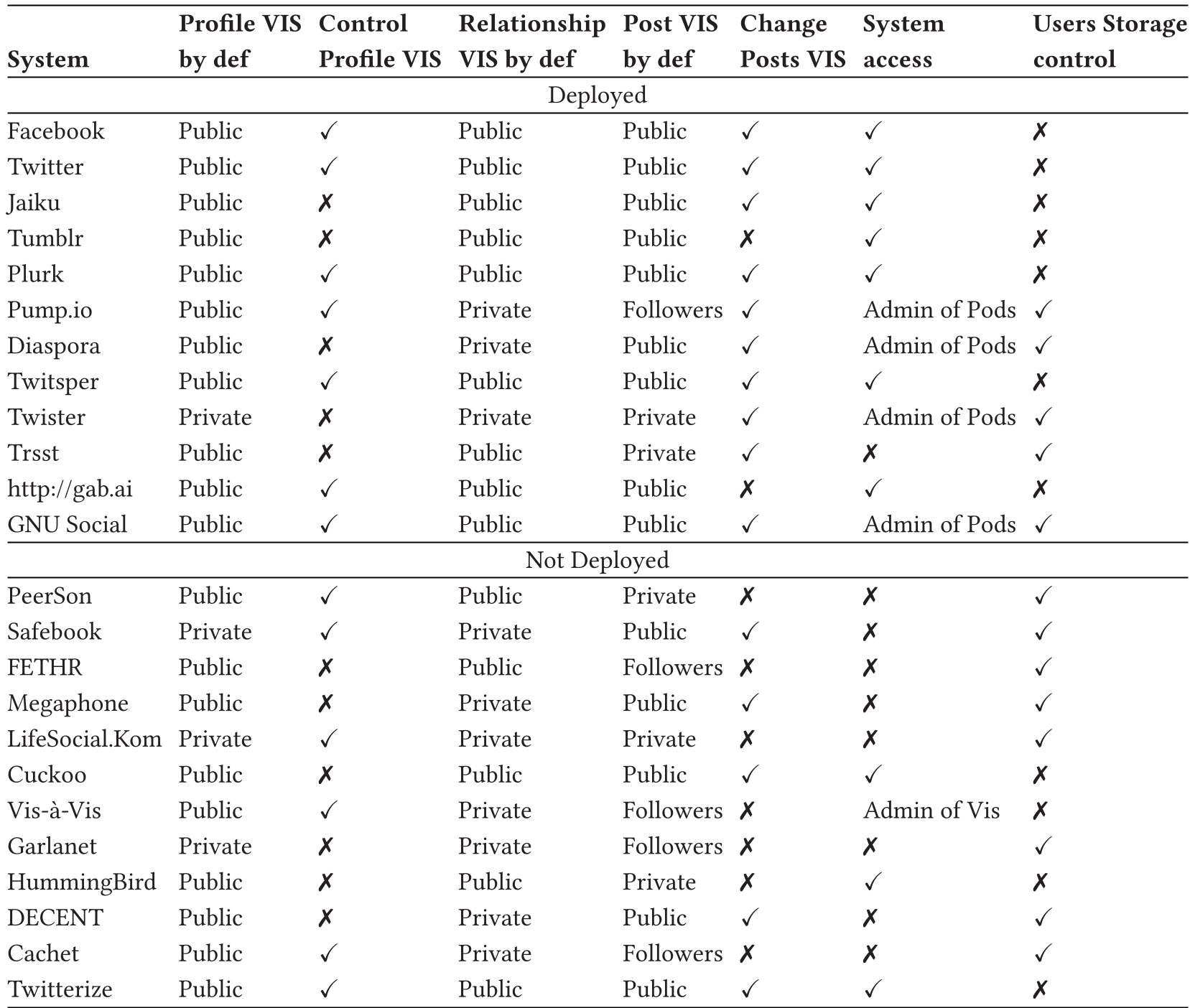
*Table 6: Most deployed systems (Facebook, Twitter, Tumblr) have "Public" default visibility, while academic models like Safebook opt for "Private" by default.*
## Deployed vs. Not Deployed: The Reality Gap
The most innovative privacy-preserving systems (like *Garlanet* or *Safebook*) often remain in the laboratory. Why?
1. **Network Effect**: Users stay where their friends are.
2. **Implementation Complexity**: Key management (storing private keys) is too complex for the average user.
3. **Availability**: In a P2P social network, if your "friend" is offline, you might not be able to see their latest post.
## Critical Analysis & Future Outlook
While the paper was published in 2019, its insights into **Decentralization** foreshadowed the recent "Fediverse" movement (Mastodon/BlueSky).
**Key Takeaways for Engineers:**
* **Censorship Resistance** is the strongest argument for Decentralization.
* **Metadata is the New Frontier**: Even if message content is encrypted, "who speaks to whom" (the social graph) remains a massive privacy leak.
* **Legislative Alignment**: Systems must move toward "Security and Privacy by Design" to comply with maturing frameworks like GDPR.
## Conclusion
The "Modern OSN" is a trap of convenience. For a social network to be truly private, it must shift from a model of *trusting* a provider to a model of *not needing* to trust a provider. Until decentralized protocols can match the UX of centralized giants, the Privacy Paradox will persist.