
Runet Privacy: A Catastrophic Exposure of 30 Million Profiles
4858_Analysis of privacy in online social networks of runet.
This paper presents a large-scale comparative analysis of privacy in the Russian segment of the Internet (Runet) by crawling 30 million user profiles from five major SNSs like Vkontakte and MoyMir. The study combines automated data mining with a user survey to assess information disclosure patterns and privacy awareness relative to Western platforms.
TL;DR
While Western scholars focused on Facebook, a silent privacy crisis was unfolding in the Russian segment of the Internet (Runet). This study analyzes over 30 million profiles from five major Russian social networking sites (SNSs), revealing that despite users being more "privacy-aware" than their Western counterparts, their data is systematically exposed by platform-level security flaws.
Background: The Uncharted Territory of Runet
By 2010, Facebook and MySpace were the darlings of academic privacy research. However, the Russian-speaking digital world—Runet—remained a "black box." The authors of this paper set out to bridge this gap, investigating platforms like Vkontakte, MoyMir, and Love.Mail.Ru to see if cultural and technical differences changed the privacy landscape.
The Problem: Awareness vs. Architecture
The researchers identified a fundamental tension: users in Runet tend to be more conservative about what they share, but the websites themselves are far less secure than Western flagships.
- Mandatory Exposure: Many sites force users to reveal birthdays or locations to even register.
- Leaky URLs: MoyMir used personal emails in the profile URL, a goldmine for spammers.
- Zero Throttling: Most sites (except Vkontakte) had no protection against rapid automated crawling, allowing digital dossiers to be built in bulk.
Methodology: Crawling 30 Million Lives
The team developed a custom C# crawler to analyze the infrastructure of five SNSs. They didn't just look at code; they surveyed real people to understand the "Why" behind the data.
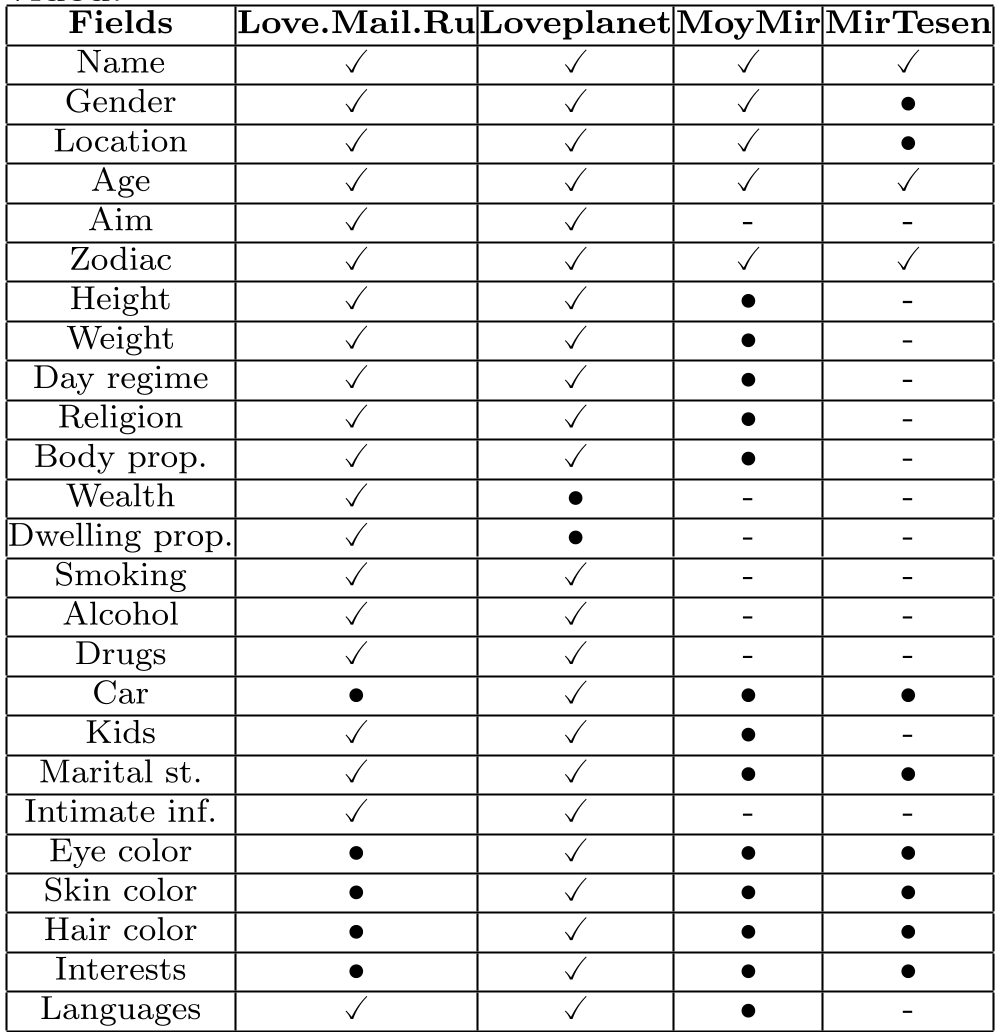 The table above highlights how different platforms vary in mandatory and available data fields.
Key Findings: The Paradox of Trust
The results provide a fascinating contrast to "Western" social media behavior:
- Lower Voluntary Disclosure: Runet users share less sensitive data (like sexual orientation) even on dating sites compared to Facebook students.
- Higher Privacy Concern: Survey data showed a significant distrust in platform security (scoring as low as 1.98/5.0).
- Failed Protection Strategies: Because platforms lack fine-grained privacy controls, Runet users resort to falsifying data (faking names or ages) more frequently than Western users.
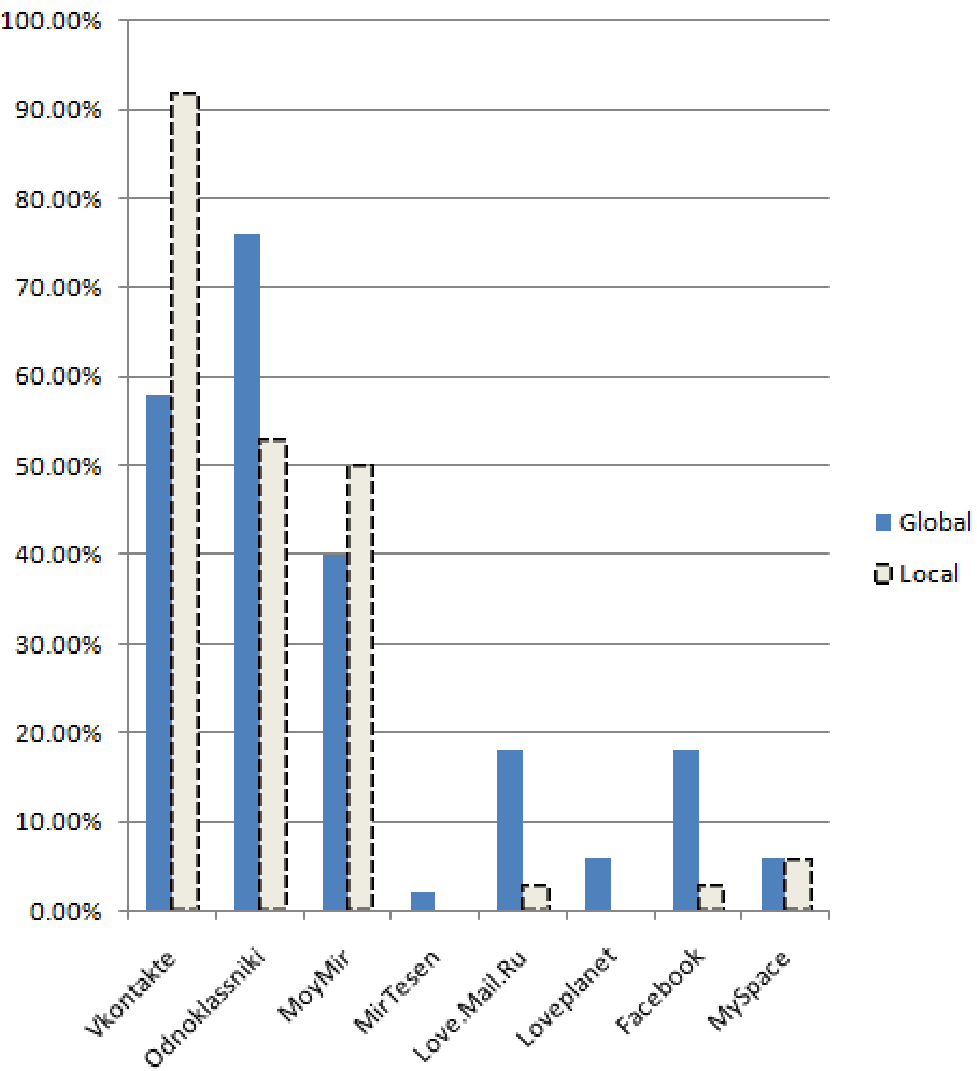 The distribution of social network usage among the surveyed Global and Local groups.
Experimental Insight: The Vulnerability of "Open" Networks
The researchers found that while users think they are being private, the defaults betray them. In MirTesen, nearly 99% of users left their friends lists open to the public. In Vkontakte, while privacy settings were more robust, the provider still forced the disclosure of 30% of personal info before allowing peer-to-peer communication.
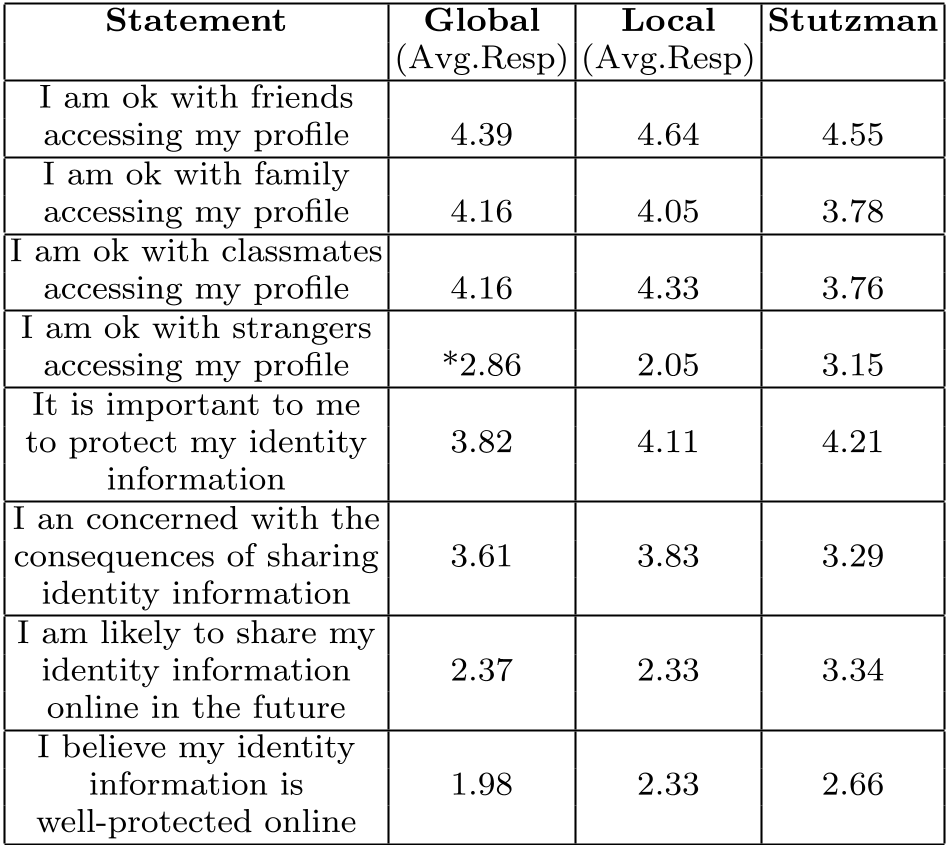 A comparison of trust attitudes, showing Runet users are generally more skeptical of "strangers" and platform protection than Western users in previous studies.
Critical Insight & Conclusion
The paper concludes that privacy in Runet is in a "catastrophic" state, not necessarily because users are reckless, but because the platform architecture is hostile to privacy.
Takeaway: The study suggests that individual "privacy awareness" is insufficient if the platform is designed for extraction. The authors call for legal frameworks (similar to HIPAA in medicine) to regulate what personal data social networks are allowed to demand from their members. As we look at the evolution of data privacy, this work remains a stark reminder that technical defaults usually trump user intentions.