
Decoding the Silhouette: How Privacy Antecedents Shape What We Share on Facebook
Privacy antecedents for SNS self-disclosure: The case of Facebook
This study investigates the complex relationships between multiple privacy-related antecedents and self-disclosure on Facebook. Using Structural Equation Modeling (SEM) on a survey of 661 users, the paper validates a holistic model integrating constructs like privacy awareness, social norms, and policy to predict disclosure behavior.
TL;DR
Why do we post personal details online despite constant news about data breaches? This study deconstructs the psychological and structural drivers of Facebook self-disclosure. By modeling factors like social pressure, policy awareness, and perceived control, the researchers found that while strict privacy policies and high awareness increase concerns, the "internal value" we place on privacy can actually lead to more sophisticated, high-volume sharing.
The "Privacy Paradox" and the Need for a Holistic Model
The digital age has introduced a fundamental tension: the social necessity of sharing versus the individual need for privacy. Existing literature often treats "privacy concern" as a monolithic barrier to sharing. However, the authors argue that this is too simplistic. Users aren't just reacting to fear; they are navigating a complex landscape of social norms (what friends think), legal frameworks (privacy policies), and personal values.
Most prior work focused on the "what" (what do people share?). This paper shifts the focus to the "why" and "how," utilizing the Communication Privacy Management (CPM) theory to view privacy as a dynamic process of opening and closing boundaries.
Methodology: Mapping the Privacy Mindset
The researchers developed a structural model to test how four independent "inputs" affect our internal state and our ultimate sharing behavior.
The Core Framework
- Inputs: Privacy Awareness, Social Norms, Privacy Policy, and Privacy Control.
- Mediators: Privacy Value (how much you care) and Privacy Concerns (how worried you are).
- Outcome: Self-Disclosure (the depth and breadth of your profile).
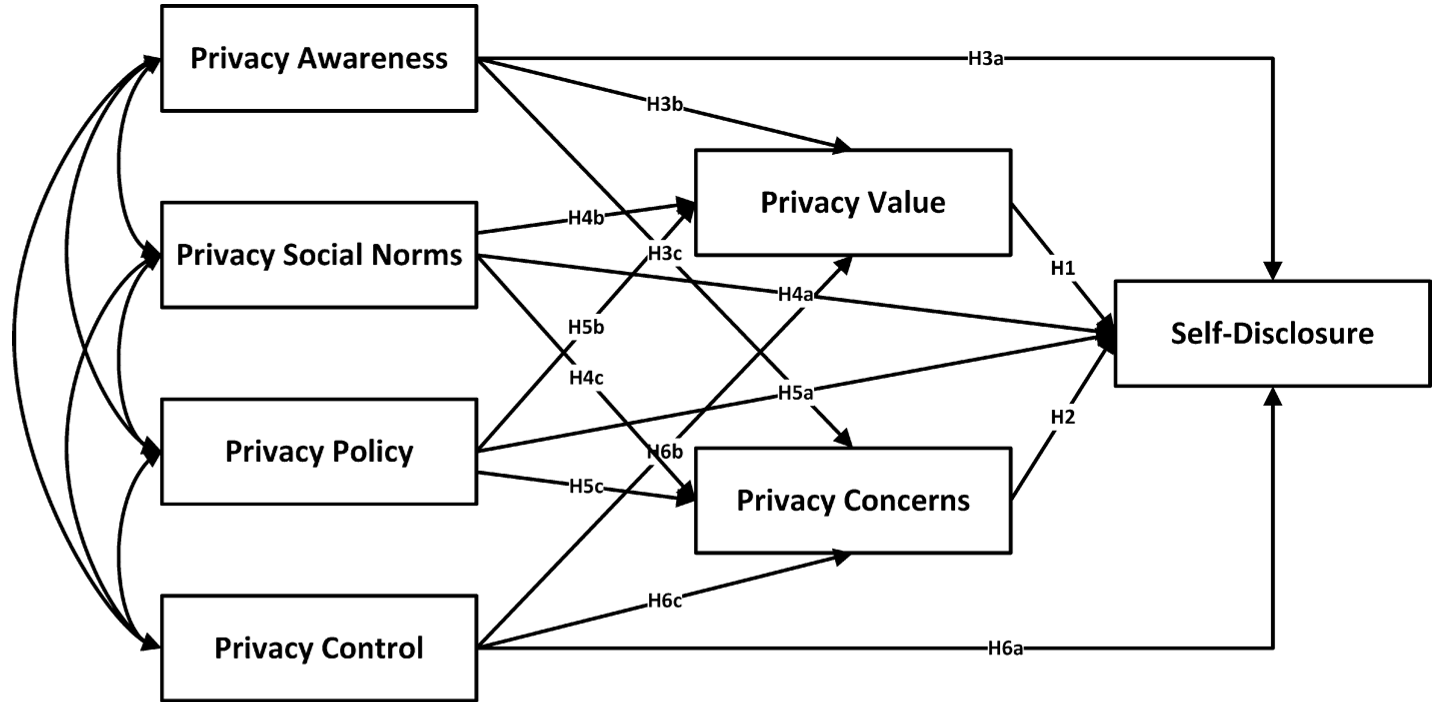
The study utilized a sample of 661 Facebook users, applying Structural Equation Modeling (SEM) to validate the "paths" or influence levels between these constructs.
Key Findings: The Power of Policy and the Irony of Value
The results from the path analysis (shown below) revealed some counter-intuitive truths about digital behavior.
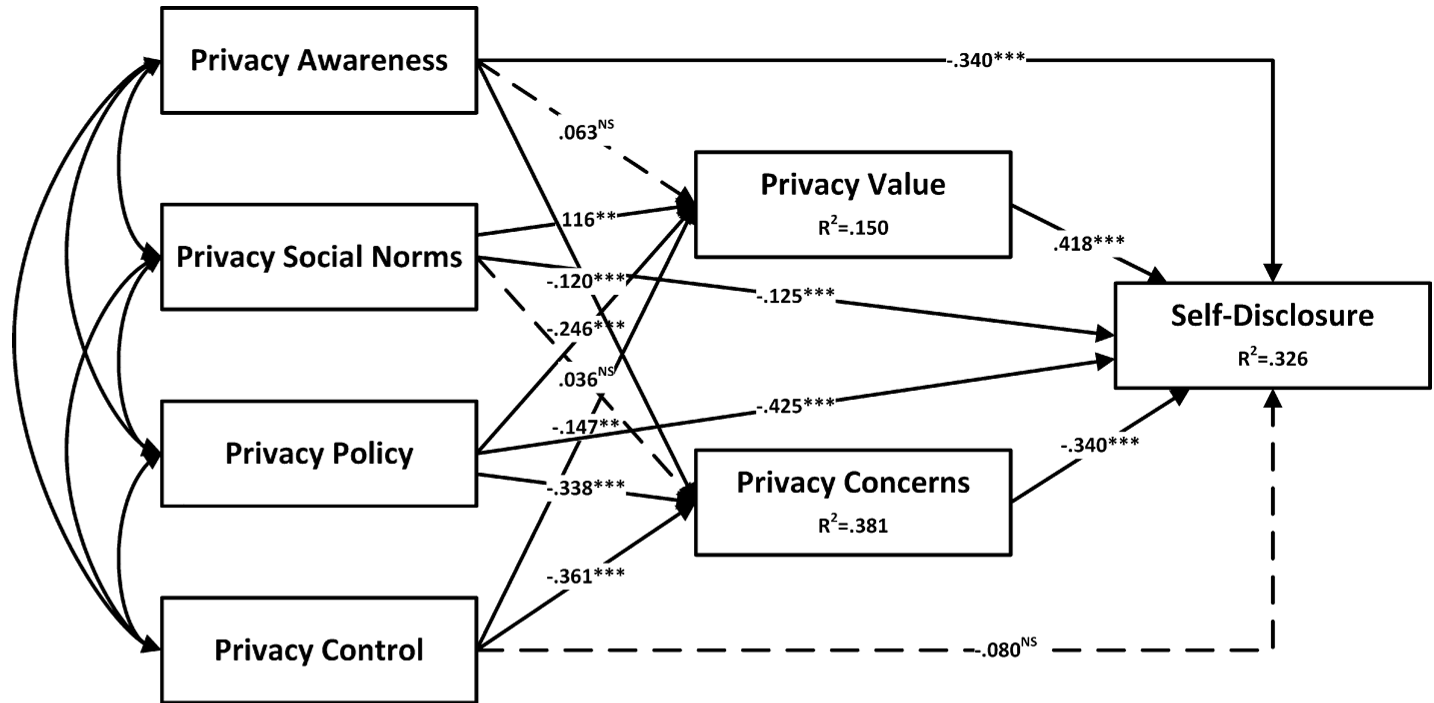
1. The Policy Effect ()
The most significant negative impact on disclosure came from Privacy Policy. When users actually understand and engage with the policy, they share significantly less. This suggests that the "fine print" acts as a sobering reminder of data permanence.
2. The Privacy Value Paradox
Surprisingly, Privacy Value had a positive impact on self-disclosure (). Users who place a high value on privacy don't necessarily go "dark"; instead, they likely feel more confident navigating the platform because they think they are managing their boundaries effectively.
3. The Role of Social Norms
If your friends believe privacy is important, your disclosure drops. This reinforces the idea that privacy is not just an individual choice, but a collective social performance.
Experimental Validation
The study achieved high statistical rigor, with model fit indices (GFI = 0.986, CFI = 0.978) well above the recommended thresholds.
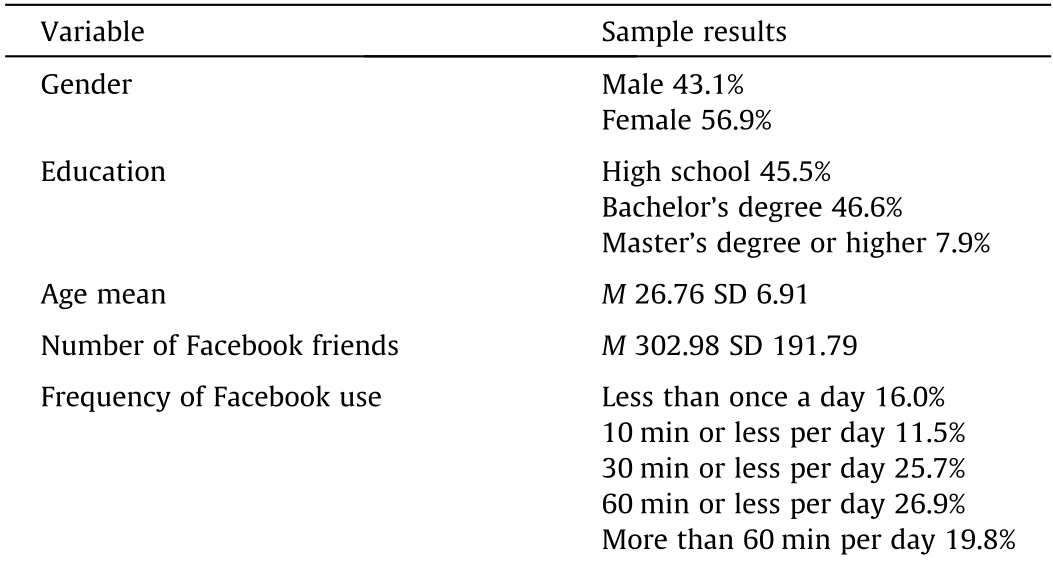
The demographic spread—balanced between genders and covering ages 18-65—ensures that these findings aren't just limited to "tech-savvy" younger generations but represent a broader cross-section of the Facebook user base.
Critical Insight: What This Means for the Future
The most profound takeaway is that control does not equal privacy.
The study found that while participants felt they had Privacy Control, this did not directly reduce their level of sharing. In fact, providing users with more "control knobs" can create a false sense of security, encouraging them to disclose more information than they otherwise would.
Limitations
- Self-Reporting: The study relies on what users say they do, which might differ from their logged behavior.
- Platform Specificity: Facebook's unique social architecture (the "walled garden") may influence these results differently than "public-by-default" platforms like X (Twitter).
Conclusion
This research provides a roadmap for understanding the psychological gatekeepers of our digital identities. It suggests that if we want to encourage safer online behavior, we shouldn't just focus on "settings," but on increasing Privacy Awareness and the transparency of Privacy Policies, as these are the levers that most effectively moderate self-disclosure.