
PPIPM: Bridging the Gap Between Information Sharing and Privacy Propagation
Privacy-Aware Personal Information Propagation Management in Social Networks
This paper introduces PPIPM (Privacy-aware Personal Information Propagation Management), a framework that leverages Role-Based Access Control (RBAC) to manage the spread of personal data in social networks. By combining a novel role mining algorithm (RMPM) with a maximum-permission authorization strategy (MAPM), it restricts information propagation based on user-defined privacy expectations.
TL;DR
Sharing technical or personal updates on social networks often feels like a gamble—once posted, the "reach" is out of your hands. PPIPM (Privacy-aware Personal Information Propagation Management) is a new framework that treats privacy not just as a "who can see this" list, but as a "how far can this go" constraint. By mining social roles and using a knapsack-optimization approach, it allows users to specify a privacy expectation (e.g., "limit reach to 30% of standard propagation") while maximizing the number of friends authorized to see the post.
Background: The Scalability and Reach Paradox
Traditional access control models like RBAC or ABAC are great for enterprise systems but fail in the chaotic environment of Online Social Networks (OSNs). Users have hundreds of friends with varying levels of trust, making manual policy configuration a nightmare. More importantly, existing models focus on access, not propagation. Even if you only share a post with your "Close Friends," the network structure might allow that information to leak much further than intended.
The technical challenge lies in identifying groups of friends who act similarly in a network and then mathematically selecting which groups should be granted access to satisfy a specific propagation limit.
Methodology: The PPIPM Framework
The researchers broke the problem into two distinct, independent modules:
1. Role Mining for Propagation Management (RMPM)
Instead of simple grouping, RMPM uses a clustering approach on the user's Ego-network (the one-hop subgraph around them). Unlike previous methods that only look at friend attributes (e.g., "Colleagues"), RMPM incorporates:
- Strong Associations: Direct edges between friends.
- Weak Associations: Similarities in attributes (profiles) and propagation characteristics (how many mutual friends they interact with).
This ensures that a "Role" isn't just a label, but a group of people who are likely to propagate information in a similar pattern.
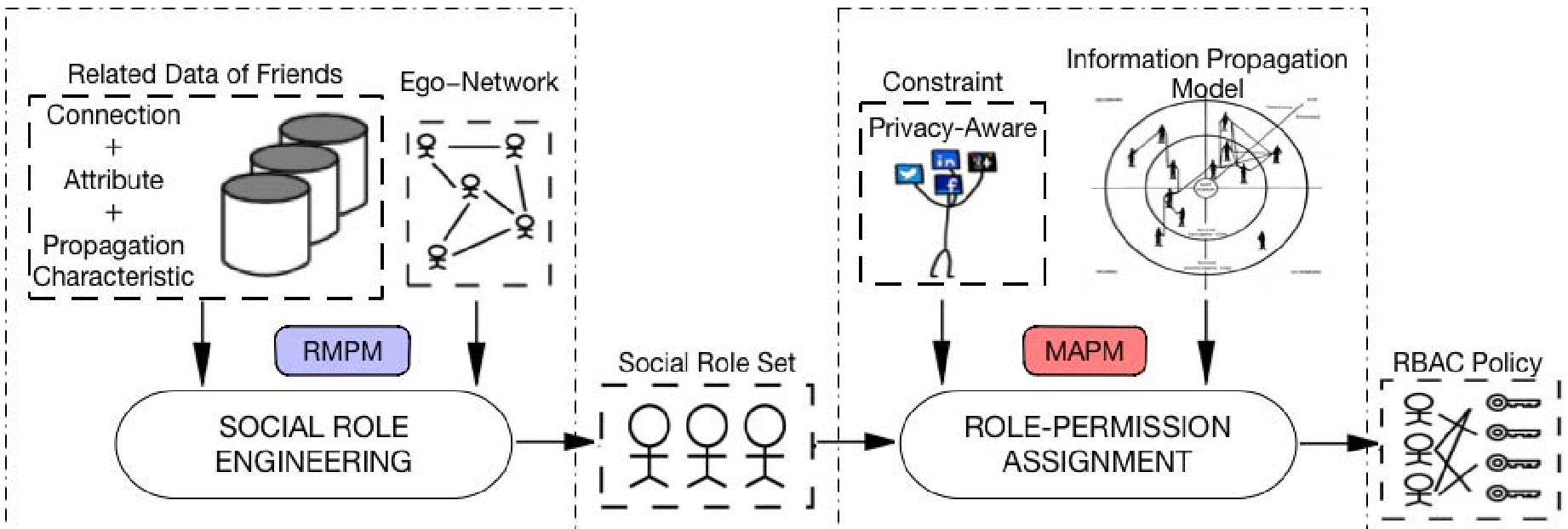
2. Maximum-permission Authorization (MAPM)
Once roles are defined, the system needs to decide which roles get "Permission" to see a new post.
- Measuring Capability: Using the Independent Cascade Model, the system calculates the Role's Propagation Capability (RPC)—a normalized score of how far a role can spread a message.
- Optimization: The task is transformed into a Knapsack Problem. Given a user's privacy threshold (the "bag" capacity) and the number of friends in each role (the "value"), the algorithm selects roles that maximize the total number of authorized users without exceeding the propagation limit.
Experimental Validation
Using Facebook data from SNAP, the authors compared RMPM against standard Social Circle (SC) clustering and community detection (CESNA).
Key Findings:
- Safety: As shown in the "Actual information propagation range" graph, all models successfully kept propagation below the user's threshold ().
- Utility: PPIPM (using RMPM) consistently allowed a higher ratio of authorized friends to view the content compared to competitors. This satisfies the "Maximum-permission principle"—the idea that a privacy tool shouldn't be so restrictive that it kills the "social" aspect of the network.
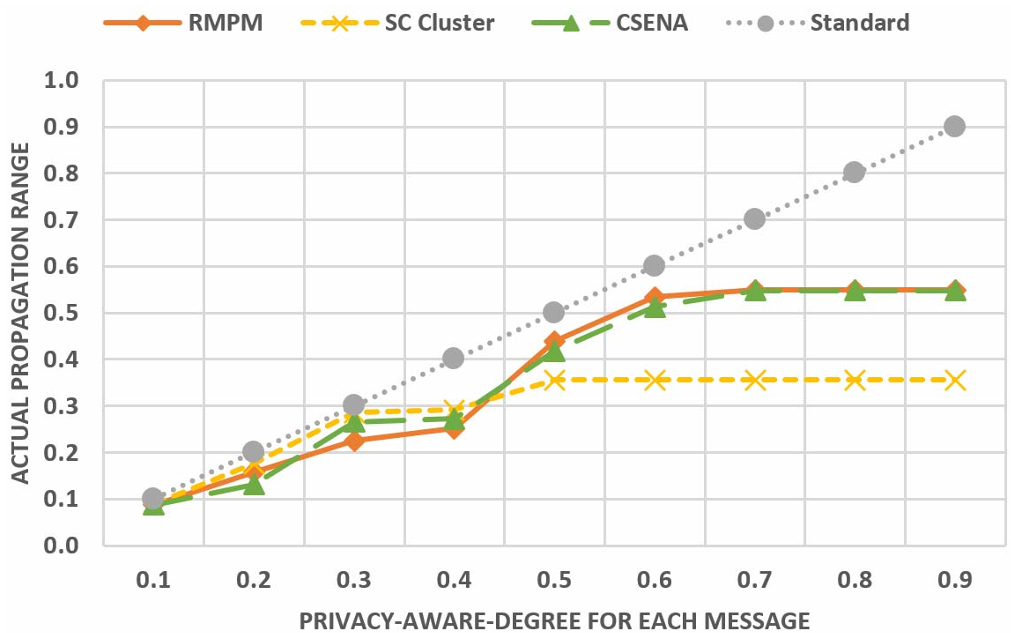 Fig 3. shows that the actual reach (lines) consistently stays under the user-defined threshold (delta).
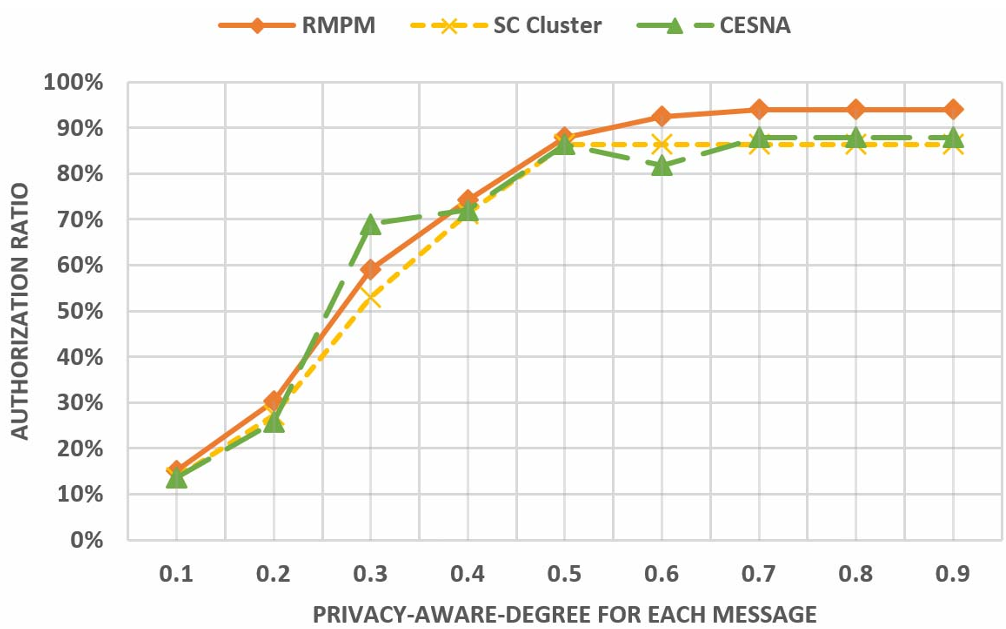 Fig 4. highlights RMPM's superior ability to grant more permissions while remaining safe.
Critical Insight: Why This Matters
The core genius of this work is the decoupling of role mining from authorization. By treating the authorization step as a mathematical optimization, the system moves away from "all-or-nothing" privacy settings.
Limitations: The current model assumes a static Ego-network. In reality, social networks are highly temporal; a "close friend" today might be inactive tomorrow. Additionally, the framework relies on having access to friend-of-friend connection data (the Ego-network), which many modern platforms (like the post-Cambridge Analytica Facebook API) now strictly limit for third-party developers.
Conclusion
PPIPM represents a shift toward Intent-Based Privacy. Instead of asking a user "Which 500 friends should see this?" it asks "How private is this post to you?" and handles the heavy lifting of graph theory and optimization to enforce that intent. For future OSNs, this could be the blueprint for "Smart Privacy" toggles that actually work.