
DES-TraVec: Securing the Future of Trajectory Crowdsourcing with TPR*-Trees
Privacy-aware task data management using TPR*-Tree for trajectory-based crowdsourcing
The paper introduces DES-TraVec, a privacy-preserving framework for trajectory-based spatial crowdsourcing that combines 3DES encryption with Compressive Sensing (CS). It utilizes an extended TPR-Tree* index to manage encrypted trajectory data and support real-time task queries from service providers.
TL;DR
To address the dual challenge of location privacy and real-time processing in spatial crowdsourcing, this paper presents a hybrid framework. It uses 3DES for data transit security, Compressive Sensing (CS) for trajectory recovery at the server, and an optimized TPR*-Tree for high-speed indexing. The result is a system capable of handling thousands of moving participants without exposing their raw movement paths to eavesdroppers.
The "Anonymity Paradox" in Trajectories
In spatial crowdsourcing (e.g., traffic monitoring or environmental sensing), protecting a user's location isn't as simple as hiding a single point. Trajectories carry temporal correlations; an attacker who steals a sequence of anonymous points can often "connect the dots" to reveal a user's home, workplace, or identity.
While previous works suggested matrix-based public key cryptography, they suffered from latency issues. Decrypting a massive matrix of trajectory data using genetic algorithms is too slow for "near-real-time" services like live traffic updates.
Methodology: High-Speed Privacy
The authors' core insight is that traffic on a highway exhibits low-rank properties—vehicles move at similar speeds in predictable directions.
1. DES-TraVec Cryptography
Instead of heavy asymmetric encryption, the system uses a 3-Step process:
- Task Distribution: The server sends 3DES keys and task parameters to participants.
- Vector Perturbation: Participants encrypt their trajectory vectors locally.
- SVD-based Recovery: The server collects trajectories into an matrix and uses Singular Value Decomposition (SVD) to recover the original data.
2. The TPR*-Tree Advantage
Standard R-Trees are static. The Time Parameterized R-Tree (TPR-Tree)** is designed specifically for moving objects. The authors improved this by implementing a bulk-load algorithm, allowing the server to insert entire groups of recovered trajectories from the same area/time simultaneously, drastically reducing overhead.
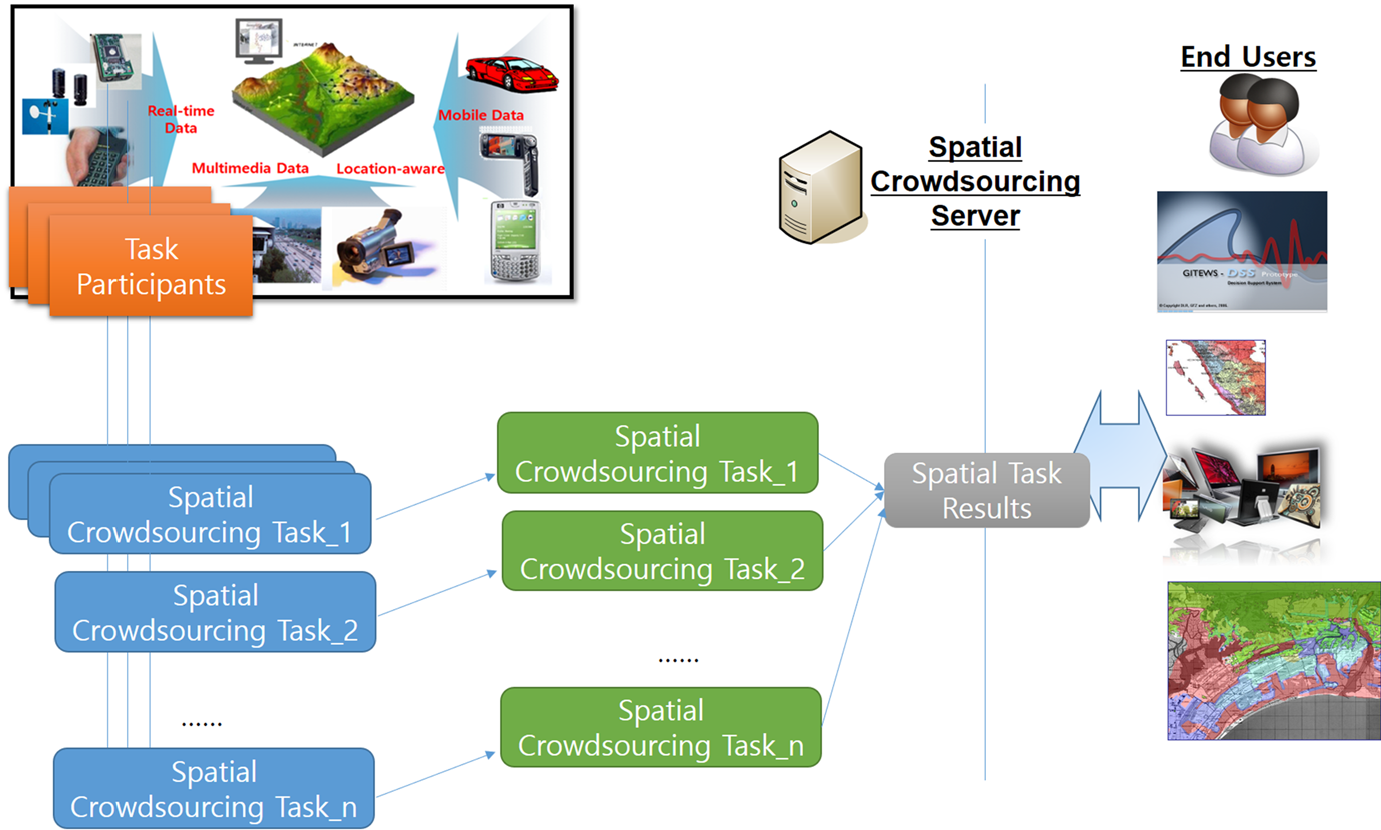 Figure 1: The general spatial crowdsourcing workflow from task propagation to result collection.
Experimental Validation
Using a massive dataset of 40 million data points from Chongqing highway traces, the researchers compared their method against PPCS (Privacy-Preserving Compressive Sensing) and standard tree structures.
- Decryption Speed: By replacing genetic algorithms with an experience-matrix-based estimation, the decryption cost remained nearly linear even as the number of trajectories scaled, whereas PPCS costs spiked.
- Indexing Performance: The TPR*-Tree outperformed R-Tree and MVR-Tree in insertion speed, proving vital for high-velocity sensor data.
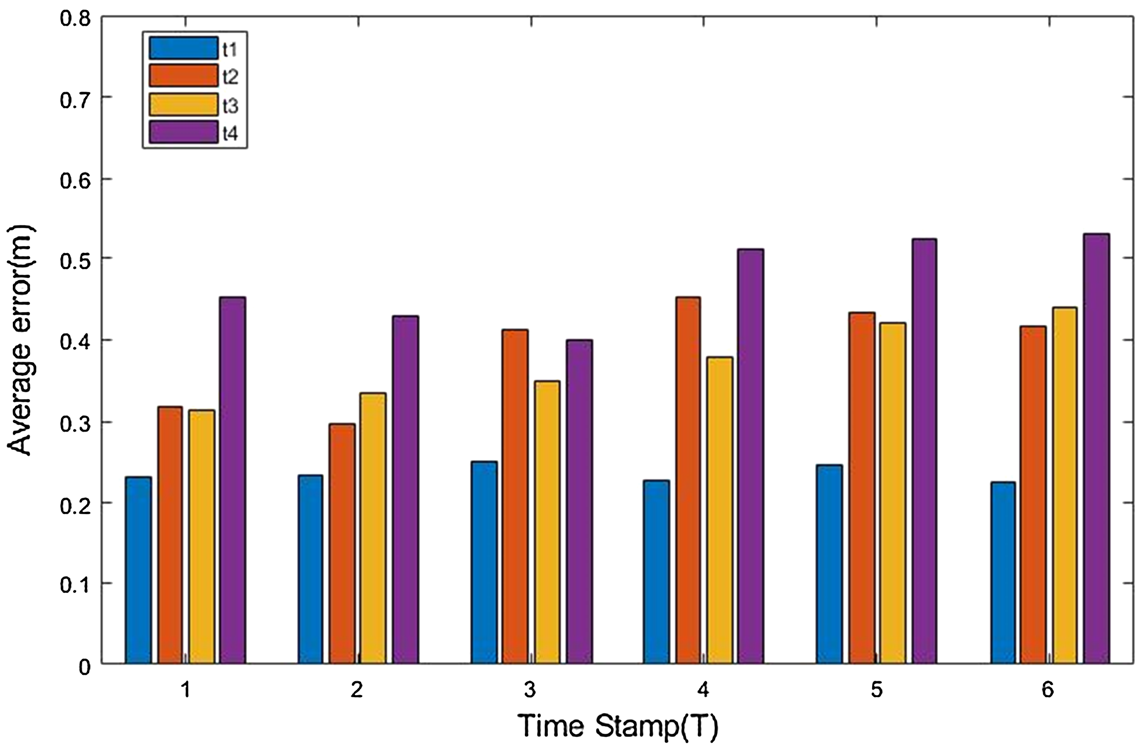 Figure 2: Recovery error rates and decryption cost comparisons.
Critical Insight
The paper's strongest contribution is the transition from theoretical privacy to industrial feasibility. By acknowledging that "exact" decryption isn't always necessary—provided the recovery error is low—they unlocked the ability to use "experience matrices" to speed up the math.
Limitations: The reliance on "low-rank" properties means this method works best in structured environments like highways. In chaotic urban environments with unpredictable pedestrian movements, the recovery error might increase.
Future Outlook
The authors suggest that moving the matrix estimation to the GPU could further reduce bottlenecks. As we move toward 6G and ubiquitous sensing, the DES-TraVec approach offers a blueprint for balancing the public's need for data with the individual's right to privacy.