
Unmasking Your Social Life: How GPS Data Leaks Your Private Relationships
Privacy breach of social relation from location based mobile applications
The paper investigates social relationship leakage through Location-Based Services (LBS). Using the "Mobishare" app and Facebook friend lists, the authors developed a spatio-temporal correlation method to infer user relationships (friends, colleagues, or strangers) based on GPS proximity and habitual patterns, achieving high accuracy in predicting real-world ties without user consent.
TL;DR
Think your location data only shows where you are? Think again. This research demonstrates that by analyzing simple GPS "lat-long" pairs alongside public social media friend lists, third parties can accurately map out your social circle—identifying your colleagues, best friends, and even roommates—all without your explicit consent. By calculating a "percentage of togetherness" across different times of the day, researchers could predict real-world relationships with alarming precision.
Background: The Invisible Social Map
We live in an era where 1.75 billion people carry sophisticated tracking devices in their pockets. While applications like "Mobishare" or navigation tools use GPS for convenience, they simultaneously build a digital breadcrumb trail. The authors of this paper argue that these trails are not just individual footprints; when they overlap, they form a "Social Graph" that mirrors our offline lives.
The Core Motivation: Beyond Individual Privacy
Most privacy research focuses on hiding where an individual is (e.g., hiding a home address). However, this paper addresses a more subtle threat: Social Relation Leakage. The insight is simple:
- Colleagues are together from 9 AM to 5 PM.
- Friends are together during evening hours or weekends.
- Family/Roommates overlap during "relaxation hours" (late night/early morning). By correlating these temporal buckets with Facebook data, the researchers sought to prove how easily "private" relationships can be reverse-engineered.
Methodology: The "Togetherness" Calculus
The researchers utilized a dataset from the Mobishare application, involving 55 users and over 1.5 million GPS points. Their approach followed a three-step logic:
- Spatio-Temporal Filtering: They identified "encounters" where two users were within meters of each other. They allowed a 15-minute time window to account for GPS logging inconsistencies.
- Slot-Based Analysis: They divided the 24-hour cycle into:
- 9 AM - 5 PM: Professional/Working hours.
- 5 PM - 10 PM: Social/Leisure hours.
- 10 PM - 9 AM: Domestic/Relaxation hours.
- Social Graph Overlay: They used a custom Facebook app to pull friend lists and calculated "Hop Counts" (0 for direct friends, 1 for friends-of-friends).
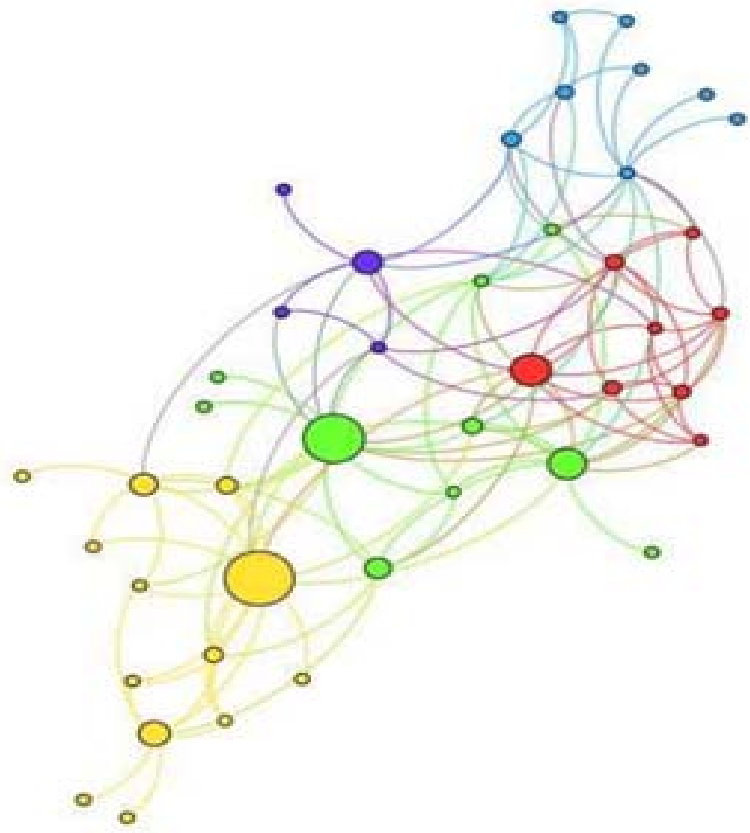 Figure 1: Visualization of the social network clusters within the Mobishare user base.
The math is straightforward: high overlap in the first slot suggests a workplace tie; high overlap in the third slot suggests a domestic tie.
Experimental Insights & Results
The efficacy of the model was validated through manual interviews with the participants (IIIT Delhi students).
- Direct Hits: Out of 62 co-located pairs, 22 were direct Facebook friends.
- Hidden Ties: 11 pairs were co-located but not connected on Facebook. Manual validation revealed these were often people who "meet by chance" or have real-world interactions not yet mirrored online.
- The Power of Time: The researchers noted that high togetherness during the 10 PM - 9 AM slot almost always indicated hostel mates or roommates.
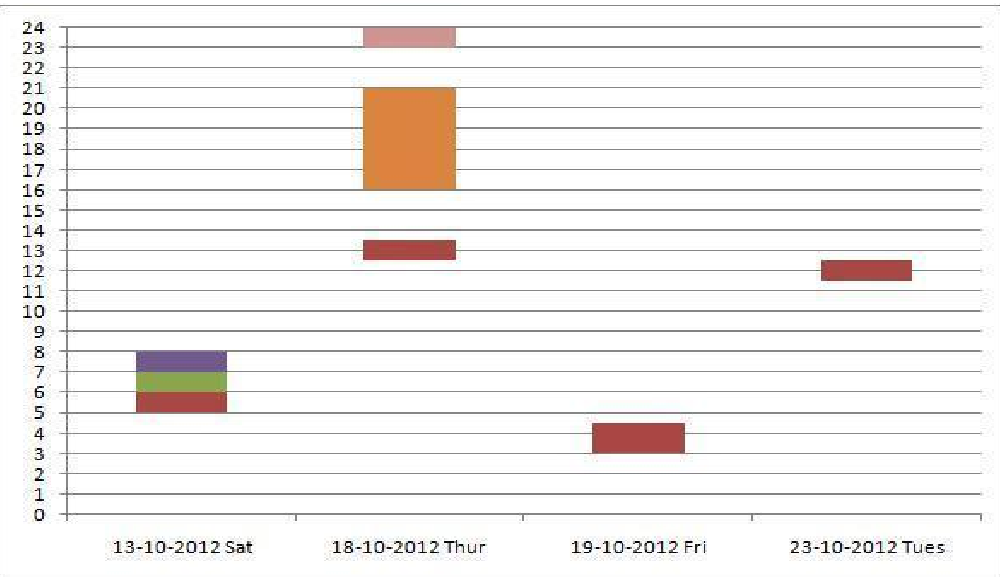 Table II: Mapping the intersection of physical co-location and digital friendship.
Critical Analysis: The Price of Convenience
The study highlights a massive "Privacy-Utility Tradeoff." While the Mobishare app enables seamless file sharing, it acts as a silent informant.
Limitations: The sample size (55 users) is relatively small and homogeneous (university students). Patterns might vary significantly in a more diverse urban population where "proximity" doesn't always imply "interaction" (e.g., living in the same high-rise apartment building).
Future Outlook: The researchers suggest that the number of files shared between users could be an even stronger indicator of relationship strength. For developers, the takeaway is clear: Location data must be cloaked. Methods like adding noise (Differential Privacy) or using "K-anonymity" (ensuring a user is indistinguishable from others) are no longer optional—they are ethical imperatives.
Conclusion
This work proves that your "friend list" isn't just a list on a website; it’s a living map of your movements. If a simple research project could uncover these ties with 2012-era GPS data, the risks posed by modern, hyper-precise tracking are monumental.