
The Deletion Illusion: Why Your "Deleted" Social Media Photos Live On
10444_Privacy Concerns for Photo Sharing in Online Social Networks.
This study investigates the "deletion delay" phenomenon in Online Social Networks (OSNs), revealing that deleted photos often remain accessible via direct URLs for extended periods. The authors evaluate major platforms like Facebook, Instagram, and MySpace in both single-platform and cross-platform sharing scenarios, identifying Twitter as the only platform offering near-immediate deletion.
TL;DR
Think that embarrassing photo is gone once you hit "Delete"? Think again. This paper uncovers the "Deletion Delay" risk across major social networks. While some platforms like Twitter remove content instantly, others like MySpace and Tumblr keep your data accessible via direct URLs for over 30 days. Worse yet, when you share across platforms, "ghost" copies of your images often haunt the internet forever.
Background: The Latency of "Forgotten" Data
In the era of instant gratification, we assume digital deletion is binary. However, this study positions the problem within the complex architecture of Content Delivery Networks (CDNs). When you delete a photo, the platform might remove the pointer in its database, but the image remains cached in edge servers globally to optimize traffic. This gap between the user interface and the physical storage layer is what the authors term Deletion Delay.
The Investigation: How Long Does "Gone" Really Take?
The researchers conducted a systematic audit of prominent platforms, tracking the survival time of image URLs after deletion.
Single-Platform Vulnerabilities
The findings were startling. While Twitter achieved SOTA performance in privacy by invalidating links immediately, other giants lagged behind significantly.
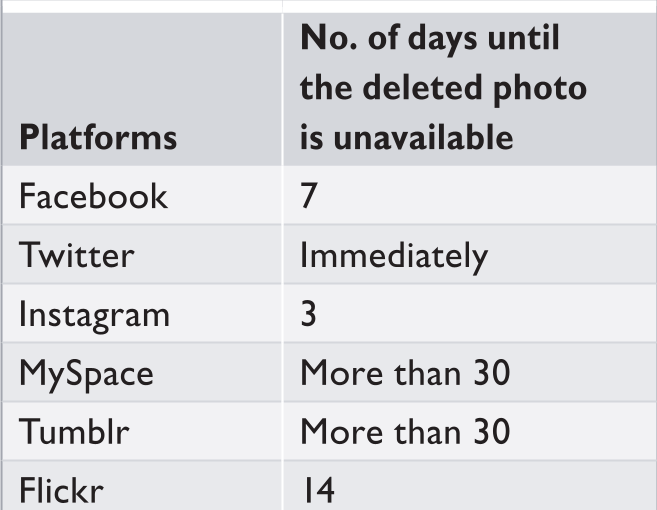
- The Laggards: MySpace and Tumblr showed delays exceeding a month.
- The Giants: Facebook required 7 days for the CDN to flush, meaning anyone with the direct URL could still view the "deleted" content for a full week.
Cross-Platform Leaks: The "Ghost" Photo Problem
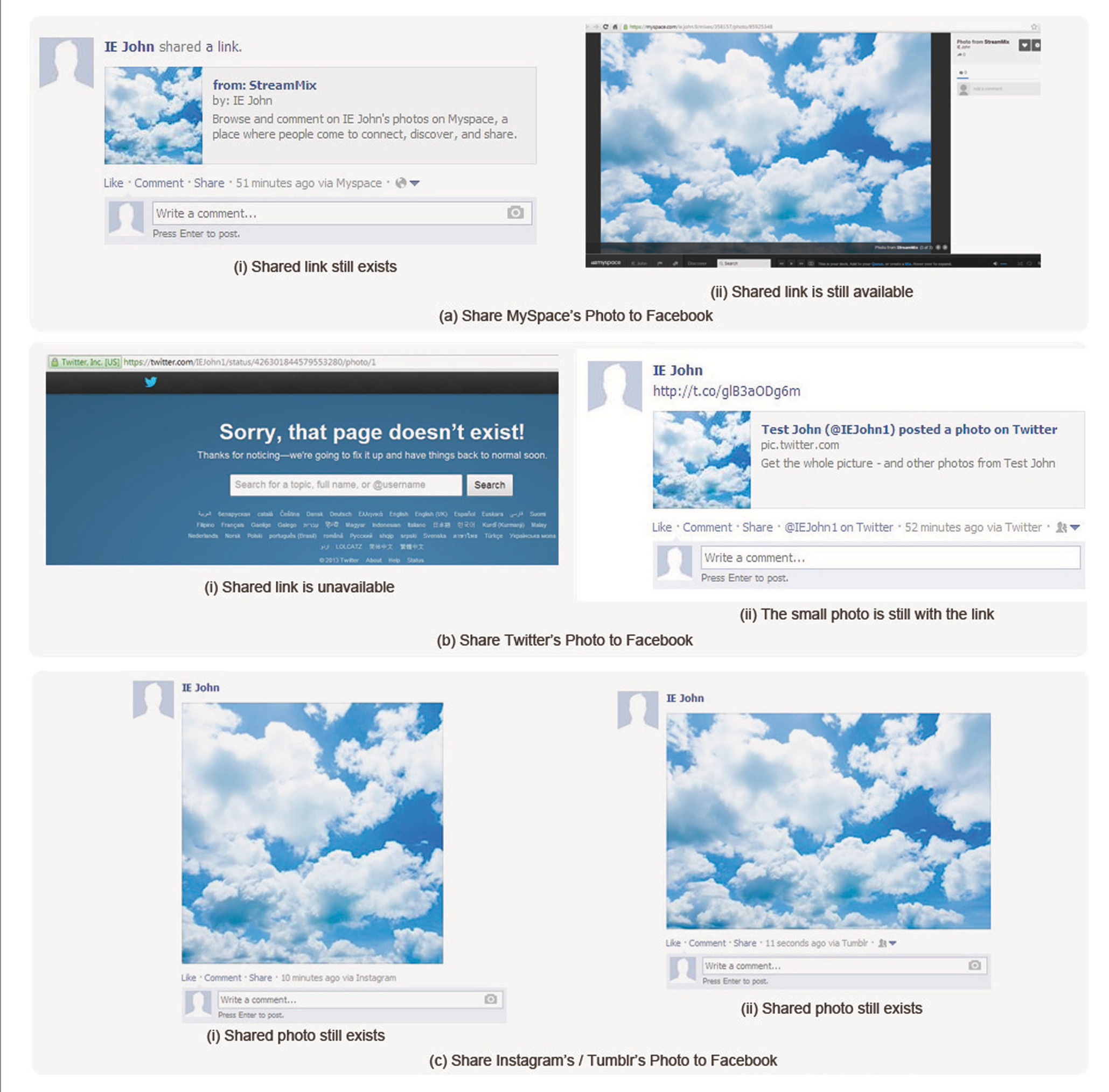
The most significant contribution of this work is the analysis of Cross-Platform Sharing. When you link your Instagram to Facebook, the privacy policy of the destination platform often overrides the intent of the source platform.
Key Findings in Cross-Sharing:
- Direct Copies: Platforms like Tumblr often create a high-resolution copy on their own servers when you "share" from another site. Deleting the source does nothing to the copy.
- Persistent Metadata: When sharing from Flickr to Facebook, the link might break, but a resized "preview" image remains visible on the timeline indefinitely.
Why is this so hard to fix? (The Methodology Layer)
The authors identify a technical bottleneck: OSN backends manage millions of users. Locating and purging a specific file across a globally distributed CDN is computationally expensive and resource-intensive. Current architectures prioritize availability and speed over deletion integrity.
Proposed Countermeasures
The paper suggests a shift from "trusting the platform" to "technological enforcement":
- Shortened CDN TTL (Time-to-Live): Reducing the interval for cache refreshment.
- Attribute-Based Encryption (ABE): Users could encrypt photos before uploading. To "delete," they simply destroy the decryption key held by a trusted third party, rendering the cached images on the OSN server useless (ciphertext is junk).
- Privacy-Enhanced Technology (PET): Implementing standardized protocols for cross-platform deletion requests.
Critical Insight: The Academic Position
This work serves as a foundational "awareness" paper. While it doesn't propose a new math-heavy algorithm, it precisely maps the threat landscape of modern web architecture. It highlights an Inductive Bias in user behavior: the false belief that the GUI represents the total state of the system.
Conclusion
The study concludes that as long as we rely on centralized CDNs, the "Right to be Forgotten" is a technical challenge, not just a legal one. For users, the takeaway is clear: Twitter is the safest harbor for temporary sharing, but in the world of Facebook and Tumblr, "delete" is merely a suggestion.
Follow-up research should investigate if modern Edge Computing and Edge Functions (like Cloudflare Workers) have shortened these gaps in the years since this investigation.