
SmartAssist: Balancing Autonomy and Surveillance in the Silver Economy
Privacy Concerns in a Remote Monitoring and Social Networking Platform for Assisted Living
This paper introduces SmartAssist, a web-based Ambient Assisted Living (AAL) platform that combines in-home wireless sensor monitoring with a social networking infrastructure. It aims to delay nursing home admission for the elderly by connecting them with "Patrons" (family, doctors, and services) while addressing critical privacy challenges inherent in persistent domestic surveillance.
Executive Summary
TL;DR: SmartAssist is a comprehensive AAL (Ambient Assisted Living) portal that merges IoT sensor data with social networking to support elderly independence. By empowering "Patrons"—a network of family and professionals—the system creates a safety net while introducing novel privacy mechanisms like "Privacy Switches" and "Rights of Nescience" to protect the dignity of the users.
As global populations age, the pressure on healthcare systems is reaching a breaking point. SmartAssist positions itself as a critical bridge, moving surveillance from the sterile environment of a nursing home into the comfort of a private residence.
The "Digital Nursing Home" Problem
Traditional remote monitoring often suffers from a paradox: to be safe, the senior must be watched; to be watched, they must surrender their privacy. Prior work often ignores the psychological impact of "constant observation," which can lead to social withdrawal or system rejection. The authors argue that privacy isn't just about data security; it's about Informational Self-Determination—the user's right to decide who knows what, and when.
Methodology: The SmartAssist Architecture
The platform rests on three pillars: Monitoring, Communication, and Services.
1. The Sensor Fabric
Instead of cameras, the system uses non-intrusive ambient sensors (power, water, door cycles) to infer the "Circadian Rhythm."
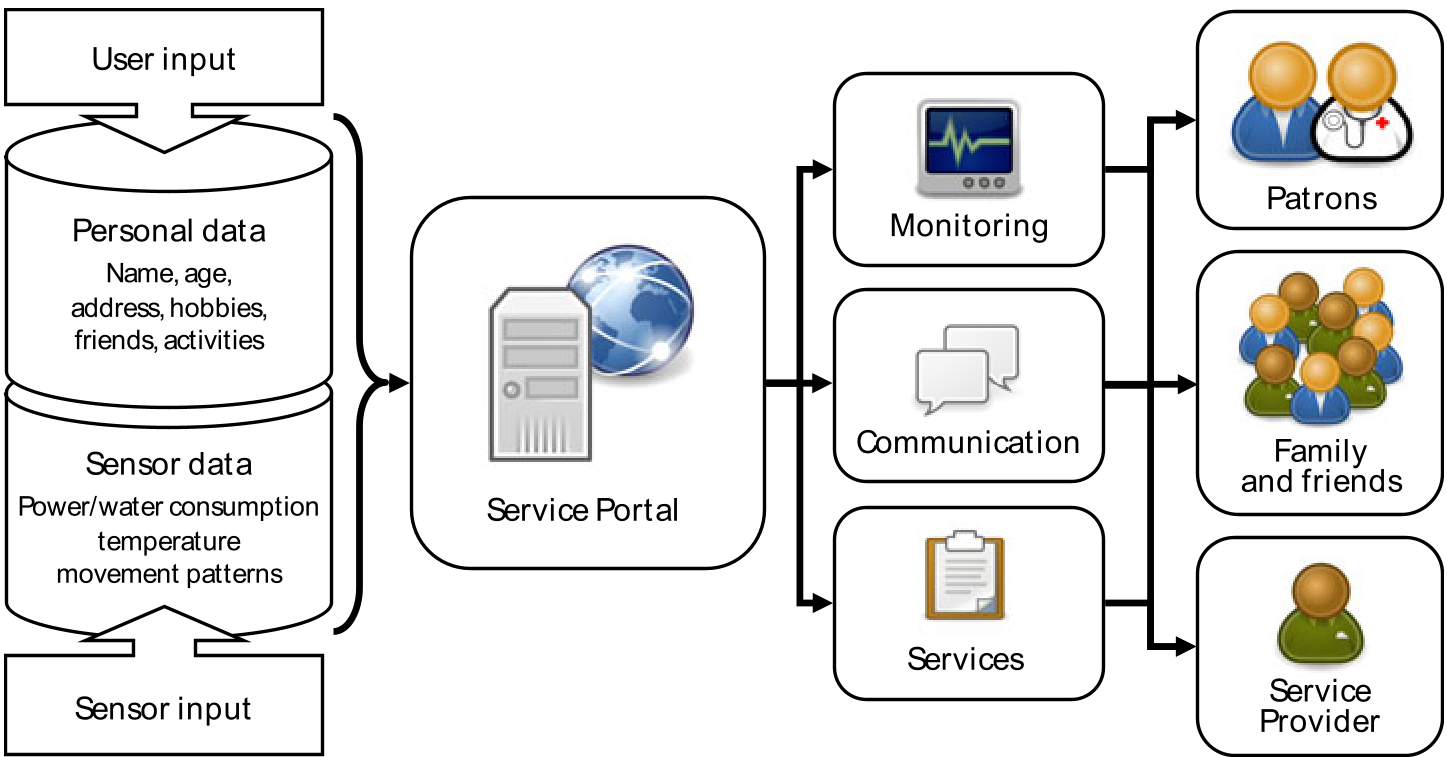 Figure 1: The architecture connects in-home sensors to a residential gateway, then to a secure central portal accessible by various Patrons.
2. Social Networking as a Privacy Shield
One of the paper's most profound insights is the use of social networking to combat depersonalization. By sharing photos and stories alongside medical data, the system reminds Patrons that the "subject" is a human being with a history, which statistically reduces the likelihood of "easy" privacy violations by staff.
3. Privacy Engineering
To solve the surveillance discomfort, the authors propose:
- Physical Privacy Switches: A "Global Privacy" button at the entrance to disable sensors when guests arrive.
- Data Fuzziness: Implementing high-pass/low-pass filters and reversible noise to obscure exact movements while preserving general safety trends.
- The Right of Nescience: A radical ethical stance where certain diagnoses are hidden from the senior until a human doctor can provide a compassionate context.
Critical Insight: Monitoring the Mundane
The system's power lies in its ability to turn everyday actions into safety metrics without being "creepy."
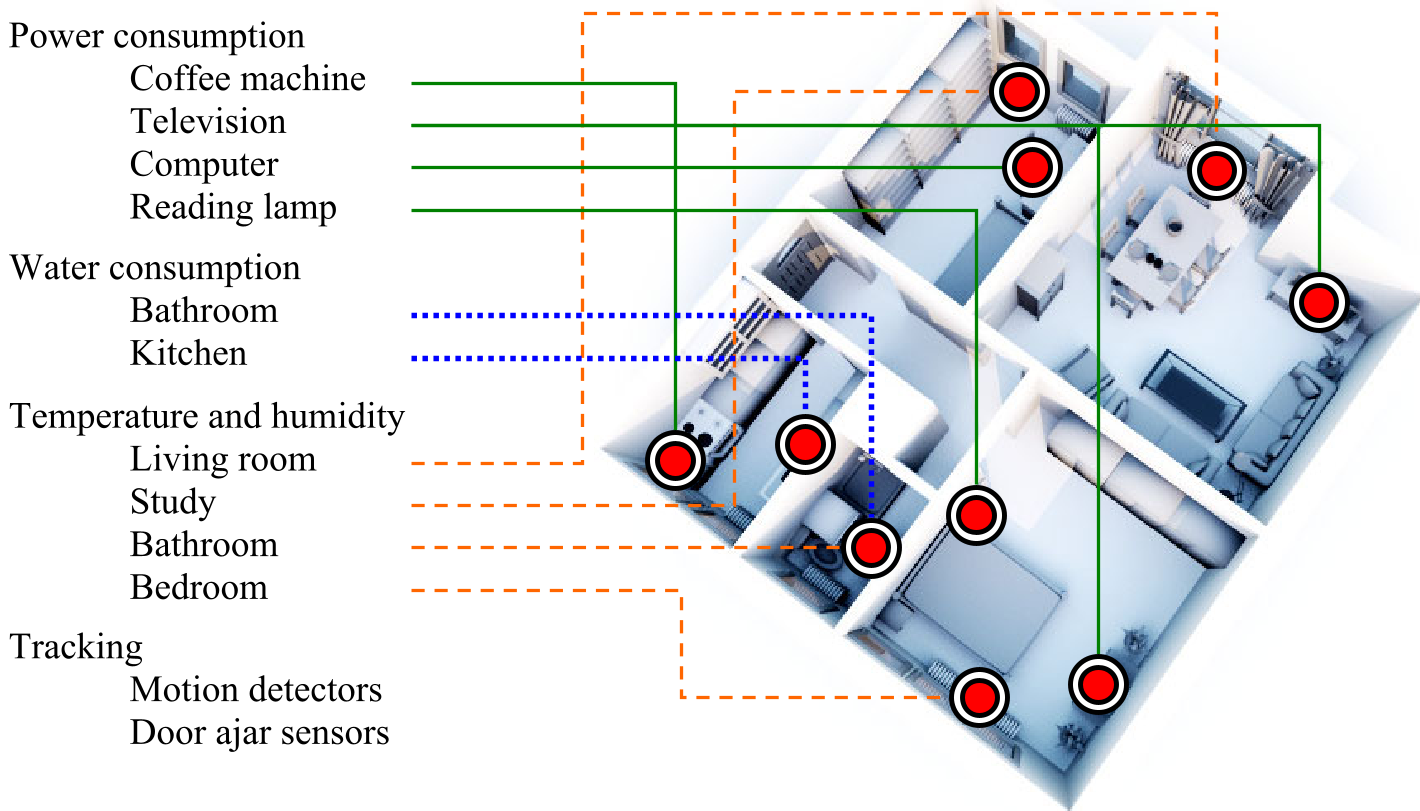 Figure 2: By monitoring the coffee machine or the bathroom's water usage, the system can detect subtle shifts in health (e.g., increased frequency suggesting a UTI) without ever using a camera.
Future Outlook & Limitations
The primary challenge for SmartAssist remains Usability vs. Complexity. As noted in the paper, even tech-savvy students struggle with complex privacy policies. For a 80-year-old user, managing a "Privacy Switch" or understanding "Data Fuzziness" requires a radical simplification of the UI (User Interface).
The next phase involves a large-scale field test in Lübeck, Germany, to determine if these indicators truly provide medical value. The success of SmartAssist will ultimately depend on whether it can remain "invisible" enough to be lived with, yet "vocal" enough to save a life during an emergency.
Conclusion
SmartAssist teaches us that the future of AAL isn't just about better sensors—it's about better human-centric data ethics. By involving "Patrons" and respecting the "Right to be Unknowing," the authors have provided a blueprint for dignified aging in the digital age.