
Beyond the Check-in: Decoding the Privacy Paradox in Chinese Social Networks
Examining Privacy Concern in Social-Driven Location Sharing: An Empirical Study on Chinese Popular SNSs
This paper presents an empirical study on privacy concerns in social-driven Location-Sharing Services (LSS), specifically focusing on popular Chinese Social Networking Sites (SNS) like RenRen. Using a mixed-methods approach (surveys N=522 and 8 in-depth interviews), the authors reveal how situational factors, information types, and user motivations drive location-sharing behaviors.
TL;DR
Is checking into your favorite restaurant an act of social connection or a privacy risk? This study explores the "MP Competition"—the tug-of-war between the Motivation for social self-disclosure and Privacy concerns. Focused on the Chinese Social Networking Site (SNS) landscape, the researchers find that users are highly strategic about where and how they share their whereabouts, often resorting to "fake" data to protect their most sensitive locations.
Context: Why Location Sharing is Different in China
While Western research has extensively covered platforms like Foursquare and Facebook, the Chinese digital ecosystem (dominated by platforms like RenRen at the time of the study) presents a unique case. In China, LSS is predominantly "social-driven" rather than incentive-driven. This paper investigates how cultural and professional identities—specifically the transition from student to employee—alter the perceived stakes of privacy.
The "MP Competition" Framework
The core of the paper lies in the Motivation vs. Privacy (MP) Competition. The authors argue that location sharing is a form of selective self-disclosure.
- Motivation: Users want to build an "interesting" image of themselves (Impression Management) and record memorable events.
- Privacy: Users fear the "unconscious leakage" of their home address or daily routines.
When the motivation to project a high-status or exciting life wins, the location is shared. If the perceived risk to personal safety or professional reputation is too high, the user abstains or obfuscates.
Methodology: Mapping Privacy Across 9 Occasions
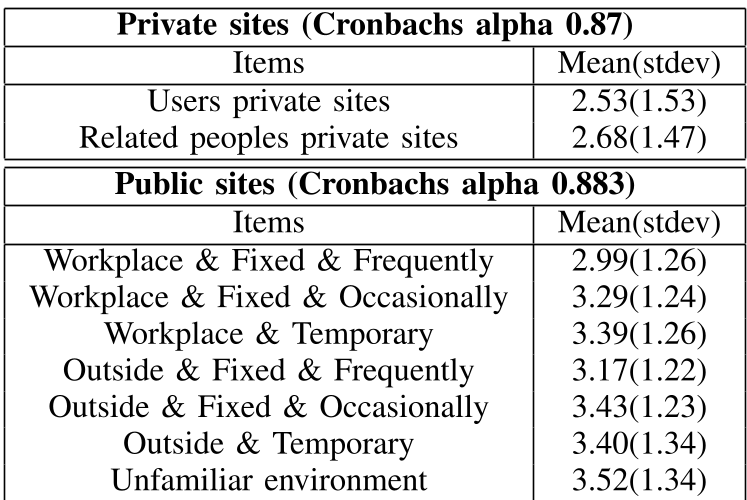
The researchers categorized location-sharing environments into nine distinct "occasions" based on Intimacy and Visiting Frequency.
Core Findings:
- The Frequency Paradox: Users are actually more concerned about sites they visit frequently (like home or the office) than temporary event spaces. Familiarity breeds a sense of vulnerability.
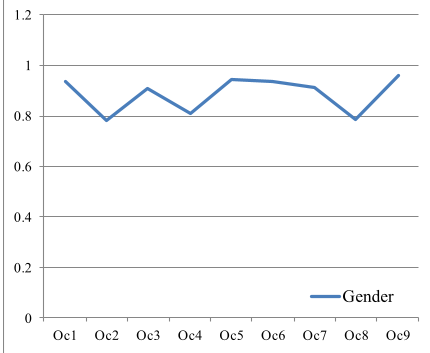
- Professional Sensitivity: Employed individuals show significantly higher privacy concerns than students, especially regarding "Workplace" locations. As social responsibility increases, the willingness to be "tracked" decreases.
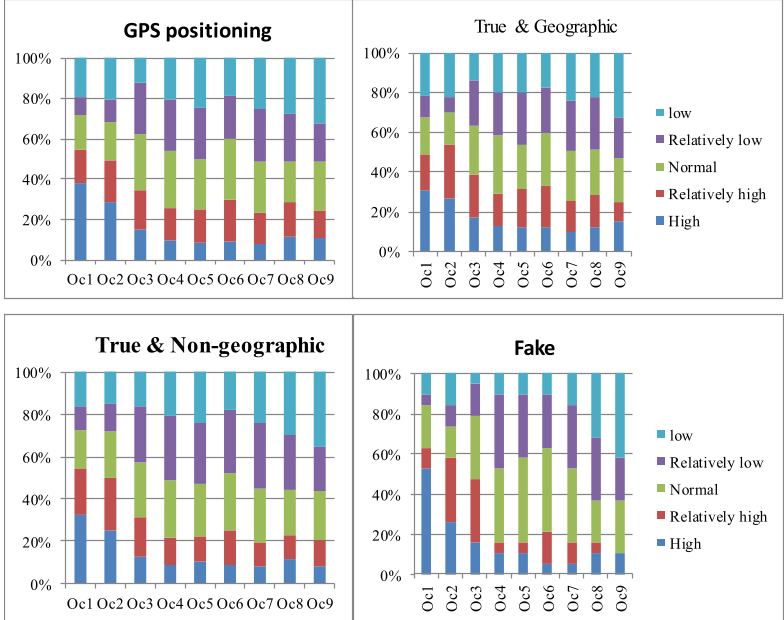
- The Art of "Fake" Sharing: A surprising number of users modify the information provided by their GPS. Those who post "fake" information do so because they have the highest levels of privacy sensitivity but still want to participate in the social ritual.
How Users Cope: Data Obfuscation
The study highlights how users rarely accept "raw" GPS data. Instead, they interact with LSS in three ways:
- Modification: Tweaking a specific address to a more general neighborhood.
- Non-Geographic Sharing: Using the location field to describe a state of mind (e.g., "In a dilemma") rather than physical coordinates.
- Fake Indicators: Manually entering a prestigious or interesting location while physically elsewhere.
Takeaways for Designers and Researchers
- Encourage "Obscurity": LSS providers should offer "fuzzy" location settings by default (e.g., "In Fudan University" rather than "Room 304, Guanghua Building").
- Beyond Coordinates: There is a massive demand for "Virtual" or "Subjective" locations. Users often use location tags as sub-titles for their mood rather than geographic markers.
- The Trust Gap: Most users remain suspicious of service providers. Enhancing transparency regarding how "automatic indicators" (GPS) are stored is critical for user retention.
Conclusion
This empirical study reminds us that location data is not just a point on a map; it is a piece of social currency. In the Chinese SNS context, privacy is managed through a sophisticated process of selective disclosure, where users weigh the social benefit of a "check-in" against the long-term risks of digital stalking and identity exposure.