
Analyzing WhatsApp’s Privacy Architecture: Insights from the Privacy Design Model (PDM)
Analyzing the application of the privacy design model in WhatsApp: a case study
This paper presents a case study applying the Privacy Design Model (PDM) to analyze WhatsApp's privacy settings. It evaluates how design choices impacts user privacy in instant messaging contexts, specifically comparing "Groups" versus "Status" features.
TL;DR
In an era where "Privacy by Design" is often a buzzword rather than a practice, researchers from the Federal University of Minas Gerais applied the Privacy Design Model (PDM) to WhatsApp. By dissecting the platform's "Group" and "Status" features, the study reveals significant discrepancies in how privacy is handled across different communication modes. More importantly, it exposes the limitations of current academic models in capturing the nuances of modern instant messaging, such as "shared spaces" and system-automated information disclosure.
Context: Why Privacy Models Matter
Most users perceive privacy as a simple toggle, but for designers, it is a multi-dimensional challenge. The Privacy Design Model (PDM) was created to bridge the gap between abstract privacy principles and concrete design decisions. It decomposes every instance of sharing into two levels:
- User-System-User Communication: Who is sharing? Where? To whom?
- Communication Effects: Is the user notified? Is the information disseminated or highlighted by the system?
Methodology: The Hexagonal Lens
The authors analyzed WhatsApp version 2.20.193.1, focusing on two primary "Communication Types": Groups and Status updates. Using a visual representation where darker colors signify higher privacy, the researchers mapped these features across PDM dimensions like Temporal Persistence, Audience, and Information Content.
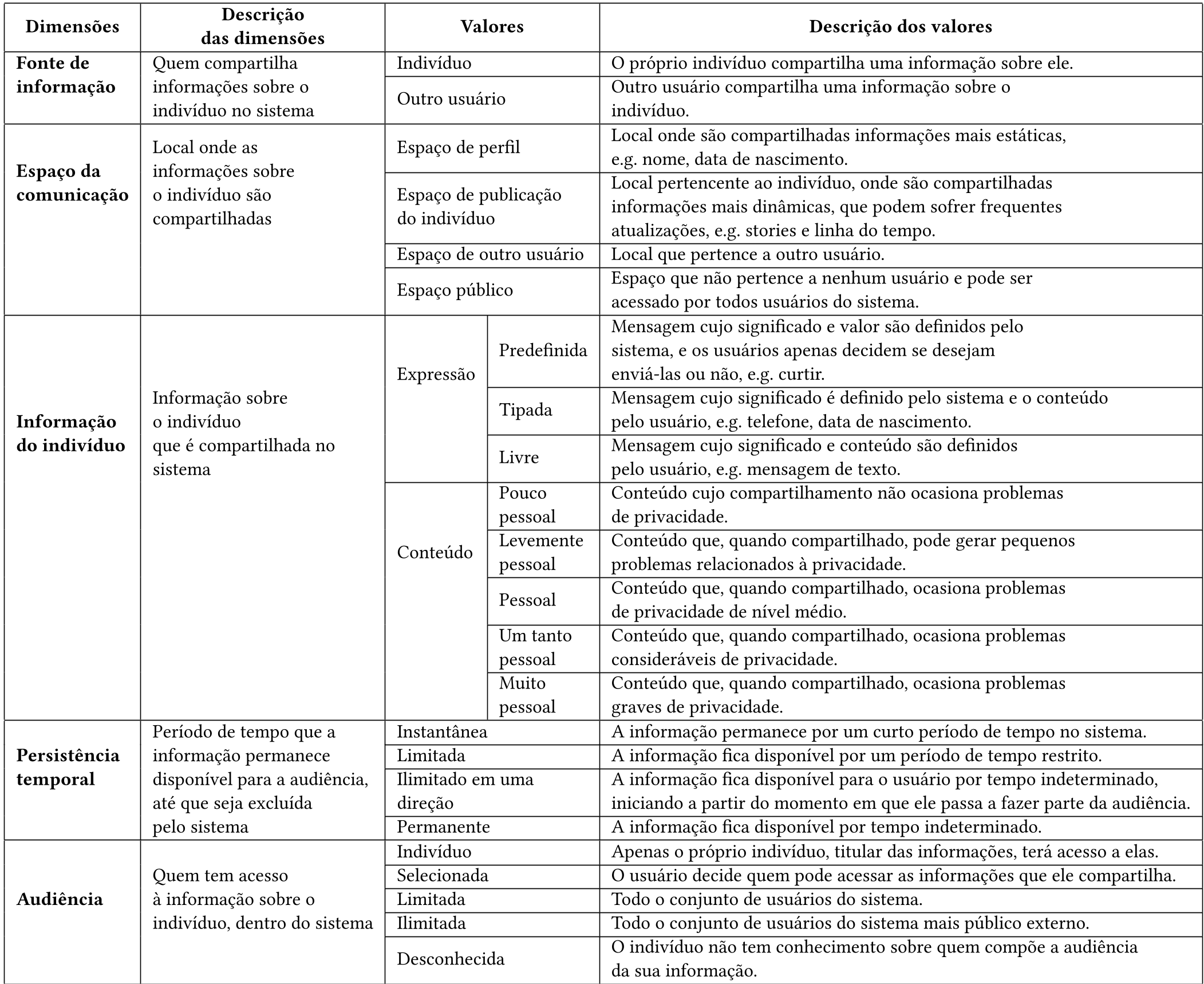 Table 1: PDM dimensions for the User-System-User communication level.
Key Findings: Groups vs. Status
The comparison yielded a clear winner in privacy protection: WhatsApp Status.
1. The Vulnerability of Groups
In groups, privacy is inherently lower because:
- Audience Control: Often managed by an administrator, not the individual.
- Dissemination: Members can forward messages without the original sender’s permission.
- Persistence: Information is effectively permanent unless manually deleted.
- The "Shared Space" Problem: PDM struggles to categorize a group chat—it isn't a "Profile Space" or a "Public Space," but a unique hybrid shared by a specific collective.
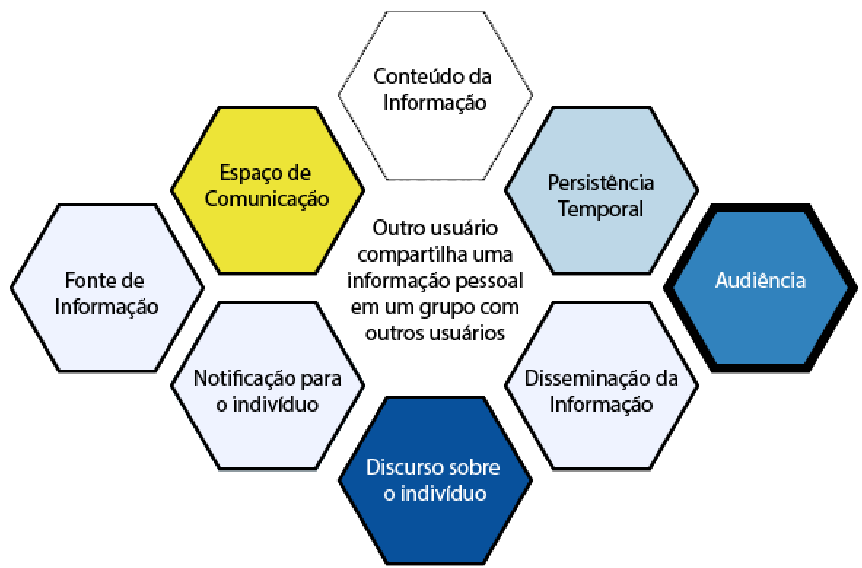 Figure 1: Visual mapping of privacy in WhatsApp Groups (yellow indicates architectural gaps).
2. The Robustness of Status
Status updates provide a more "private" experience because:
- Self-Selection: The user chooses exactly who sees the update.
- Ephemeral Nature: The 24-hour limit significantly lowers the risk of long-term exposure.
- Anti-Forwarding: By design, WhatsApp restricts the direct resharing of Status updates.
Critical Insight: Where Current Models Fail
The most striking part of this research is the identification of PDM's limitations. The authors suggest that for a model to be truly effective for modern apps, it must include:
- The System as a Source: WhatsApp automatically reveals when you are "online," "typing," or when you "read" a message. PDM currently only considers the "User" or "Other Users" as information sources.
- Media Granularity: Sharing a high-resolution video of one's home carries a different privacy weight than a text message, yet current models treat "free content" as a monolith.
- Shared Ownership: The concept of a "Group" defies traditional notions of digital ownership, requiring a new classification for "Shared Spaces."
Conclusion & Future Outlook
This case study serves as a critical audit of both a world-leading messaging app and the academic frameworks used to evaluate it. While WhatsApp has made strides in providing granular controls (especially in Status), the "invisible" indicators of user activity remains a design frontier that still favors system transparency over user solitude.
For practitioners, the takeaway is clear: privacy is not just about what the user posts, but what the system says about the user behind their back.