
Privacy in Crowdsourcing: Navigating the Tension Between Participation and Protection
Privacy in Crowdsourcing: A Systematic Review
This paper presents a systematic literature review (SLR) of privacy within crowdsourcing environments, analyzing 212 relevant studies published between 2013 and 2017. The authors categorize research through a multi-dimensional framework involving privacy layers, principles, concerns, and enhancement techniques.
TL;DR
This systematic review provides a comprehensive taxonomy of privacy in the crowdsourcing era. It identifies a critical imbalance: while technical models are abundant, we lack a deep understanding of the human element—specifically how gender and individual perceptions dictate whether a user contributes to or retreats from a "crowd" due to privacy fears.
The Core Dilemma: "The Crowd" vs. "The Individual"
Crowdsourcing relies on the concept that "many heads are better than one." However, it creates a paradox: to harness the collective intelligence of the crowd (as seen in Wikipedia or Waze), platforms must monitor, verify, and often track their contributors. This "unavoidable" monitoring directly clashes with the individual's right to digital solitude and control over personal information.
Methodology: A Multi-Dimensional Taxonomy
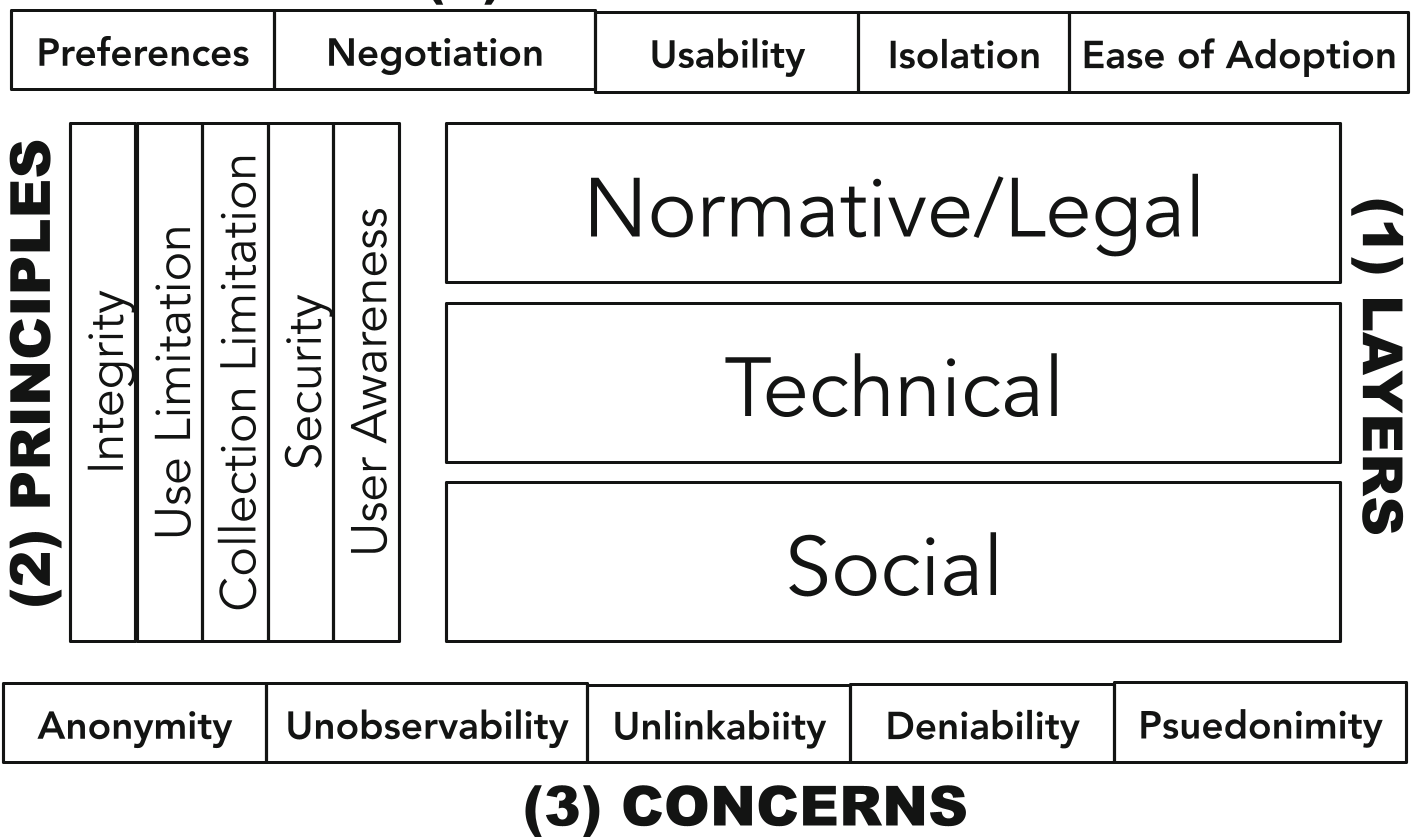
The researchers didn't just list papers; they organized the field into four orthogonal dimensions to see where the light is shining and where it remains dark.
1. The Four Pillars of Perspective
- Privacy Layers: Addressing the legal (regulations), technical (encryption/access control), and social (contextual boundaries) aspects.
- Privacy Principles: Based on the OECD guidelines, focusing on Disclosure, Security, and Integrity.
- Privacy Concerns: What do contributors actually care about? (Anonymity, Pseudonymity, Unobservability).
- Enhancement Techniques: Tools like User Preference settings and Negotiation protocols.
Key Findings: The Focus of Contemporary Research
The review analyzed 212 papers, revealing that the academic community is heavily skewed toward Modeling (55%) and Frameworks (34%).
| Category | User Awareness | Security | Collection Limitation |
|---|---|---|---|
| Trust & Evaluation | [81] | [62] | ● |
| Protection Measures | [17, 72] | [35] | [22] |
Note: The bullet points (●) in the table highlight significant voids in research, particularly in "Collection Limitation" for trust-based apps.
The "Hidden" Gaps: Gender and Perception
The most striking insight from the study is the identification of two under-researched areas:
1. The Gender Gap
The authors highlight a "clubhouse" effect. In platforms like Wikipedia, female editors represent a small minority (only ~16%). The review suggests this isn't just a lack of interest, but a privacy-preserving behavior. Females, statistically shown to be more concerned with online privacy, may avoid crowdsourcing to escape the risks of vandalism, trolling, and over-exposure.
2. Individual and Cultural Perceptions
Privacy is not a monolith. Anonymity may be valued differently in collectivist vs. individualist cultures. Current crowdsourcing systems often apply a "one-size-fits-all" privacy policy, which fails to respect these idiosyncratic views.
Critical Insight & Conclusion
While we have plenty of algorithms to anonymize data (the "How"), we are failing to understand the "Who" and the "Why."
The Takeaway: If crowdsourcing platforms want to be truly inclusive and sustainable, they must move away from purely technical "Privacy by Design" to a "Socio-Technical Privacy" approach that respects gender-specific concerns and cultural nuances.
Limitations to Consider
The review covers 2013-2017, meaning it predates the widespread implementation of GDPR and the rise of Decentralized Identifiers (DIDs). Modern readers should supplement this with current PETs (Privacy Enhancing Technologies) used in Web3 and Blockchain-based crowdsourcing.