
The Illusion of Control: Why Facebook's News Feed Triggered a Privacy Revolution
Privacy as information access and illusory control: The case of the Facebook News Feed privacy outcry
This study investigates the 2006 Facebook "News Feed" privacy outcry using a survey of 172 users. It identifies that the backlash was driven by the shift from a "pull" to a "push" information delivery model, which increased ease of access and created an "illusory" loss of control among users.
TL;DR
In 2006, Facebook introduced the News Feed, sparking a massive user revolt despite the fact that zero privacy settings had changed. This seminal study discovers that privacy isn't just about what is hidden—it's about the perceived effort required to find it. By shifting from a "pull" model (searching profiles) to a "push" model (notifications), Facebook triggered an "illusory loss of control" that fundamentally altered the digital privacy landscape.
Context: When "No Change" leads to an Outcry
When Mark Zuckerberg launched the News Feed, his defense was technically correct: "The privacy rules haven't changed. None of your information is visible to anyone who couldn't see it before." Yet, hundreds of thousands of users joined "Students Against Facebook News Feed."
This paper positions the outcry not as a technical failure, but as a psychological one. It challenges the "binary" view of privacy (Access vs. No Access) and introduces a more nuanced reality: Privacy is a function of information accessibility.
The Core Mechanism: Pull vs. Push
The authors argue that the transition from a profile-centric (Pull) model to a feed-centric (Push) model changed the Economics of Social Oversight.
- The Pull Model (Pre-2006): Information was "visible" but required intentionality. A friend had to visit your profile to see a relationship change. This created a sense of "obscurity through effort."
- The Push Model (Post-2006): Facebook began broadcasting updates directly to friends' homepages.
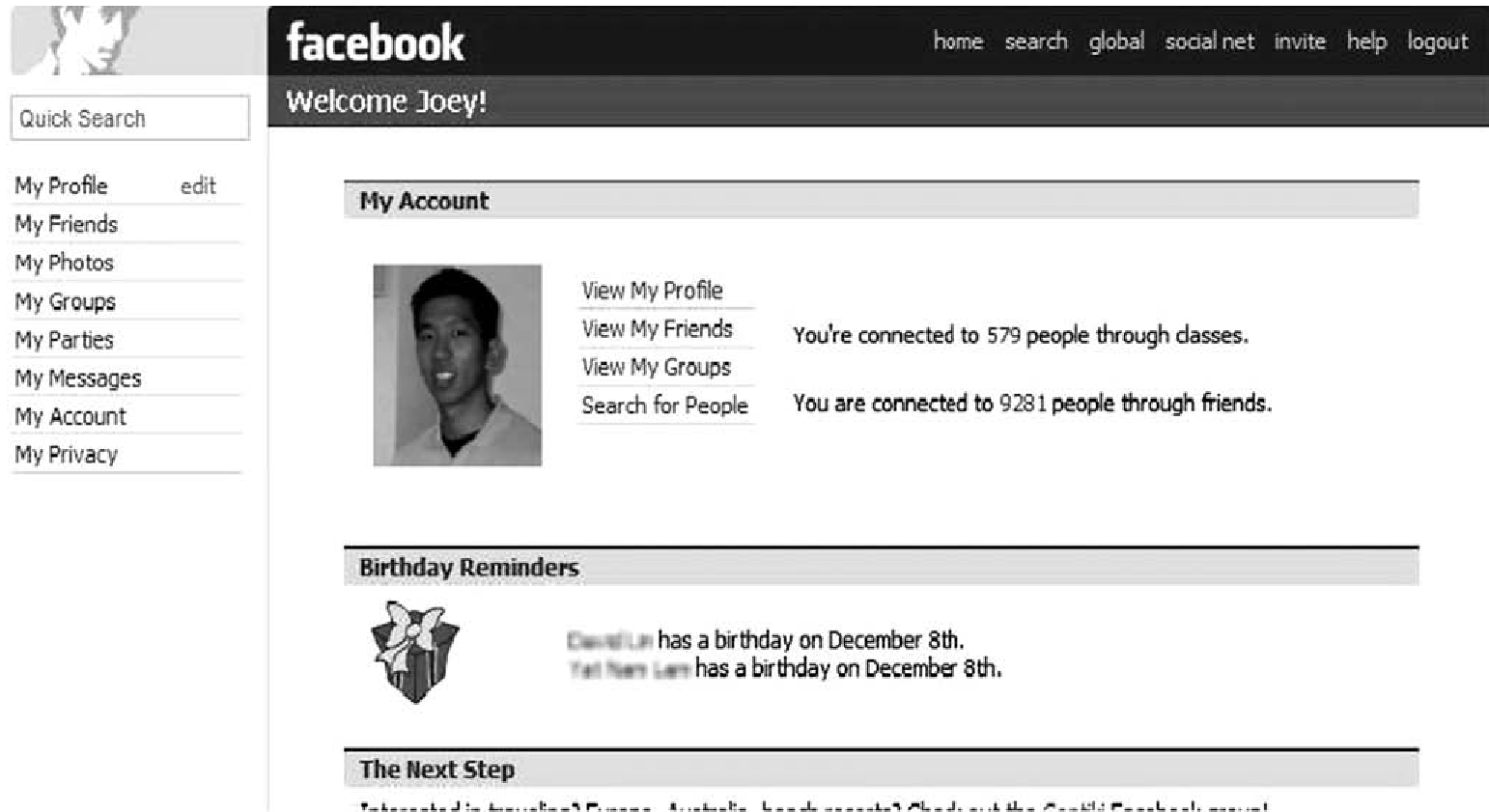 Caption: The shift from Profile-based browsing to the centralized News Feed.
The "Illusory" Loss of Control
The study highlights that users felt they had lost control because the visibility of their actions increased, even if the permission stayed the same. This is what the authors term an "illusory" loss—nothing changed in the database, but everything changed in the user's mind.
Key Findings: The Data of Discomfort
The survey conducted at a large US university revealed a sharp divide between what individuals do and what they think others do:
- The Visibility Gap: Before News Feed, only 58% of users thought it was easy to see profile changes. After News Feed, that number jumped to 78%.
- Behavioral Chilling Effect: 55.5% of respondents reported being less willing to share information after the feed's introduction.
- The "Friend" Factor: Users with more friends were significantly more likely to adjust their privacy settings, suggesting that privacy concerns scale with the size of the perceived audience.
 Caption: Frequency of negative reactions and levels of discomfort reported by survey participants.
Academic Insight: Privacy as Information Access
The paper’s most significant contribution is the validation of the Limited Access Theory. It proves that privacy is violated not just by unauthorized access, but by over-facilitated access.
If an OSN (Online Social Network) makes it too easy to "spy," users perceive a threat. Facebook's eventual fix wasn't to remove the feed, but to add "Control Features" (Opt-outs, granular blocking). This restored the Perception of Control, even if most users never actually touched the settings.
Critical Perspective & Takeaways
Why does this 2009 study still matter? In the era of TikTok and AI-curated "For You" pages, we are seeing the ultimate evolution of the "Push" model.
- The Professional Context: The authors warn that perceived control can be a trap. Users might feel safe in their circle of friends, forgetting that "potential" access by employers or coaches is still a reality.
- Design Instruction: For product managers, the lesson is clear—whenever you improve "Findability" or "Discovery," you must simultaneously increase "Granularity of Control."
Summary of the Lesson
Privacy is not a wall; it is a volume knob. When Facebook turned the volume up to 11 with the News Feed, they forgot to give the users the remote. The "revolution" was simply users demanding the right to turn it back down.
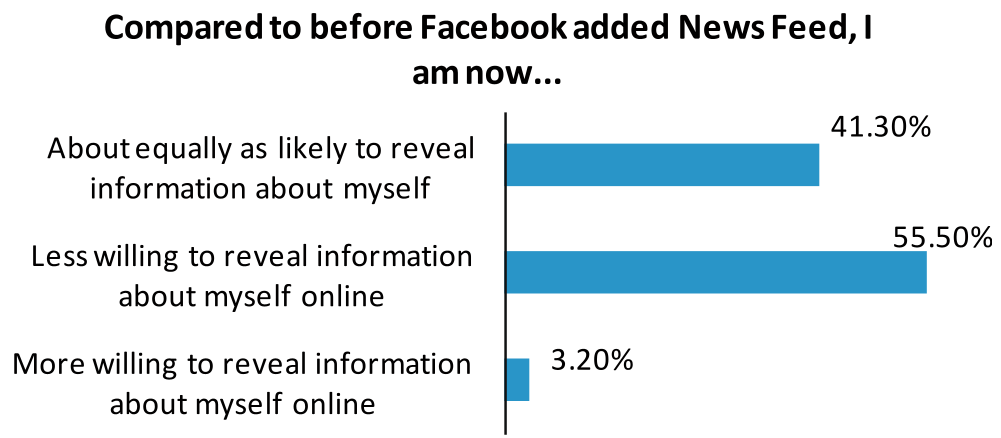 Caption: The impact of News Feed on users' willingness to share personal details.