
The Privacy Paradox: Navigating the Minefield of Social Network Sites
Privacy Issues and Solutions in Social Network Sites
This paper provides a comprehensive taxonomy of privacy threats and defense strategies in Social Network Sites (SNS). It categorizes privacy risks into voluntary "privacy disclosure" and involuntary "attack techniques," while reviewing current legal, market, and technical solutions (e.g., SybilGuard, P3P) to mitigate these vulnerabilities.
TL;DR
This seminal review by Xi Chen and Katina Michael dissects the dual nature of social network privacy: the information we give away willingly and the information stolen from us. It balances the sociological drivers of self-disclosure (the "Weak Ties" theory) against the technical brutality of Sybil and DDoS attacks, arguing for a future where privacy is a human-centric design requirement rather than a hidden setting.
Background: The Erosion of the "Right to be Let Alone"
For over a century, privacy was defined simply as the "right to be let alone." However, the explosion of Social Network Sites (SNS) like Facebook and QQ has rendered this definition obsolete. In a world where connection is mandatory for social capital, the new connotation of privacy is the right to keep the disclosure of personal information safe from others.
The authors position this work as a critical taxonomy, mapping out how the "public portion" of our private lives is expanding and being monetized by the "invisible hand" of the market.
The Anatomy of Privacy Invasion
The paper classifies privacy threats into two distinct categories:
1. Information Leakage via Disclosure
This is the "soft" side of privacy loss. Users voluntarily provide data through:
- Registration Requirements: Mandatory fields for service access.
- Tracking: IP tracing and search cookies that record behavior patterns.
- Monetization: Companies like Gratis Internet have historically profited by selling user email lists for marketing purposes.
2. Information Leakage via Attack Techniques
This is the "hard" side involving malicious intent:
- Data Mining: Aggregating fragments of behavior to build complete personal files.
- Direct Attacks: Utilizing DDoS to overwhelm resources or Sybil attacks to hijack reputation systems.
- Malicious Applications: The infamous "Secret Crush" worm on Facebook serves as a case study in how social engineering tricks users into installing spyware.
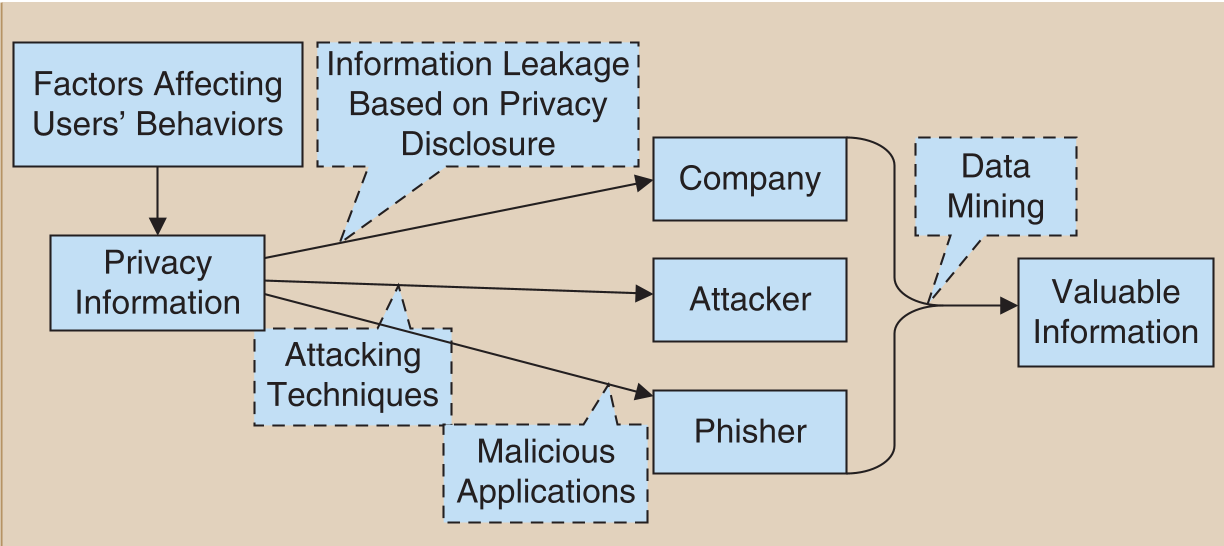 Figure 1: The dual paths of privacy compromise.
Methodology: The Three Pillars of Protection
The authors argue that technical fixes alone cannot solve the privacy crisis. A holistic defense requires:
- Mandatory Government Rules: Citing the EU model, the authors advocate for four constraints: purpose definition, disclosure, specific permission, and data retention limits.
- Architectural Shifts: Moving from centralized servers to Peer-to-Peer (P2P) architectures to restrict the diffusion of malicious applications.
- Human-Computer Interaction (HCI): Most privacy settings fail because they are too complex. The paper asserts that "privacy protection mechanisms need to be designed using human-computer principles with easy manipulation."
 Table 1: A comprehensive map of problems, solutions, and historical literature in the SNS privacy domain.
Critical Insight: The "Weak Ties" and Strategy
Why do we share at all? Drawing on Granovetter’s Theory of Weak Ties, the authors explain that SNS interactions are a dyadic process. We disclose information because the perceived benefit of maintaining "weak ties" (friends of friends, colleagues) outweighs the perceived risk. This creates a hurdle for privacy advocates: users are fundamentally driven to identify with communities, even at a personal cost.
Future Outlook: Personalization vs. Invasion
The paper concludes with a warning derived from Facebook's 2010 "Open Graph" controversy. Companies often adopt an "act now; apologize later" strategy. The real frontier for research lies in Privacy-Preserving Collaborative Networks, where data can be shared for collective intelligence without exposing individual identities.
Final Takeaway
Privacy is no longer just a technical setting; it is a business model. Firms that treat privacy as a cooperative interaction rather than an exploitative one will likely emerge as the trusted leaders in the next generation of the social web.