
Beyond the Profile: Navigating the Complex Landscape of Social Network Privacy
Privacy Issues in Social Networks: A Brief Survey
This paper provides a concise survey of privacy challenges in online social networks (SNs), contrasting them with traditional relational databases. It focuses on anonymization techniques such as k-anonymity, l-diversity, and differential privacy, specifically adapted for graph-based structures to mitigate neighborhood and link-based attacks.
TL;DR
With billions of users sharing data daily, Social Networks (SNs) have become a goldmine for data mining—and a minefield for privacy. This survey underscores that unlike traditional databases, SNs cannot be protected by simple masking. Because the structure of the network itself reveals identity, researchers must employ sophisticated graph anonymization, link randomization, and differential privacy to prevent "neighborhood attacks."
The Structural Trap: Why SN Privacy is Harder
In a standard hospital database, your record is a row, and you can't see other rows. In a social network, you are a node, and your value is derived from your edges (relationships).
The authors point out a critical distinction:
- Databases: Controlled by a central curator; privacy is about data disclosure during queries.
- Social Networks: Users join voluntarily and share data across nodes. An attacker can join the network, masquerade as a member, and use "Link Lookahead" to steal identities or infer sensitive connections.
The "Background Knowledge" of an adversary in SNs isn't just knowing your age or zip code; it’s knowing who your friends are (Neighborhood Knowledge) or the specific pattern of connections you belong to (Embedded Subgraphs).
Methodology: From Anonymity to Diversity
The survey breaks down the evolution of privacy metrics adapted for the graph domain:
1. The Anonymity Suite
- k-Anonymity: A node is hidden if it is indistinguishable from at least other nodes based on its structural properties.
- l-Diversity: Ensuring that for any group of similar nodes, the sensitive attributes (like political leanings or medical status) have at least "well-represented" values.
- t-Closeness: Further refining this by ensuring the distribution of sensitive attributes in a group is close to the overall global distribution.
2. The Randomization Paradox (Link Privacy)
One of the most fascinating sections discusses Edge Randomization. To protect link privacy, researchers add false edges and delete true ones.
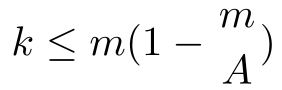
The authors analyze a threshold for randomization. Their insight is profound: As a graph becomes more connected, it actually becomes harder to randomize effectively. If the graph is nearly a "clique" (fully connected), adding false edges is limited, making any existing edge in the randomized graph a high-probability indicator of a real-world relationship.
Differential Privacy: The New Gold Standard
The paper introduces Differential Privacy as a shift from "hiding in a crowd" to "mathematical noise."

The goal here is strictly statistical. A query on a social network (e.g., "What is the average number of friends for users over 50?") should return nearly the same result whether a specific individual is included in the network or not. This is achieved by adding Laplacian noise. However, the authors admit a significant hurdle: to truly protect privacy, the amount of noise required often destroys the utility of the data for researchers.
Critical Analysis & Conclusion
While this survey provides an excellent taxonomy of privacy attacks, it leaves us with an uncomfortable truth: utility and privacy are in a zero-sum game in social media.
Key Takeaways:
- Link Prediction is a Double-Edged Sword: The same algorithms that suggest new friends can be used by attackers to de-anonymize "randomized" networks.
- Context Matters: Protecting a node's ID is useless if an attacker can identify them through their unique local network topology.
Future Outlook: The transition from manual anonymization to automated, differential-privacy-preserving data analysis is inevitable, but the structural complexity of social graphs remains a formidable barrier that requires more than just "adding noise" to solve.