
CAP-Score: Why Your Friends are the Weakest Link in Your Privacy Chain
Your Privacy, My Privacy? On Leakage Risk Assessment in Online Social Networks
This paper introduces the CAP-Score (Context-Aware Privacy Score), a novel metric designed to quantify privacy leakage risks in Online Social Networks (OSNs). By adapting the Personalized PageRank algorithm, the authors model privacy risk as a property influenced not only by an individual's settings but also by the privacy attitudes of their friends and the broader network.
TL;DR
This research challenges the notion that privacy is an individual setting. By applying Google's PageRank logic to social behavior, the authors developed the CAP-Score, a metric that proves your privacy risk is dictated by the "carelessness" of your social circle. Experiments on Facebook data show this context-aware approach is far more accurate in predicting data leaks than looking at a user in isolation.
Context is Everything: The Motivation
In the "Big Data Era," we are told that adjusting our privacy toggles is enough to stay safe. However, Online Social Networks (OSNs) are inherently collaborative. If you share a private photo with a "trusted" friend who has zero privacy awareness, that photo is one click away from the public domain.
The authors identify a critical gap: Prior metrics (like the P-Score) treat users as isolated islands. They argue that privacy risk is contagious. Just as an authoritative website lends "link juice" to others in PageRank, a careless friend leaks "risk" to everyone they are connected to.
Methodology: From Epidemiology to PageRank
The researchers approached the problem in two stages:
1. Information Diffusion Simulation
They used an extended SIR model (Susceptible-Infectious-Recovered) to simulate how information "infects" a network. They found that while an individual’s attitude matters, if the "network attitude" is poor, information eventually escapes the local neighborhood regardless of the spreader’s caution.
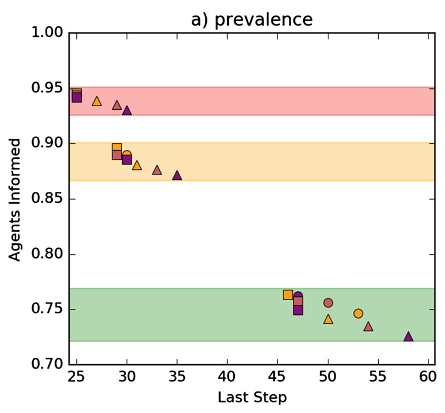 Fig 1: SIR simulation results showing how global network behavior eventually dominates local privacy settings.
2. The CAP-Score Formula
To quantify this, they utilized a Personalized PageRank implementation. Instead of ranking "importance," they rank "vulnerability."
The formula is defined as:
- (Intrinsic Risk): Your personal propensity to leak data.
- (Adjacency Matrix): How you are connected to others.
- The Logic: If you are surrounded by nodes with high intrinsic risk, your CAP-Score increases, even if your personal is low.
Experimental Results: Validating the Risk
The authors tested this on a real-world snapshot of Facebook (ego-networks). They compared the old P-Score against their new CAP-Score by measuring which one better correlated with actual information spread in a simulation.
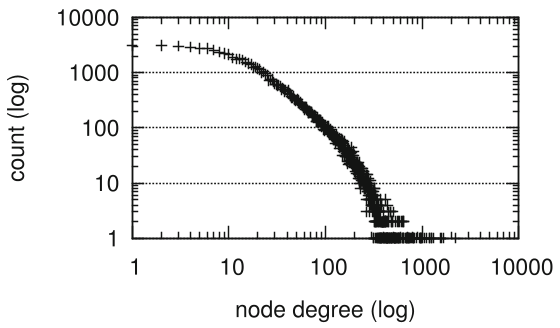 Fig 2: Spearman correlation between privacy scores and information prevalence.
Key Findings:
- Higher Accuracy: The CAP-Score's correlation with the prevalence rate was significantly higher than the P-Score, especially in early iterations.
- The "Silent" Threat: Users often underestimate their centrality. Even if a user thinks they are private, if they are a "bridge" between two careless groups, their objective risk is massive.
Critical Analysis & Conclusion
The CAP-Score provides a reality check for OSN users. It moves the conversation from "What are my settings?" to "Who am I trusting?"
Limitations
- Static Attitude: The model assumes privacy attitudes are static, whereas users might be more cautious with specific types of sensitive data (medical vs. hobbyist).
- Computational Weight: Running Personalized PageRank on a billion-node graph (like the full Facebook graph) requires significant infrastructure, suggesting this might be best implemented as a local "Ego-network" feature.
The Bottom Line
The research successfully demonstrates that privacy is a collective responsibility. Future social platforms should not just show you your risk, but warn you when your neighborhood's low privacy standards are putting your data at risk.