
Privacy in the Weighted Web: Rethinking k-Anonymity for Social Graphs
Privacy Preservation by k-Anonymization of Weighted Social Networks
This paper introduces a clustering-based k-anonymization framework for weighted social networks, extending traditional privacy models to account for edge intensity. By grouping nodes into supernodes and edges into superedges, it achieves formal k-anonymity while preserving structural utility such as degree and path length distributions.
TL;DR
As social networks move beyond binary "connected or not" models to weighted graphs representing the intensity of relationships, privacy risks escalate. This paper presents a novel k-anonymization method specifically designed for weighted graphs, using a generalization technique that groups nodes and edges into "super-structures" to prevent identity and weight disclosure without destroying the data's analytical utility.
The Problem: Weights as Digital Fingerprints
Traditional anonymization often involves "naive" methods—simply scrubbing names and IDs. However, researchers have long known that the structure of a graph—who you talk to and how often—is as unique as a fingerprint.
In weighted graphs, the problem is twofold:
- Identity Disclosure: If an attacker knows you have three friends with connection weights of 10, 5, and 2, they can find you in a "de-identified" set simply by looking for a node with those specific edge weights.
- Weight Disclosure: The strength of a relationship (e.g., frequency of financial transactions) is sensitive information in itself.
Prior works mostly addressed unweighted graphs, leaving a massive gap in how we handle modern, high-intensity social data.
Methodology: The Supernode Strategy
The authors transition from graph modification (adding/deleting edges) to generalization (clustering). The core intuition is to make nodes look identical by merging them.
1. The Core Transformation
The algorithm transforms a graph into an anonymized version through a series of abstractions:
- Supernodes: A group of at least original nodes.
- Superedges: A representative connection between supernodes.
- Superedge Weights: Calculated as the average of the underlying original edge weights to minimize Information Loss ().
2. The k-Anonymity Algorithm
The process is iterative:
- Initialize: Every node is its own supernode.
- Cluster: Identify supernodes with members.
- Merge: Find the "best" candidate to merge with. The paper explores three selection strategies: Random, AllCandidates, and NonAnonymizedCandidates.
- Probabilistic Edge Release: To prevent edge disclosure, superedges are assigned an existence probability , ensuring an adversary can only guess a relationship's existence with limited confidence.
 Figure 1: The candidate selection and merging logic used to achieve k-anonymity.
Experiments & Results: Does It Still "Look" Like a Graph?
A major concern with anonymization is Utility Loss. If the graph is scrambled too much, it becomes useless for researchers. The authors tested their method on the "Karate Club" and "Les Misérables" datasets.
Key Findings:
- Structural Preservation: For , the Degree Distribution and Volume Distribution (the sum of weights per node) remained remarkably similar to the original data.
- Version Performance: The
NonAnonymizedCandidatesversion struck the best balance, maintaining accurate path length distributions—essential for studying how "information" might flow through a network. - Scalability of Privacy: As increases, the graph naturally becomes "coarser," leading to a decrease in average degree as connections are consolidated.
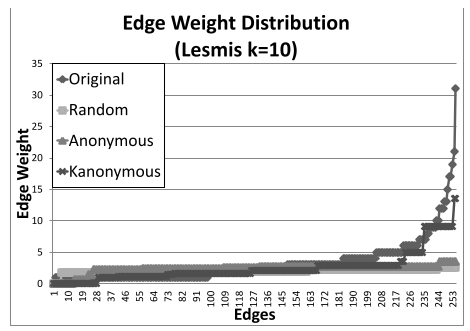 Figure 2: Comparison of Degree Distributions across different k-values and strategies.
Critical Analysis: A Step Toward Robust Privacy
The Value
This paper successfully bridges the gap between graph compression and privacy. By using weight averaging, it provides a mathematically sound way to minimize the squared error of edge weights, which is a standard proxy for data utility in weighted contexts.
The Limitations
While effective for identity preservation, the method relies on a Clustering/Generalization approach that might struggle with "long-tail" or extremely sparse graphs where finding similar nodes is difficult. Furthermore, the evaluation was limited to smaller datasets (under 100 nodes); real-world social networks with millions of nodes would require significant computational optimization of the candidates function.
Conclusion
The shift from unweighted to weighted graph anonymization is crucial for modern data science. This research demonstrates that we don't have to sacrifice the "strength" of social link data to protect individual identities. By intelligently grouping nodes based on neighborhood similarity, we can release datasets that are private by design yet rich enough for complex social analysis.