
Traceability without Big Brother: A Modern Framework for Privacy-Preserving Anomaly Detection
A Framework of Privacy Preserving Anomaly Detection: Providing Traceability without Big Brother
This paper introduces a privacy-preserving anomaly detection framework that provides "Traceability without Big Brother." It utilizes Group Signatures with Message-Dependent Opening (GS-MDO) and Public Key Encryption with Non-interactive Opening (PKENO) to ensure that only malicious users are identified while honest users remain anonymous.
TL;DR
As personal data collection scales, we face a paradox: how do we catch "bad actors" (fraudsters, system attackers) without monitoring every law-abiding citizen? This paper presents a cryptographic framework that achieves exactly this. By combining GS-MDO and PKENO, it ensures that users remain anonymous by default, but become "traceable" the moment their data triggers an anomaly alert. Crucially, it eliminates the "Big Brother" risk—no single administrator can unilaterally deanonymize users.
The "Big Brother" Dilemma
In traditional systems, security and privacy are treated as a zero-sum game. If you want to find an attacker in a smart city sensor network or detect medical fraud, you usually need a lookup table linking data to IDs.
- The Risk: This table makes the administrator a "Big Brother" who can spy on everyone.
- The Problem with Anonymization: If you use -anonymity or differential privacy to scrub IDs, you often lose the ability to hold malicious actors accountable when things go wrong.
The authors' research intuition is that Traceability should be conditional and distributed across multiple entities so that trust is fragmented.
Methodology: The Cryptographic Trio
The framework splits the process among three entities: the Data Provider (DP), the Anomaly Analyzer (AA), and the Anomaly Detector (AD).
1. The Core Architecture
The beauty of this framework lies in its use of two advanced primitives:
- GS-MDO (Group Signatures with Message-Dependent Opening): This allows a user to sign on behalf of a group. Unlike standard group signatures where an "Opener" can deanonymize anyone, GS-MDO requires a specific "token" related to the message (data) to open the signature.
- PKENO (Public Key Encryption with Non-interactive Opening): This allows the person who decrypts the data to prove what the result was to a third party without revealing their private key.
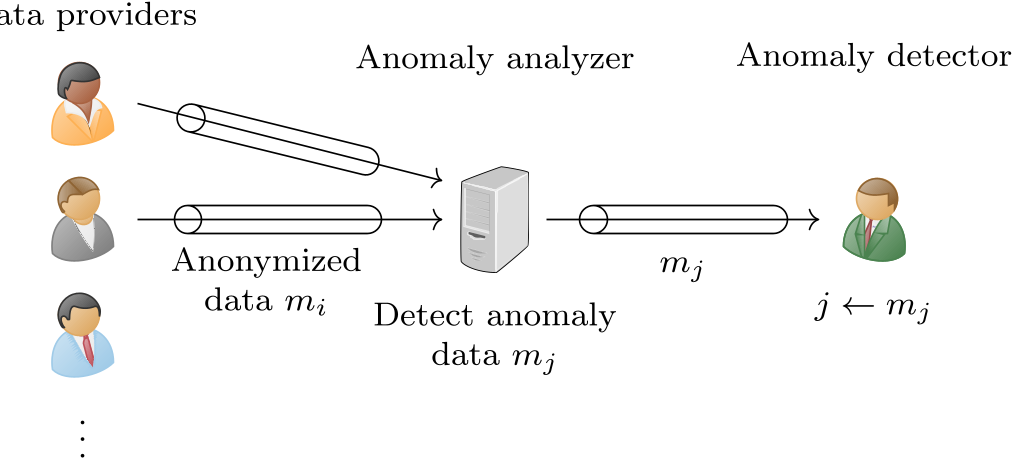 Figure 1: The flow of data. The Analyzer finds the "What" (anomaly), and only then does the Detector find the "Who" (identity).
2. The Protocol Flow
- Encryption: The user encrypts their data using the Analyzer's public key and signs the ciphertext with a GS-MDO group signature.
- Detection: The Analyzer decrypts the data and runs an anomaly detection rule. If it's a "hit," the Analyzer generates a token.
- Identification: The Detector receives the anomaly, the token, and the signature. Using the secret opening key, it finally links the data back to the user's ID.
Experiments & Real-World Performance
A common criticism of complex cryptography is "it's too slow." The authors debunk this by implementing the framework using Type-3 Bilinear Groups (specifically the BLS curve) for efficiency.
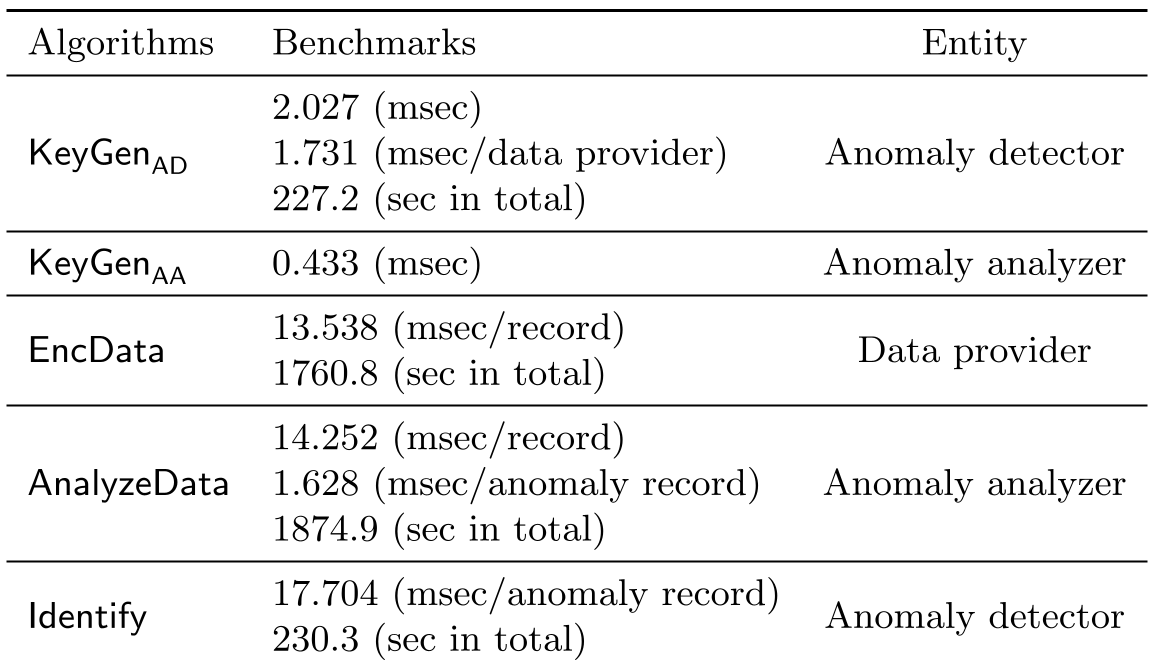 Table 1: Benchmark results showing millisecond-level overhead for each operation.
Key Takeaways from the Results:
- Efficiency: Encrypting a record takes ~13.5ms. Even for a dataset of 130,000 records, the analyzer's overhead is manageable.
- Security: The system holds up against collusions between the Analyzer and the Detector.
Critical Analysis & Conclusion
Why this matters
The modularity of this framework is its strongest asset. You can swap out the anomaly detection algorithm (from simple thresholds to complex Deep Learning) or change the anonymization technique without redesigning the underlying security protocol.
Limitations
- Rule Integrity: The paper assumes the Anomaly Analyzer honestly follows detection rules. If an analyzer is malicious, they could theoretically "hide" their friends' anomalies.
- Quantum Threat: The current implementation relies on ECDLP and Pairing-based cryptography, which are not quantum-resistant. Future iterations would need Lattice-based primitives.
Final Thought
This work moves us toward Privacy-by-Design. It proves that we can build accountable information systems that respect the GDPR "right to be forgotten" for honest citizens while ensuring "no place to hide" for adversaries.