
ORE: Revolutionizing Privacy-Preserving Location Sharing in Social Networks
Privacy-Preserving Location Sharing Services for Social Networks
The paper introduces a Privacy-Preserving Location Sharing Service (PPLSS) based on a novel cryptographic primitive called Order-Retrievable Encryption (ORE). It enables friends in social networks to share exact locations while preventing an "honest-but-curious" server from learning any location data, achieving SOTA performance in communication and query efficiency.
TL;DR
Location sharing is a cornerstone of modern social networks (e.g., Facebook Places, Google Plus), but it poses a massive privacy risk if the central server is untrusted. This paper presents Order-Retrievable Encryption (ORE), a cryptographic breakthrough that allows a server to process exact location queries without ever "seeing" the coordinates. By combining ORE with a specialized ORE-Index, the authors achieve exact results with significantly lower overhead than existing SOTA methods like CRT.
The Localization Privacy Trilemma
Why is this problem so hard? Historically, developers had to pick two out of three:
- Exact Accuracy: Knowing exactly where a friend is.
- Efficiency: Low latency and battery usage on mobile.
- Privacy: Keeping data secret from the service provider.
Previous methods like spatial cloaking sacrifice accuracy (users are hidden in "buckets"), while Multi-Party Computation (MPC) or Private Information Retrieval (PIR) often kill efficiency with multiple communication rounds or heavy math.
Methodology: The Power of Order-Retrievability
The core innovation is Order-Retrievable Encryption (ORE). Unlike Order-Preserving Encryption (OPE), which reveals the absolute numerical order of data, ORE is designed for 2D spatial context.
The Secret Sauce: Cmp Function
The ORE scheme consists of four algorithms: KGen, Enc, QGen, and Cmp. The magic happens in Cmp. Given a query point (encrypted as ) and two user locations (encrypted as ), the server can compute:
The server learns only the relative order (who is closer), not the actual distance or the coordinates.
ORE-Index Architecture
To avoid sequential scans for every friend in a group, the authors designed a tree-like index. The querying user provides "location markers" (ring boundaries) that the server uses to categorize friends into "rings" or "donuts."
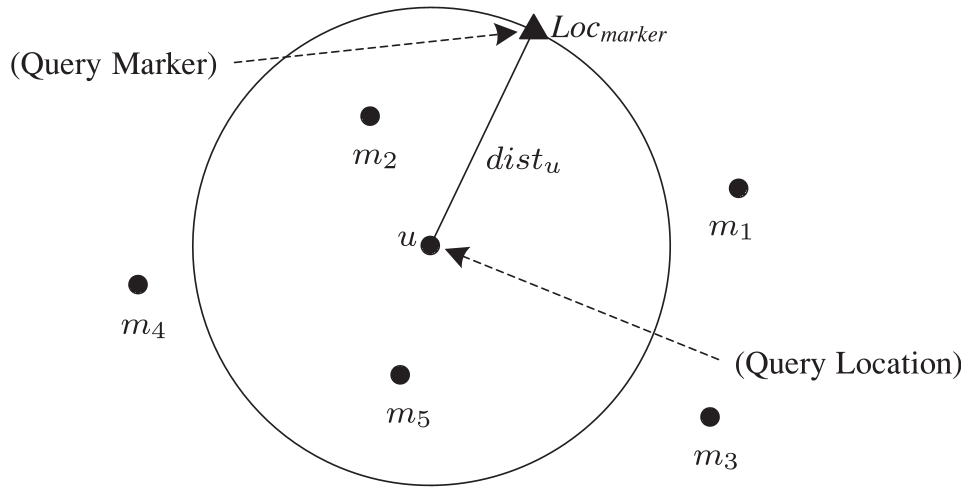 Fig 1: The ORE-Index structure dividing the search space into non-overlapping rings for efficient pruning.
Personalized Privacy: Defining Your Own Borders
Unlike generic systems where the requester sets the rules, PPLSS allows the target to set a dist_priv. If a friend is 5km away, but you’ve set your privacy limit to 2km, the server will filter you out of their results automatically, even though the server doesn't know your actual distance.
Experimental Validation
Using road network data from Hennepin County, MN, the authors pitted ORE against the CRT scheme (a leading cryptographic spatial query method).
1. Communication Efficiency
ORE consistently outperformed CRT, transmitting 33% to 50% less data. This is crucial for mobile users on limited data plans or weak signals.
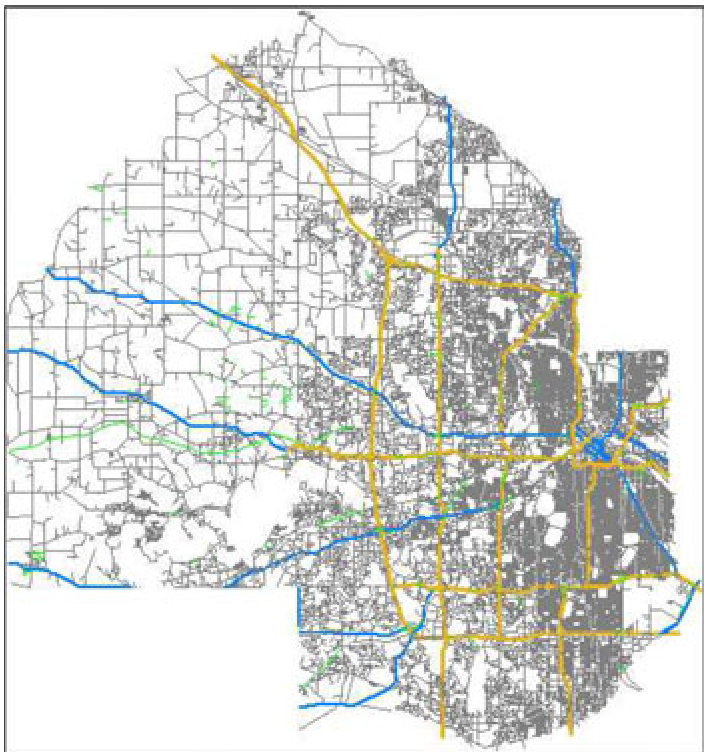 Fig 2: Communication cost comparison between ORE and CRT across different user group sizes.
2. Query Speed
Standard ORE is fast, but ORE-Index is a game changer. For a group of 5,000 friends, the index structure reduces query processing time by nearly 10x compared to a sequential scan.
Critical Analysis & Conclusion
Takeaway
The paper successfully bridges the gap between theoretical cryptography and practical mobile applications. By focusing on retrieving order rather than preserving distance, the authors found a "sweet spot" in the privacy-performance tradeoff.
Limitations
- Brute Force Vulnerability: The authors identified that low-dimensional ORE (d=2) can be susceptible to advanced brute-force attacks if the attacker maps enough ciphertexts to plaintexts. They suggest "dimension augmentation" (e.g., d=80) as a fix, which slightly increases computation.
- Honest-but-Curious Assumption: The system assumes the server follows the protocol. It does not protect against a malicious server that returns "garbage" or intentionally omits results.
Future Outlook
ORE opens doors for more than just location sharing. Its logic could be applied to private recommendation systems or secure medical database searches, where relative similarity is more important than absolute values.