
LPC: Securing Spatial Crowdsourcing Without Trusted Third Parties
Privacy-Preserving Personal Sensitive Data in Crowdsourcing
The paper introduces LPC (Local Protection in Crowdsourcing), a localizedDifferential Privacy (DP) framework designed for spatial crowdsourcing. It addresses worker location privacy in Server Assigned Tasks (SAT) mode by utilizing a Trie-Tree structure and a hybrid noise mechanism (Exponential and Laplace) to protect sensitive data without relying on a trusted third-party cellular service provider.
TL;DR
Researchers from USTC have developed LPC (Local Protection in Crowdsourcing), a framework that allows workers to participate in location-based tasks without revealing their exact movements to a central server. By moving the privacy mechanism to the "local" side and using a Trie-Tree structure combined with Differential Privacy, they've eliminated the need for a trusted Cellular Service Provider while maintaining high task accuracy.
Background: The Trust Gap in Crowdsourcing
In Server Assigned Tasks (SAT) mode, a crowdsourcing platform (like Uber or Gigwalk) needs to know where workers are to assign tasks efficiently. Historically, researchers assumed a "Trusted Third Party" (like a Telecom provider) would handle this data. However, in the real world, no one is 100% trustworthy. If the platform or the provider is compromised, the worker's sensitive "habits"—where they live, work, and visit—are laid bare.
The Core Insight: Why Trie-Trees?
The authors identify a major bottleneck: adding noise to every single coordinate or data point destroys the "utility" of the data (making it useless for task assignment).
Their solution? Trie-Trees.
- Efficiency: By aggregating location frequencies into a tree structure, they can represent complex movement patterns compactly.
- Noise Optimization: Instead of adding noise to every raw data entry, noise is added to the nodes of the tree. This reduces the total "privacy budget" consumption and keeps the data structure coherent.
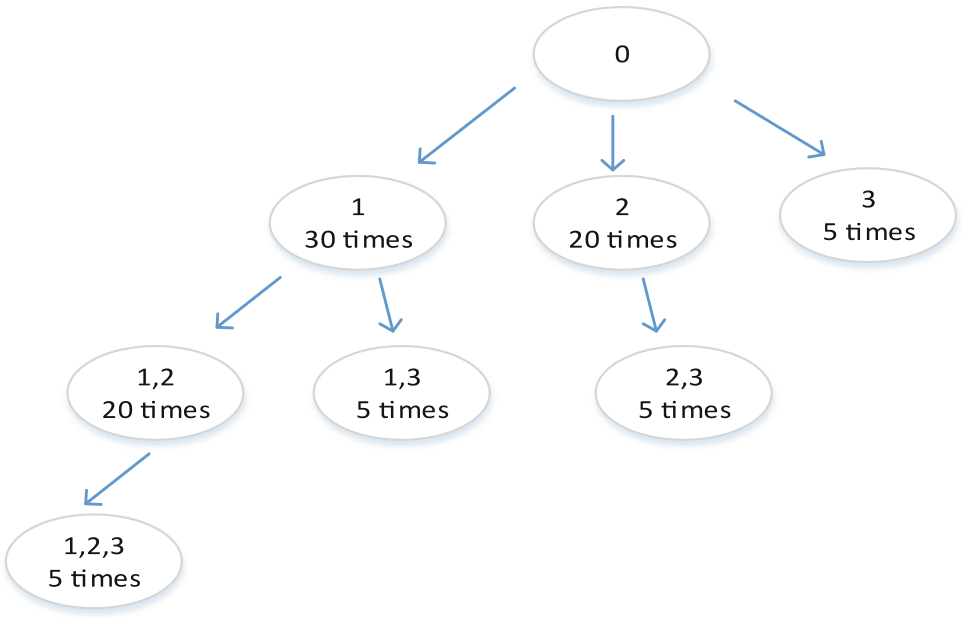 Figure 1: The LPC Framework featuring Data Preprocessing, Filtering, and Noise Addition.
Methodology: The Three-Step Privacy Guard
The LPC framework operates in three distinct phases:
1. Data Preprocessing (Trie-Tree Construction)
The worker’s device builds a Trie-Tree where each node represents a location or a sequence of locations visited. The value in the node represents the visiting frequency.
2. Information Filtering (The Exponential Mechanism)
Not all data is equal. The system filters out "insensitive" or infrequent locations using a threshold . It then uses the Exponential Mechanism to select the most significant nodes to report, ensuring that the selection process itself doesn't leak privacy.
3. Noise Addition (The Laplace Mechanism)
Once the key nodes are selected, the Laplace Mechanism adds random noise (sampled from a Laplace distribution) to the frequency counts. This ensures that an attacker cannot determine whether a specific visit occurred by looking at the noisy output.
Experimental Validation
Using the Gowalla dataset (real-world check-ins), the authors compared LPC against existing methods like Trun-Fre and DP-topkP.
- Efficiency: Building the tree is nearly instantaneous (less than 1ms for 512 nodes), making it feasible for implementation on standard smartphones.
- Utility: The Ratio of Rejecting True nodes (RTR) is lower than competitors, meaning the server still receives a very accurate "blurred" map of where the worker is, allowing for effective task assignment.
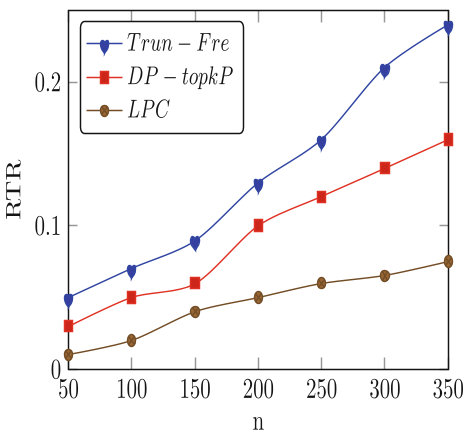 Figure 2: Performance comparison showing LPC's superior accuracy (lower RTR) as the number of nodes increases.
Critical Insight & Conclusion
The true value of this paper lies in its Local approach. By shifting the responsibility of privacy from a central server to the worker's device, it fulfills the "privacy-by-design" requirement of modern regulations like GDPR.
Limitations: While the Trie-Tree is efficient for frequent items, it may struggle with highly sparse individual trajectories where few locations are repeated. Future work should look into how this interacts with dynamic, real-time movement where the tree structure might need constant re-building.
Final Takeaway: LPC proves that we don't need to trust the "middleman" to benefit from crowdsourcing. Localized Differential Privacy is a viable path forward for the future of mobile service economies.