
Reversible Mosaics: Balancing Privacy and Recoverability in Social Networks
Privacy-Preserving Recoverable Photo Sharing in Mobile Social Network
The paper introduces a privacy-preserving photo-sharing framework for mobile social networks using reversible image mosaic techniques. It features two core algorithms: PARIMoS for predicting the maximum recoverable mosaic capacity and GAoRIM for efficient data hiding and restoration, achieving high-quality recovery even when mosaic regions are attacked.
TL;DR
Researchers from BUPT have developed a reversible image mosaic system that allows users to mask sensitive parts of a photo (like license plates or faces) before sharing. Unlike standard mosaics, authorized users can perfectly reconstruct the original pixels. The system uses a specialized compression algorithm and a roughness-based embedding strategy to hide the "recovery key" inside the non-sensitive parts of the image itself.
Background: The Privacy Paradox in Social Sharing
In the era of mobile social networks, we often share photos that contain "incidental" private data—a home address in the background, a stranger's face, or a work ID. Standard blurring or mosaic techniques are destructive; once the pixels are averaged or scrambled, the original data is gone forever. While encryption is an option, it renders the photo unviewable to everyone.
The ideal middle ground is Reversible Partial Mosaic: sensitive areas are masked for the public, but the original details are retrievable by those with the correct credentials.
The Core Problem: Fragile Restoration
Previous attempts at reversible mosaics often faced a critical flaw: they stored the "undo" information within the mosaic region itself. If a malicious actor (or a lossy compression algorithm) modified the pixels in the mosaic area, the recovery information was destroyed, making restoration impossible.
The Methodology: GAoRIM and PARIMoS
The authors solve this by treating the image as two distinct zones: the Region of Interest (ROI) (the mosaic) and the Carrier Area (the public part of the photo).
1. Capacity Prediction (PARIMoS)
Before applying the mosaic, the system must know: How much data can we actually hide in the "clean" part of the photo without ruining its quality? The PARIMoS algorithm calculates the theoretical upper bound of mosaic blocks based on a target Peak Signal-to-Noise Ratio (PSNR).
2. Twice-Run-Length-Encoding (TRLE)
To fit the recovery data into the carrier areas, it must be tiny. Since natural images have strong pixel correlation, the authors use twice-run-length-encoding. It goes beyond standard RLE by re-encoding both the data blocks and the run-length digits, significantly shrinking the payload.
3. Roughness-Based Selection
Instead of hiding data randomly, the algorithm selects blocks where the "roughness" (calculated via standard deviation and pixel means) most closely matches the characteristics of the hidden data. This ensures the change in "visual texture" is nearly invisible to the human eye.
 Figure 1: The mathematical foundation for predicting the number of recoverable blocks (N).
Experimental Performance
The system was tested against various SOTA baselines (Chen et al. and Xuan et al.). The results were compelling:
- Data Capacity: GAoRIM protected 8.70% to 26.98% more data than previous methods while maintaining similar image quality.
- Visual Fidelity: The average roughness change in the carrier area was a mere 0.28%, making it virtually impossible to detect that secret data was hidden there.
- Robustness: Unlike prior methods that fail when the mosaic is attacked, this method recovers the ROI perfectly because the recovery data is stored elsewhere.
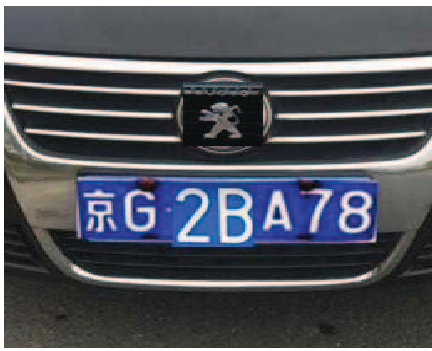 Figure 2: (d) The mosaic image, and (h) the successful recovery using the proposed method, outperforming previous techniques (e, f, g).
Critical Insight: Why This Matters
The genius of this approach lies in its anti-attack capability. By utilizing the "Least Significant Bits" (LSBs) of the public areas to store the "Most Significant Bits" (MSBs) of the private areas, the authors create a redundant system. Even if a sniffer tries to "clean" the mosaic or replace it, the recovery data persists in the texture of the non-mosaic regions.
Conclusion & Future Outlook
This paper provides a robust framework for privacy-conscious media sharing. While currently focused on static images, the logic of Roughness-based Carrier Selection and Twice-RLE could easily be extended to video streams or AR/VR environments where selective privacy is paramount. Future work likely needs to address how these LSB-hidden bits survive the aggressive lossy compression used by platforms like WeChat or Instagram.
Author Analysis: This work successfully transitions theoretical data hiding into a practical mobile-friendly application, proving that privacy doesn't have to be a "zero-sum game" between security and shareability.