
Beyond the "Like" Button: Safeguarding Privacy in Decentralized Social Networks
Privacy-preserving resource evaluation in social networks
The paper introduces a privacy-preserving protocol for resource evaluation (e.g., "Like" buttons) in decentralized social networks. It combines a DHT-based P2P infrastructure with a cryptographic protocol using partially blind digital signatures to decouple user identity from their preferences.
TL;DR
In the era of data-driven profiling, even a simple "Like" can expose deep psychological traits. This paper proposes a decentralized protocol that allows users to evaluate social media resources anonymously. By leveraging Distributed Hash Tables (DHT) and Partially Blind Signatures, it creates a "lightweight e-voting" system that prevents providers from tracking user preferences while ensuring each vote is unique and verifiable.
Background & Motivation: The Cost of a "Like"
In centralized platforms like Facebook, the provider acts as a trusted intermediary. However, this "trust" is often misplaced, as metadata regarding your interests is used to build high-value profiles.
The authors identify a critical gap: while P2P social networks (like PeerSoN) exist to decentralize storage, they lack a dedicated mechanism for anonymous resource evaluation. Existing e-voting systems are too cumbersome for a social network—they include features like "receipt-freeness" (preventing coercion) that introduce unnecessary complexity and bottleneck scalability.
Methodology: The Lightweight E-Voting Protocol
The core innovation lies in a 4-step protocol that splits trust across the network.
1. Decentralized Identity (CU Identification)
Instead of one central authority, the system uses a DHT to map a resource's ID to a set of Credential Users (CUs). These are random peers selected to act as temporary "gatekeepers." This ensures that no single entity can control the authorization process.
2. Blinded Authorization (Credential Issuing)
The voter requests a credential from CUs using a Blinded Message.
- The Insight: The CU knows who you are (to prevent double-voting) but doesn't know what you are liking (because the resource ID is blinded).
3. Verification & Certification (Voting)
The voter unblinds the credentials and submits them to a Trusted Third Party (TTP). The TTP verifies the credentials' authenticity but, thanks to partially blind signatures, it certifies the vote without seeing the actual score or the voter's identity.
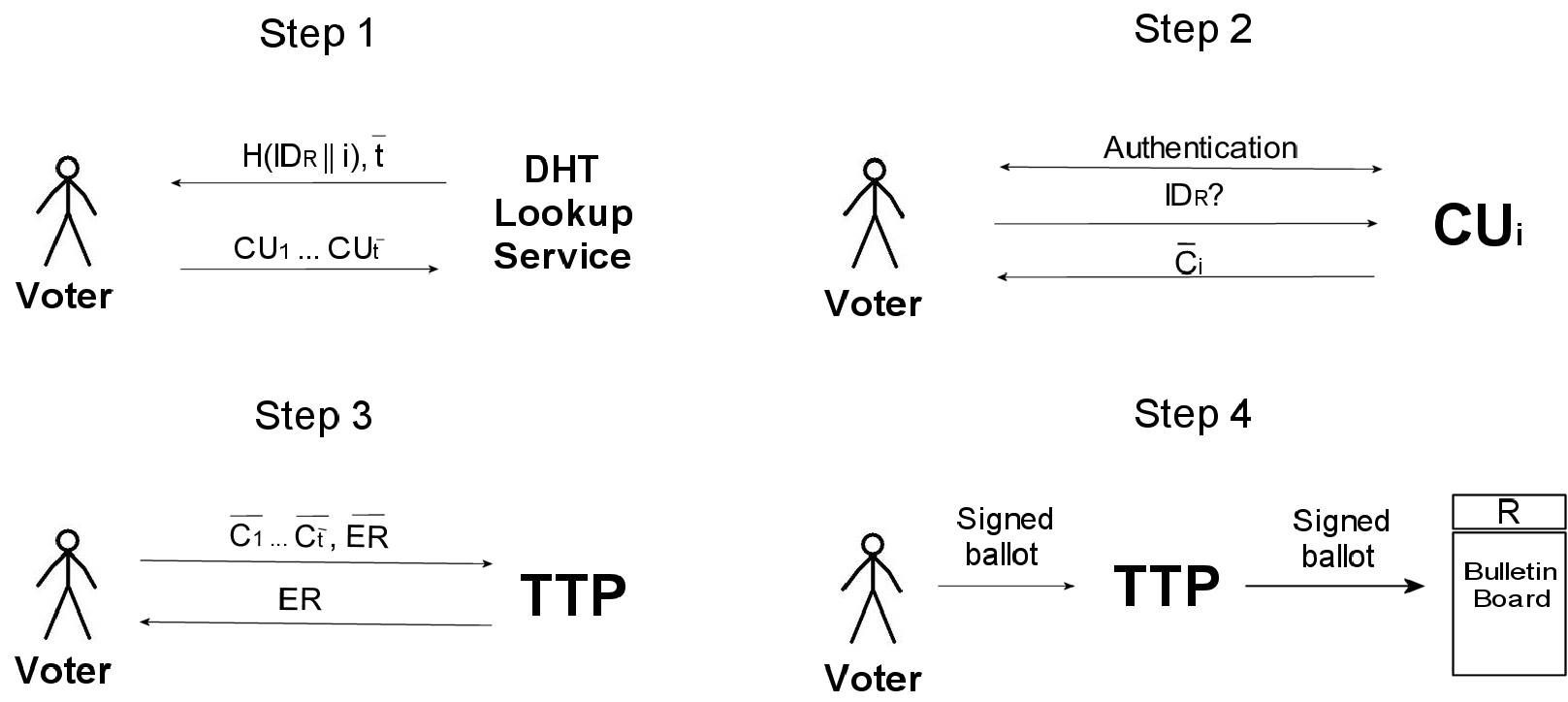 Figure 1: The interaction between Voter, Credential Users, and TTP.
Security Analysis: Balancing Trust and Efficiency
The protocol manages a difficult trade-off between Uniqueness (one person, one vote) and Secretness (anonymity).
- Uniqueness: Achieved by having TTP store a 128-bit random identifier () for every ballot. The math behind the "Birthday Attack" confirms that for any reasonable number of users, the chance of two people picking the same is effectively zero ().
- Secretness: By using Tor-like anonymous communication for the final submission and blinding the score during the certification phase, the TTP cannot link a specific "Like" back to a profile.
- Robustness: The system assumes an "honest majority" among CUs. Even if a few CUs are malicious, the TTP only requires valid credentials to process a vote.
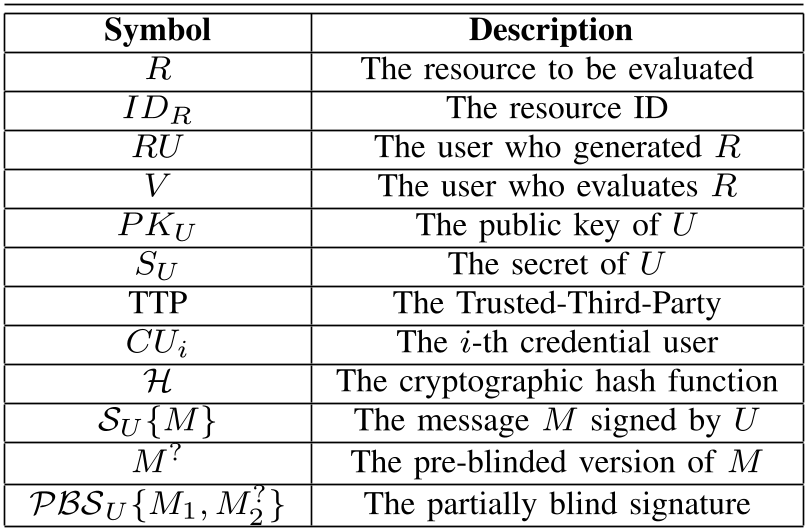 Table 1: Key cryptographic notations used in the protocol.
Critical Insight & Future Outlook
The genius of this paper is not in inventing new cryptography, but in pruning existing e-voting requirements (eligibility, fairness, receipt-freeness) to fit the specific needs of social media. This "lightweight" approach makes privacy-preserving likes computationally feasible for millions of users.
Limitations: The system still relies on a functional TTP to prevent double-voting. While the TTP doesn't see "who" voted for "what," it remains a central point of coordination. A future iteration might look into replacing the TTP with a Consensus Mechanism or Smart Contracts to achieve true decentralization.
Conclusion
As users become more aware of the "power of personal data," tools that decouple identity from interest will become standard. This protocol provides a blueprint for how next-generation decentralized social networks can offer features like popularity tallies without sacrificing the individual's right to digital anonymity.