
Positional Indiscernibility: A Logic-Based Shield for Social Network Privacy
Privacy-Preserving Social Network Publication Based on Positional Indiscernibility
This paper introduces a framework for privacy-preserving social network publication by leveraging social position analysis and Description Logic (DL). It proposes using "Positional Indiscernibility" to group individuals into information granules, extending traditional k-anonymity to graph-structured data.
TL;DR
When publishing social networks, removing names isn't enough—an adversary can use the structure of connections to unmask individuals. This paper introduces a formal framework using Description Logic (DL) and Social Position Analysis to guarantee that individuals remain "indiscernible" from a group, effectively bringing k-anonymity to the complex world of graph data.
The Structural Leak: Why Tabular Anonymity Fails
In standard database privacy, we worry about "quasi-identifiers" like ZIP codes or age. In a social network, your connectivity pattern is your fingerprint.
The authors point out a critical flaw in prior work: even if two people have the same attributes, if one is connected to a "CEO" and the other is connected to a "Manager," they are easily distinguished. To solve this, we need to group people into Information Granules—sets of nodes that are structurally identical from the perspective of an observer's logic.
Methodology: The Logic of Equivalence
The core "Aha!" moment of this paper is linking Social Position Analysis with Description Logic (DL).
1. Regular vs. Exact Equivalence
- Regular Equivalence (): Two actors are equivalent if they are connected to equivalent others. This aligns with the ALCI logic.
- Exact Equivalence (): A stricter version where the number of equivalent neighbors must match. This aligns with ALCQI (which allows counting).
2. The Formal Bridge
The authors prove that if two nodes are "positionally equivalent," they satisfy the same set of modal formulas. Since DL is essentially a syntax for modal logic, an adversary using DL queries cannot tell these nodes apart.
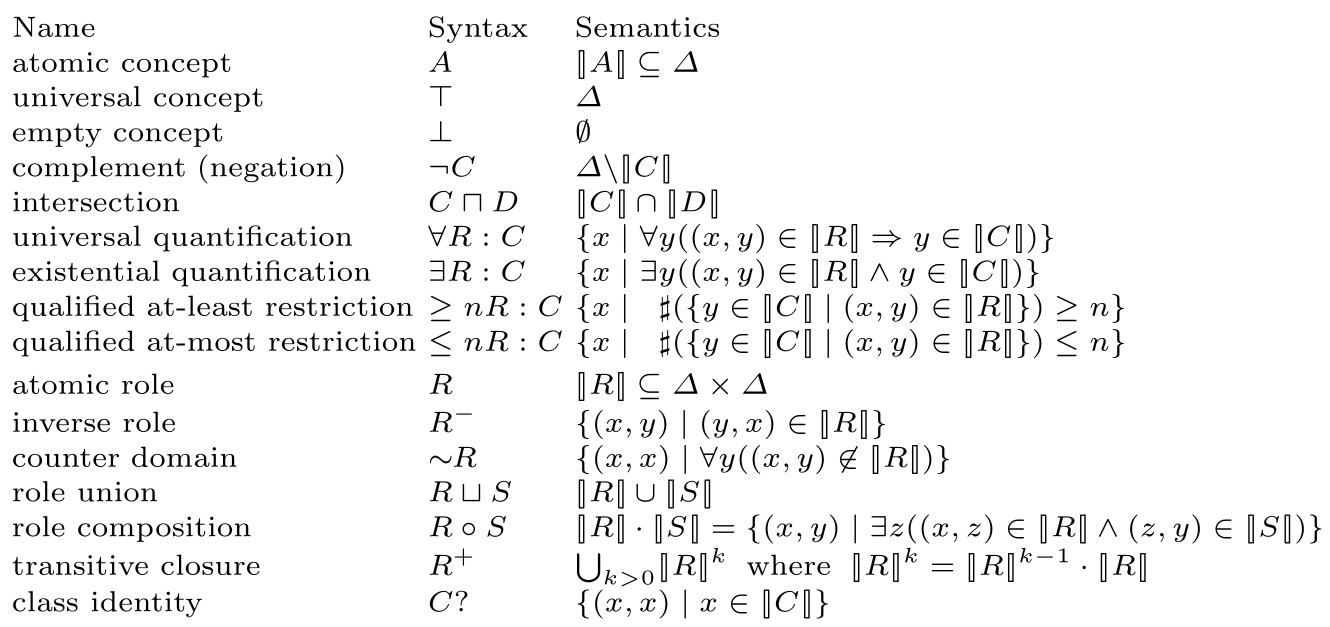 Table 1: The building blocks of DL used to define the adversary's query power.
Defining "Safe" Publication
The paper proposes two key safety thresholds:
- k-Anonymity: Every node must belong to a "positional equivalence" class of at least size k.
- Logical Safety: Even if you can't identify who a node is, you shouldn't be able to stay for certain that they have a "Sensitive Property." This protects against homogeneity attacks (e.g., "I don't know which node is Bob, but everyone in his group has Cancer").
Case Study: A Visual Example
Consider the graph structure below. By analyzing the non-sensitive relations (), the authors partition the network into blocks.
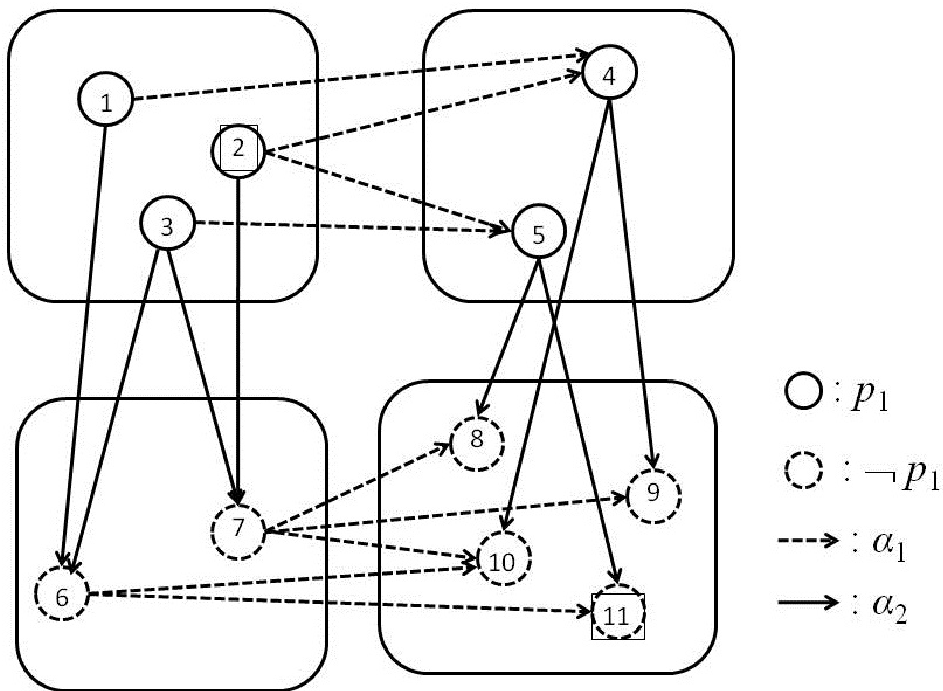 Figure 1: A social network where nodes are grouped into blocks based on structural roles.
In this example, the smallest block contains 2 nodes, satisfying 2-anonymity. However, if a sensitive attribute is shared by everyone in a block, the network fails the Logical Safety test, necessitating data "sanitization" before release.
Critical Insight & Complexity
The beauty of this approach is efficiency. While logic-based reasoning can be slow, computing the "coarsest equitable partition" (exact equivalence) is a well-solved problem in graph theory. Using algorithms like Paige-Tarjan, we can calculate these privacy granules in time, making it feasible for relatively large networks.
Conclusion
This work moves us past simple "identity scrubbing" toward structural privacy. By defining privacy through the lens of Description Logic, it provides a mathematical guarantee: if an adversary's knowledge is limited to a certain logic, and our graph is "positionally indiscernible" under that logic, the data is safe.
Future research must now look at how this holds up against "Probabilistic" or "Machine Learning" attacks, where an adversary doesn't use strict logic but explores statistical correlations.