
Bridging the Gap: Finding Friends Without Sacrificing Privacy in Human Trajectories
Privacy-Preserving Social Tie Discovery Based on Cloaked Human Trajectories
This paper introduces a semantic-tree-based algorithm for social tie discovery using cloaked (obscured) human trajectories. By transforming k-anonymity cloaking regions into a weighted hierarchical semantic tree, the method accurately predicts social links while preserving user location privacy.
TL;DR
Researchers have developed a way to identify social connections using cloaked trajectories—location data that has been intentionally blurred for privacy. By moving beyond raw coordinates and using a Weighted Hierarchical Semantic Tree, the system identifies social ties with 20% better accuracy than previous privacy-preserving models, proving that you don't need exact GPS coordinates to understand human relationships.
Background: The Privacy-Utility Tradeoff
In the era of Location-Based Social Networks (LBSNs), our movements are digital breadcrumbs. While these "breadcrumbs" are goldmines for recommending products or predicting social links, they are also highly sensitive. Standard privacy protection uses k-anonymity cloaking, which hides a user in a crowd of people by expanding their specific location into a large "cloaking region."
The problem? Traditional algorithms calculate similarity based on the physical distance between users. When your "location" is a 2-square-mile box, the distance metric breaks down, rendering social tie discovery nearly impossible.
The Insight: Semantics Over Coordinates
The authors suggest that we shouldn't care about the distance between two boxes, but rather the meaning of the places inside them. They propose a shift from geometric space to semantic space.
Their logic is twofold:
- Hierarchy Matters: If Jack is at a "Basketball Court" and John is in the "BUPT Campus" (which contains the court), they share a spatial relationship despite having different privacy levels ().
- Uniqueness is Key: Meeting a stranger at a massive international airport doesn't imply a social tie. Meeting that same person at a tiny, obscure jazz bar does.
Methodology: The Weighted Hierarchical Semantic Tree (WHST)
1. Constructing the Tree
The system transforms raw GPS rectangles into semantic nodes. If a cloaking region is too diverse, it "climbs" the hierarchy (e.g., from Library to Campus) until a single semantic label fits the anonymity requirement.
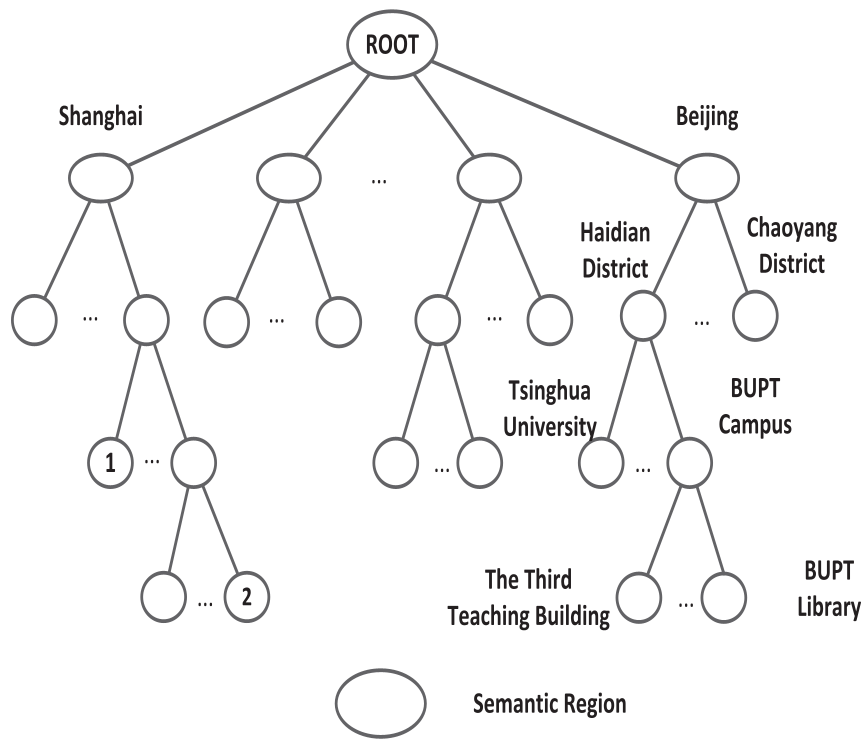 Fig 1: The process from raw GPS to Semantic Regions and Hierarchical Trees.
2. Measuring Similarity
Instead of Euclidean distance, the similarity between user and user is calculated using:
- Length of the shortest path between nodes in the tree.
- Depth of the Lowest Common Ancestor (LCA): Deep LCAs indicate a more specific shared location.
- Popularity Weight (): Calculated using mathematical expectation and standard deviation of check-ins. Regions with fewer check-ins get higher weights.
Performance & Results
The model was tested using the Gowalla dataset (196,591 users).
Key Findings:
- Superiority over Baselines: The proposed method significantly outperformed KSTCM, especially as the privacy requirement () increased.
- The Power of Popularity: By simply adding weights to "unpopular" locations, the F-measure (a balance of precision and recall) improved by 5%.
- Minimal Utility Loss: While raw GPS data still produces the most accurate results, the semantic tree allows for high-accuracy discovery even when data is heavily cloaked.
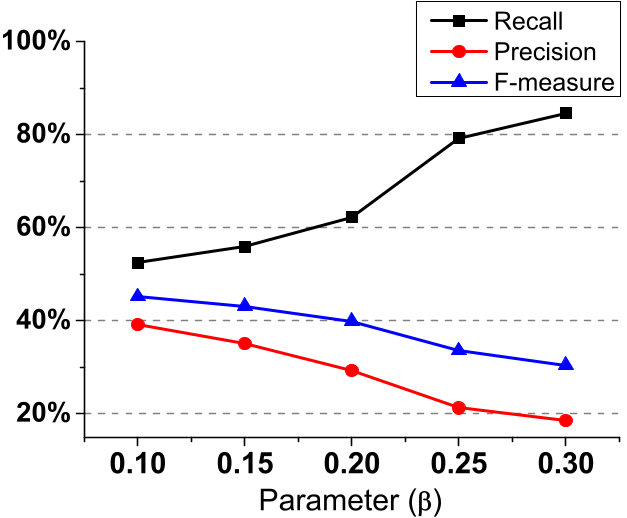 Fig 2: Comparison between the proposed method and the KSTCM baseline across different k-anonymity levels.
Critical Insight: Why it Works
The "magic" of this paper lies in its Inductive Bias. It assumes that social ties are reflected in the specificity of shared behavior. By using the hierarchical tree, the algorithm effectively "denoises" the uncertainty introduced by cloaking. It treats the hierarchy as a natural way to handle varying levels of data granularity—a common challenge in real-world sensor data.
Conclusion
This research provides a robust framework for "Privacy by Design." It demonstrates that we can provide users with strong k-anonymity (high values) without making the resulting data useless for social analytics. Future work may see these semantic patterns integrated into Graph Neural Networks to further refine how we map the "Social-Spatial" nexus.