
PVAT: Bridging the Gap Between Privacy and Root-Cause Tracing in UAV Social Networks
Privacy-Preserving Verification and Root-Cause Tracing Towards UAV Social Networks
This paper introduces a privacy-preserving self-verification and root-cause tracing framework for UAV social networks. It utilizes an improved Merkle Hash Tree (MHT) with NDlog reasoning to detect anomalies and a learned Fault Tree to identify underlying causes without compromising raw flight data privacy.
TL;DR
In the high-stakes environment of UAV social networks, drones must verify if their peers are following orders without sifting through sensitive flight logs. This paper proposes a dual-layered approach: Privacy-Preserving Verification using an optimized Merkle Hash Tree (MHT) to catch anomalies, and Root-Cause Tracing via learned Fault Trees to explain why those anomalies happened. The result? Linear-time verification and a 4.3% boost in tracing accuracy.
Background & Motivation: The Cooperative Conflict
When a fleet of UAVs executes a mission, they form a "social network" where a leader drone issues commands to followers. However, two major hurdles exist:
- Distributed Autonomy: Ground stations are often out of range; drones must police themselves.
- Privacy vs. Verifiability: Drones (often from different manufacturers or nations) are reluctant to share raw logs, yet the leader needs that data to verify mission compliance.
Prior works focused on "What" happened (detecting a deviation) but ignored "Why" (root cause) and "How much privacy" (data exposure).
Methodology: Reasoning with Privacy
1. NDlog-Based Deductive Reasoning
The system uses NDlog (a variant of Datalog) to create a set of "reasoning rules." The leader drone uses these rules to deduce what the follower's status should be based on the leader's own sent messages. If the leader sends an order, the rules dictate that a "Message Execution" entry should logically exist on the follower's device.
2. The Enhanced Merkle Hash Tree (MHT)
To verify these deductions without seeing the records, the authors use an MHT. By encoding records into a tree structure, the follower only needs to provide a "witness" path to the root hash. Innovation: The authors added Timestamps and Message IDs directly into the MHT structure. This allows the system to traverse the tree as an array () rather than a binary search (), which is critical for the limited CPU power of a drone.
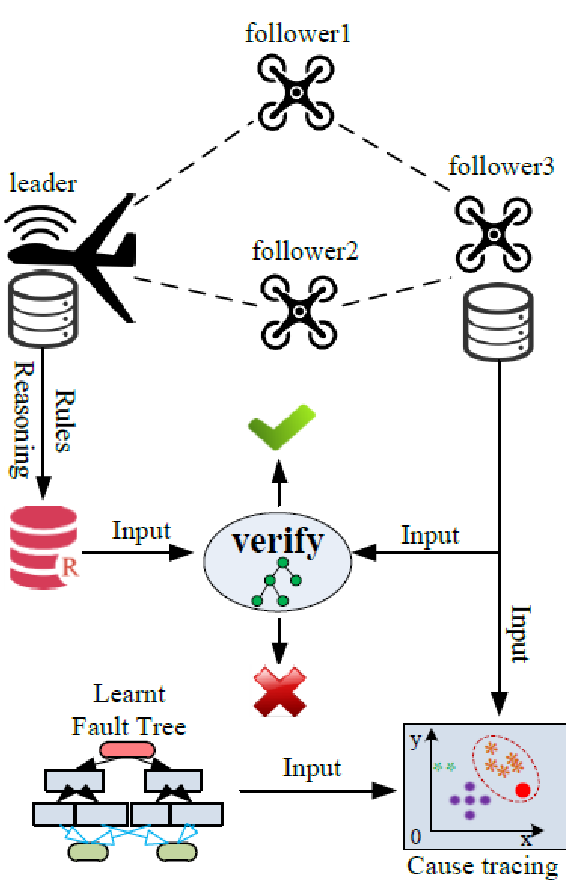 Fig 1. The PVAT System Model showing the pipeline from reasoning to root-cause tracing.
3. Automated Fault Tree Learning
When the MHT verification fails, the system triggers the Root-Cause Tracing phase. Instead of relying on human experts, the authors use Control Flow Graphs (CFG) and the Apriori algorithm to learn the causal relationship between system events and faults (e.g., GPS loss leading to "Hover Drift").
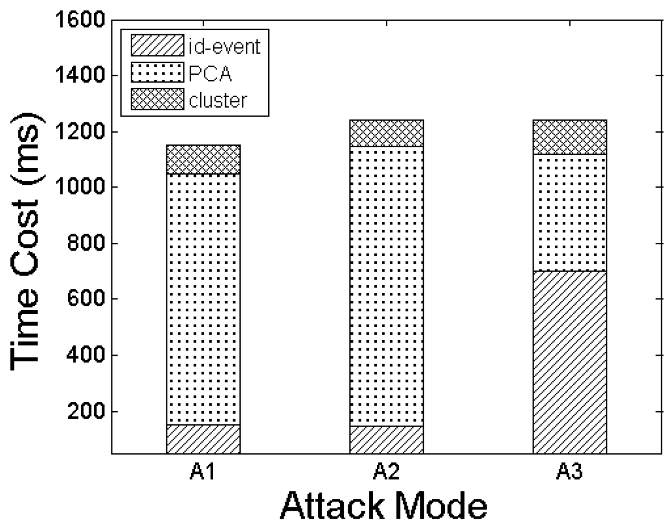 Fig 2. An example of a learned Fault Tree mapping high-level anomalies to specific sensor/hardware failures.
Experimental Validation
The authors tested the framework on the PixhackDrone environment, injecting faults like accelerometer failure and digital transmission loss.
- Efficiency: Compared to the SRDPV baseline, the proposed MHT modification kept verification time linear even as record counts grew to 10,000.
- Accuracy: The system excelled in tracing throttle feedback errors (A3) with high precision, achieving an overall 4.3% improvement in anomaly detection accuracy.
- Log Reduction: The fault tree allows the drone to ignore irrelevant "noise" logs, focusing only on the causal path, which saves significant energy and time.
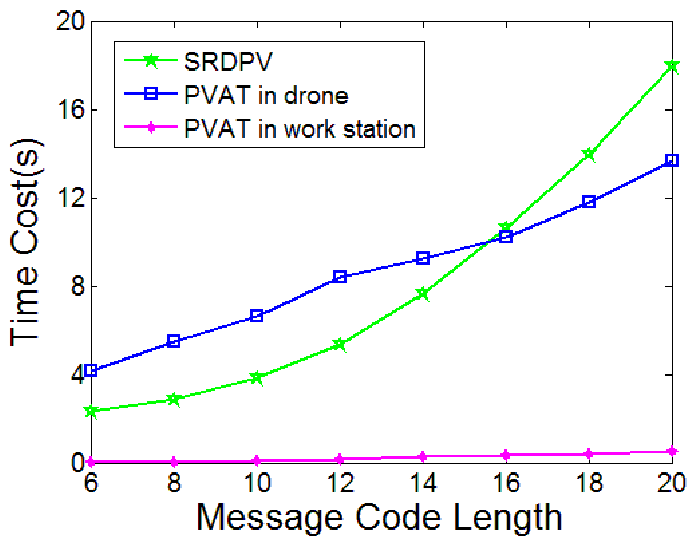 Fig 3. Performance comparison showing the linear scaling of the proposed method versus prior exponential approaches.
Critical Insight & Conclusion
The true value of this work lies in its Inductive Bias for embedded systems. By structuring an MHT around temporal and logical IDs (timestamps/MsgID), the authors bypassed the traditional computational bottlenecks of cryptographic verification.
Limitations: The system still struggles with environmental "noise" (e.g., distinguishing weather-induced drift from motor failure). Future work will likely need to integrate more robust environmental sensing to reduce false positives in unpredictable outdoor conditions.
Final Takeaway: PVAT proves that distributed UAV fleets can maintain a "trust-but-verify" relationship without sacrificing data sovereignty, paving the way for more secure and explainable autonomous swarms.