
The Facebook Privacy Paradox: How Large Networks Drive Granular Control
The Privacy Problem in Big Bata Applications: An Empirical Study on Facebook
This empirical study investigates the relationship between user activity and privacy management on Facebook among college students. By analyzing digital footprints via the Facebook Graph API, the author demonstrates that users with larger social networks are significantly more likely to utilize granular privacy controls to manage their online presence.
TL;DR
In an era where digital footprints are the "new oil," this paper explores the friction between Big Data utility and individual privacy. By analyzing the behaviors of college students on Facebook, the research reveals a critical insight: as a user's social network expands, their reliance on privacy controls increases proportionally. Far from being indifferent, "digital natives" are found to be prudent managers of their social boundaries.
Problem & Motivation: The Two Dimensions of Privacy
The author, Jerzy Surma, identifies a dual-layered privacy problem inherent in Big Data applications:
- The Business Dimension (Privacy Paradox): Consumers want personalized offers but resent data collection. This creates a trade-off where personal data becomes a currency for "bonuses and discounts."
- The Personal Dimension: The persistence of digital data means actions today can impact one's "great-grandchildren."
The motivation behind this study was to challenge the stereotype that young users (college students) do not care about privacy. The author sought to prove that privacy settings are a tool for social survival in large, sparse networks.
Methodology - The Core
The study utilized the Facebook Graph API in 2011 to collect objective behavioral data rather than just relying on self-reported surveys.
The Hypothesis
The central premise is based on Piskorski’s social strategy theory: An increase in friends leads to a higher probability of using restricted posting settings.
Variables Defined:
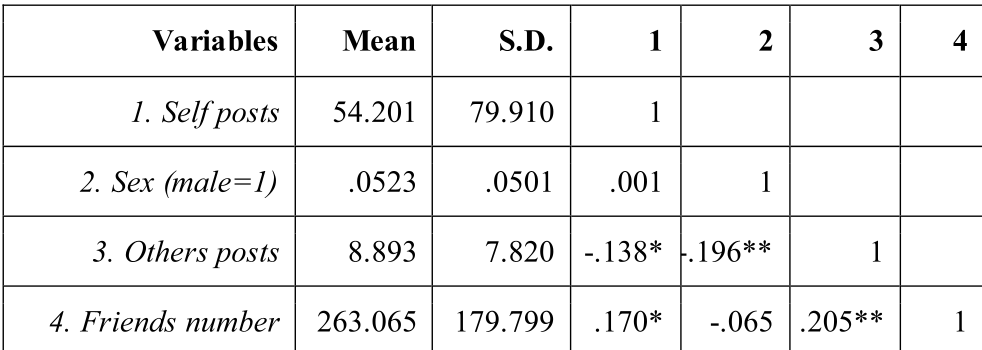
- Dependent Variable: Self posts (frequency of status updates, photos, etc.).
- Independent Variable: Friends number (size of the social graph).
- Control Variables: Sex and Others posts (inbound interaction from friends).
Experimental Analysis & Results
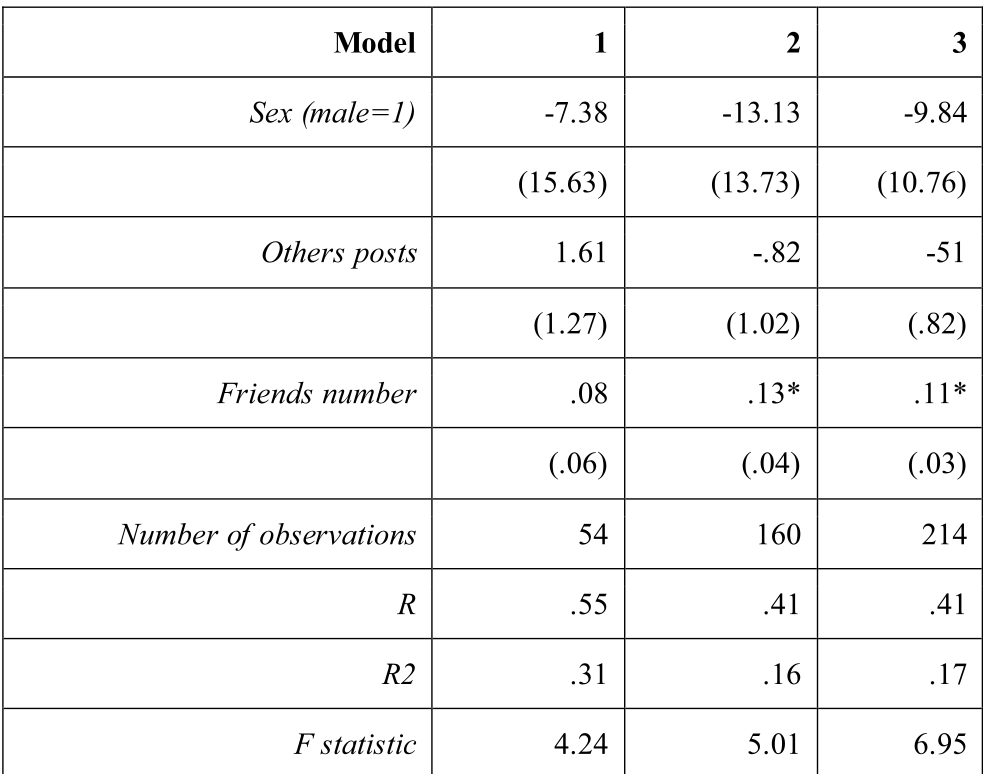
The author segmented the 214 participants into "Privacy Aware" (those using custom lists) and "Non-Privacy Aware" groups.
Key Findings:
- High Awareness: 75% of users were actively managing their privacy settings, mirroring findings by Boyd and Hargittai.
- The Network Effect: In Model 2 (Privacy Aware users), the coefficient for the number of friends was 0.13 (p < .001). This statistically significant result confirms that as the audience grows, users do not stop posting; instead, they become more selective about who sees what.
- Gender Nuance: Interestingly, the study noted a significant correlation between females and receiving posts from others, suggesting different social engagement patterns across genders.
Critical Insight: Why This Matters
The fundamental takeaway is that privacy is a facilitator of activity, not a deterrent. If users felt they had no control over their audience, they would likely terminate their activity altogether to avoid social friction.
Limitations & Future Outlook
While the study is robust, the author acknowledges the limitations of the Graph API, which prevented a full analysis of network density. Furthermore, the data was collected just before Facebook's major 2011 privacy policy overhaul.
Conclusion
For modern business models, the lesson is clear: ethical Big Data management is not about taking data, but about co-managing it with the user. Customers of the future will demand not just protection, but the "right to delete" and granular control over their digital shadows. As we move further into the age of AI, the ability to manage one's "Analytical Profile" will become a standard consumer expectation.