
Predicting the Heart of the User: Mapping SNS Motivations through Observable Data
Associations between privacy, risk awareness, and interactive motivations of social networking service users, and motivation prediction from observable features
This paper investigates the relationships between SNS user motivations, risk awareness, and information disclosure behaviors on Facebook. It introduces a binary logistic regression framework to analyze factors influencing "openness scores" and proposes a novel method to predict latent user motivations (Inward, Outward, Neutral) using only publicly observable profile features.
TL;DR
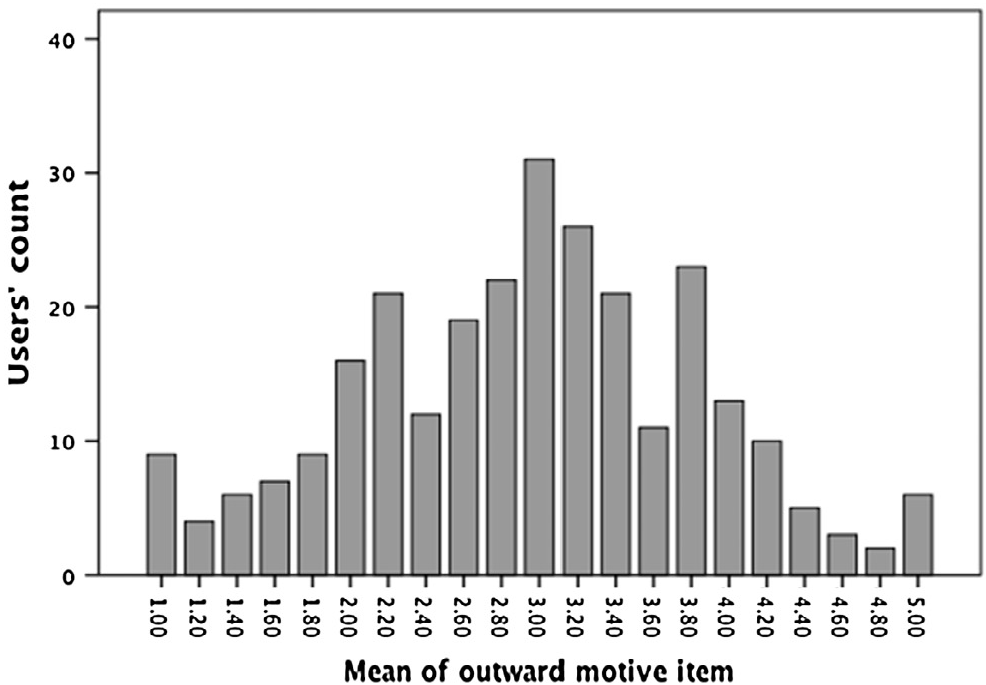
Can we know why someone uses Facebook just by looking at their public profile? This study by Mvungi and Iwaihara proves we can. By analyzing 276 users, the researchers built logistic regression models that predict whether a user is looking for new friends (Outward) or maintaining old ones (Inward) with up to 85.8% accuracy, using nothing but publicly visible data like friend counts and profile pictures.
Problem & Motivation: Beyond the Survey
Typically, understanding user psychology requires long, tedious questionnaires. For SNS providers, this isn't scalable. Moreover, there is a persistent gap between what users say about privacy and what they actually do.
The authors noticed a "diversity of disclosure." Some users share everything; some share nothing. The core question was: Is this diverseness driven by different underlying motivations? If we can predict these motivations from public "signals," we can build better friend recommendation systems and smarter privacy assistants.
Methodology: The Logic of Disclosure
The researchers split the task into two parts:
- Factor Analysis: Identifying which factors (Risk Awareness, Gender, Age) correlate with disclosure.
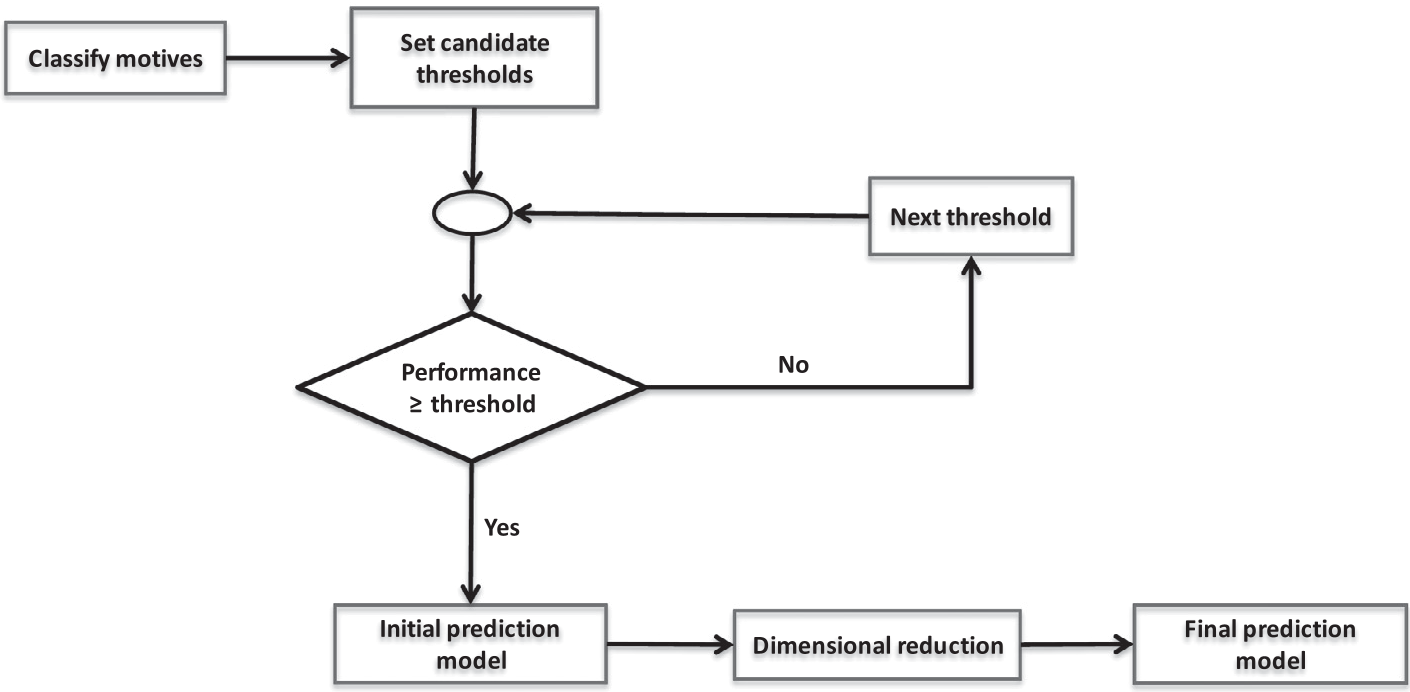
- Motive Prediction: Building the "Inversion" model—using the disclosure patterns to guess the motive.
Defining "Openness" and "Motive"
The study mathematically defines Openness Score (OS) as the count of items disclosed beyond the "Friends" scope. They further refine this into:
- Weighted Contact Openness (PC): Email, Mobile, etc.
- Weighted Non-Contact Openness (PNC): Hometown, Location, etc.
The Core Results: Signals in the Noise
The study revealed a fascinating shift in what matters as users become more "open":
- The Profile Photo Effect: For moderate users, having a profile photo is a massive predictor of openness. But for "super-sharers" (OS > 7), it stops mattering because everyone at that level has one.
- The Gender Gap: Females generally disclose less private contact information (like mobile numbers) than males, but this "gendered privacy" disappears at high disclosure levels—the most open users behave similarly regardless of gender.
Prediction Performance
The models for Inward-High and Outward-High motives performed exceptionally well.
| Motive | Accuracy | C-Statistics (Discrimination) |
|---|---|---|
| Inward-High | 77.5% | 0.692 |
| Outward-High | 80.7% | 0.689 |
| Inward-Low | 85.8% | 0.745 |
Quantitative Insight: The Risk Taking Behavior
Interestingly, the study found a "Positive Risk Relationship" for certain traits. Users with higher knowledge of "Social Security Number risks" sometimes disclosed more mobile phone info. This suggests a segment of "Risk-Aware but Tech-Active" users who consciously trade privacy for the utility of the platform.
Critical Analysis & Future Outlook
The beauty of this model lies in its simplicity. It doesn't require access to private messages or "lurking" data. It works on what is visible.
Limitations:
- Platform Specificity: The weights are tuned for Facebook. A LinkedIn or TikTok version might require different coefficients (e.g., "Professionalism" vs. "Entertainment").
- Temporal Shifts: Motivations change. A student looking for a job (Outward) might shift to Inward-only after getting hired.
Practical Takeaway: In the future, your SNS might warn you: "Your profile is set to 'Public,' but your behavior suggests you only care about your close friends. Would you like to tighten your privacy settings?" This paper provides the mathematical foundation for that exact feature.