
Beyond the Tech-Savvy Bubble: Re-evaluating Privacy and Security in Social Networks
User's Perspective: Privacy and Security of Information on Social Networks
This paper presents a literal replication and extension of the 2009 Sørensen and Skouby study regarding user requirements for next-generation social networks. Utilizing a survey of 113 participants with diverse backgrounds, the study investigates whether high privacy concerns are universal or limited to IT-savvy demographics.
TL;DR
This study replicates a foundational 2009 research project to determine if high privacy concerns in social networking sites (SNSs) are a universal sentiment or exclusive to IT experts. By surveying a diverse group of 113 users, the authors found that while concerns are widespread, general users are significantly more dissatisfied and confused by current security implementations than previously thought, signaling a desperate need for transparency and "Privacy by Design."
The Motivation: A Conflict of Perspectives
In the early eras of Facebook and MySpace, researchers were divided. Some suggested that users were "moderately concerned" yet continued to post private data because these platforms felt private. Others pointed to a small elite—the IT professionals—who demanded radical transparency.
The authors specifically targeted the work of Sørensen and Skouby (2009), which claimed users accepted security flaws but wanted more privacy. However, that study only looked at seven Danish IT experts. This paper asks: Does the average user actually care, or are they just along for the ride?
Methodology: Testing Generalizability
To move beyond the "IT-expert bubble," the researchers gathered data from 113 individuals across various age groups (18-70+) and backgrounds (Environmental Health, Math, IT).
Key methodological shifts included:
- Bias Avoidance: Questions were redesigned to be open-ended. Instead of asking "Are you worried about security?", they asked "What features are problematic?".
- Structural Diversity: Moving from small-scale interviews to a structured survey to capture quantitative trends across genders and age groups.
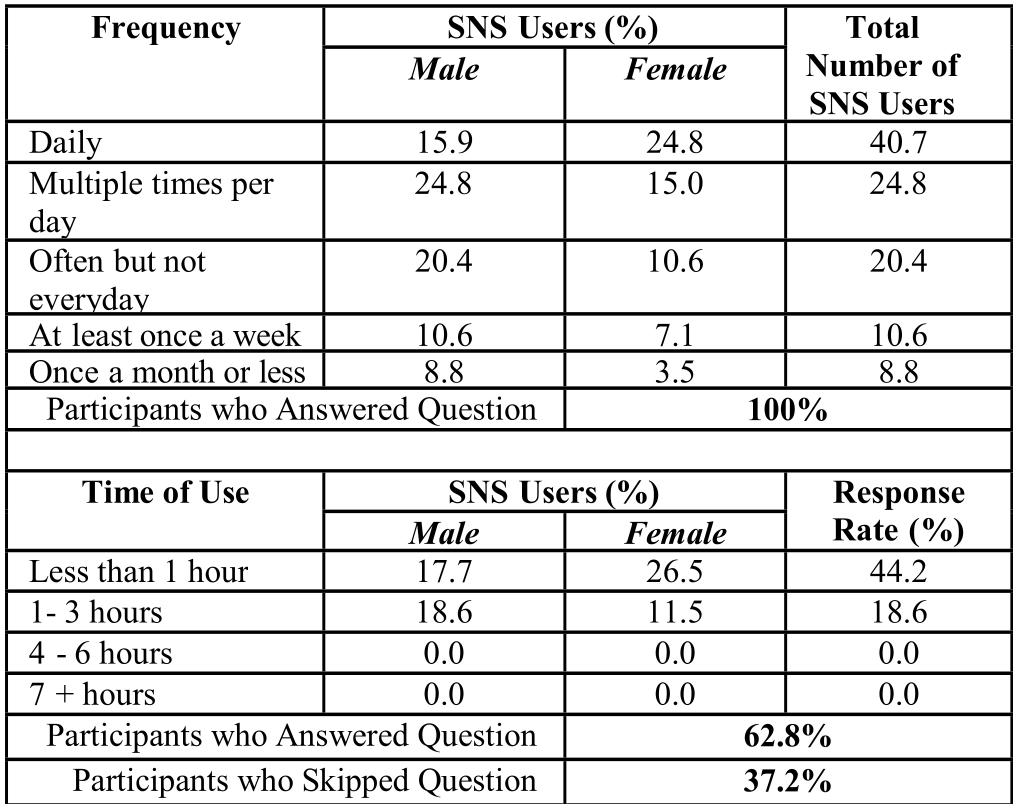
Quantitative Deep Dive: The Control Perception
One of the most striking findings involves the perception of "Control." In the original study, IT experts felt they understood the risks. In this broader sample, the data was more fragmented.
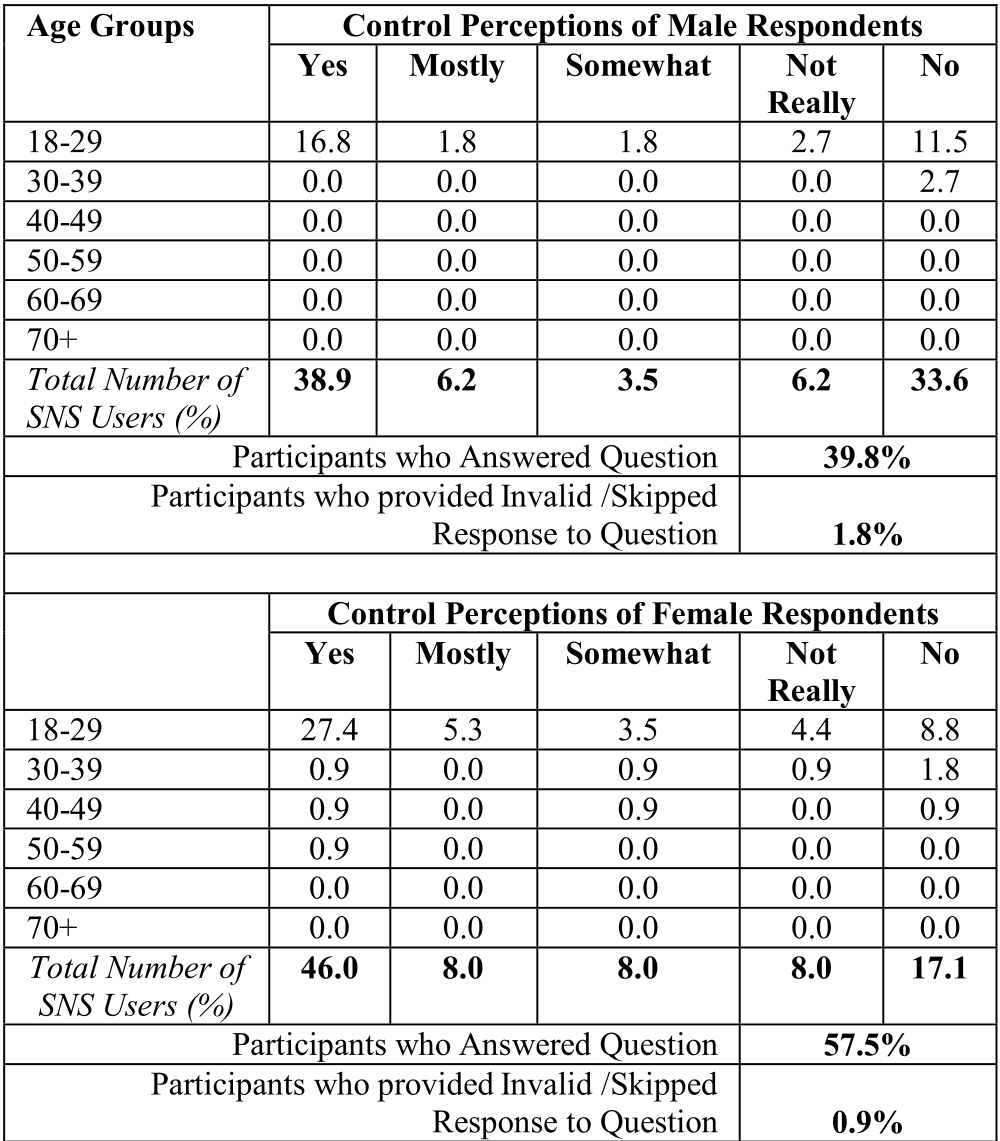
As shown in the data, a significant portion of younger users (18-29) felt they were "in control," yet paradoxically listed "inability to hide profile pictures" and "data being available to third parties" as major irritants. This suggests that perceived control is often an illusion created by familiar interfaces.
Key Findings & Critical Insights
- The Dissatisfaction Gap: While the 2009 study found users were "generally satisfied," this study found only 4% satisfaction. This reveals a growing friction between user expectations and platform behavior (ads, third-party apps, opaque settings).
- Security vs. Privacy: Unlike the original study where security wasn't even mentioned, this diverse sample explicitly demanded both. Users are worried about hackers and providers alike.
- The Desire for "Absolute Deletion": A recurring theme was the wish for a "delete means delete" function. Users expressed anxiety that their data persists in the "Internet ether" even after an account is closed.
Critical Analysis: The Way Forward
The study concludes that the "IT-interest" population is not a good proxy for the general public. While experts might "accept" risks through understanding, the general public "accepts" them through ignorance or lack of choice.
Takeaway for the Industry: The "Next Generation" of social networks must move away from complex, multi-step privacy menus. The authors advocate for a "Privacy by Design" approach where:
- Users own their data at all times.
- Information sharing with third parties is restricted by default.
- Transparency is a feature, not a footnote.
Future Work & Limitations
The authors acknowledge that while they broadened the demographic, the study was localized to a university environment. Future research should investigate whether users who know how to change settings actually feel safer, or if the knowledge itself increases their anxiety about what remains unprotected.