
Defining the Invisible Boundary: A Systematic Approach to Image Privacy in the SNS Era
Definition of Private Information for Image Sharing in Social Networking Services
This paper introduces a systematic classification framework and a privacy invasion table specifically designed for image sharing on Social Networking Services (SNS). By mapping sensitive image content (e.g., location, behavior, identification) against "Dunbar’s circles" based disclosure levels, the authors propose an automated access control methodology to prevent inadvertent privacy leaks.
TL;DR
Social Networking Services (SNS) have turned photo sharing into a daily ritual, yet users frequently leak sensitive data—leading to real-world consequences like job loss or security threats. This paper proposes a Privacy Invasion Classification Table that categorizes image content and maps it to social circles based on contact frequency. By moving from "All-or-Nothing" privacy to a granular, semantic-aware recommendation system, the authors provide a blueprint for safer digital sharing.
The Problem: The "Friends" Fallacy and One-Time Settings
Most SNS users suffer from two major hurdles when managing privacy:
- Semantic Blindness: Current systems don't distinguish between a photo of a "coffee cup" and a photo indicating "aberrant behavior" or "sensitive location."
- The Weak Tie Trap: We often have hundreds of "Friends," but according to the "Social Brain Hypothesis," we can only maintain stable relationships with about 150 people. Sharing a sensitive photo with all "Friends" often exposes it to "weak ties" who may misuse the information.
The authors argue that privacy isn't just about what you share, but the distance between the sharer and the viewer.
Methodology: The Two Axes of Privacy
The core of the paper is a classification framework built on two dimensions:
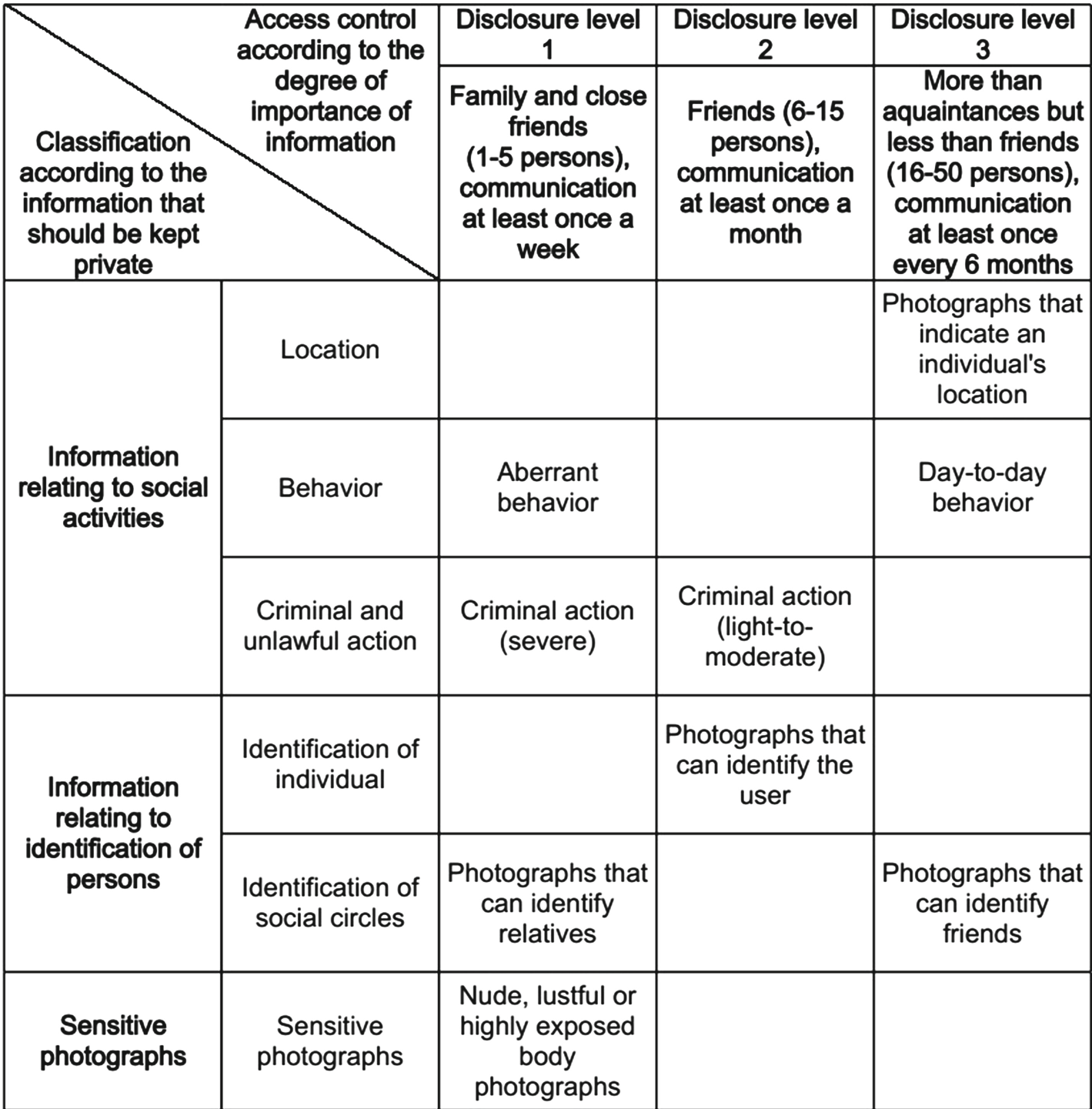
1. The Vertical Axis: Content Sensitivity
The authors identified key categories of information that trigger "sharing regret":
- Social Activities: Locations (regular vs. travel), behaviors (day-to-day vs. aberrant), and legal actions.
- Identification: Distinguishing between the user, their friends, and their relatives.
- Sensitive Content: Highly exposed or "lustful" imagery.
2. The Horizontal Axis: The Ego Network (Dunbar's Circles)
Instead of arbitrary groups, the authors use Frequency of Contact to define disclosure levels:
- Level 1 (Family/Close Friends): 1-5 people, contacted weekly.
- Level 2 (Friends): 6-15 people, contacted monthly.
- Level 3 (Acquaintances): 16-50 people, contacted every six months.
User Insights: What Do We Actually Care About?
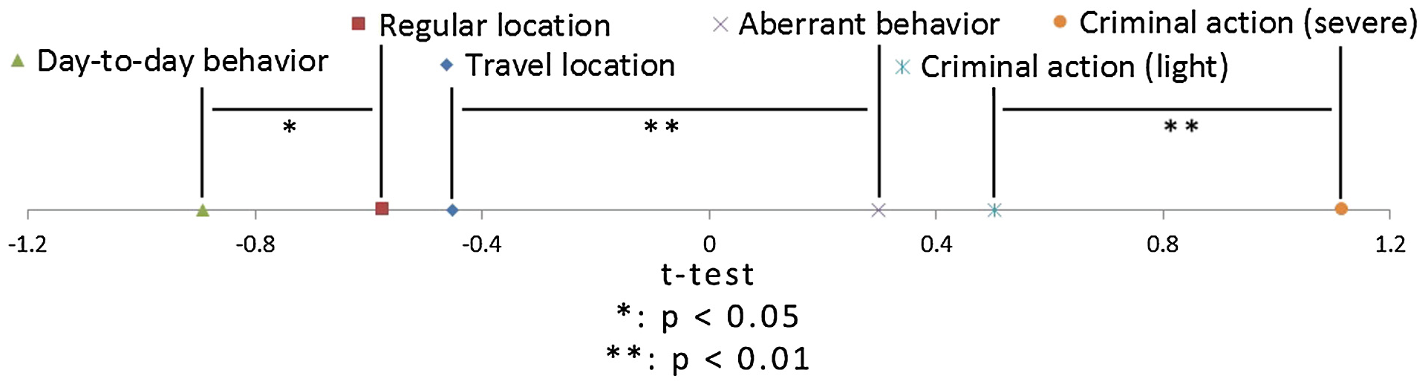
A user study using the ranking method revealed fascinating priorities. Participants were asked to rank items from "most private" to "least private."
- The Relative Rule: There is a statistically significant gap (p < 0.01) between identifying oneself and identifying relatives. Users are much more protective of family members' images.
- Behavioral Thresholds: "Aberrant behavior" and "Severe criminal actions" were consistently ranked as most sensitive, requiring the strictest access control (Level 1).
Proposed System: Automated Access Control
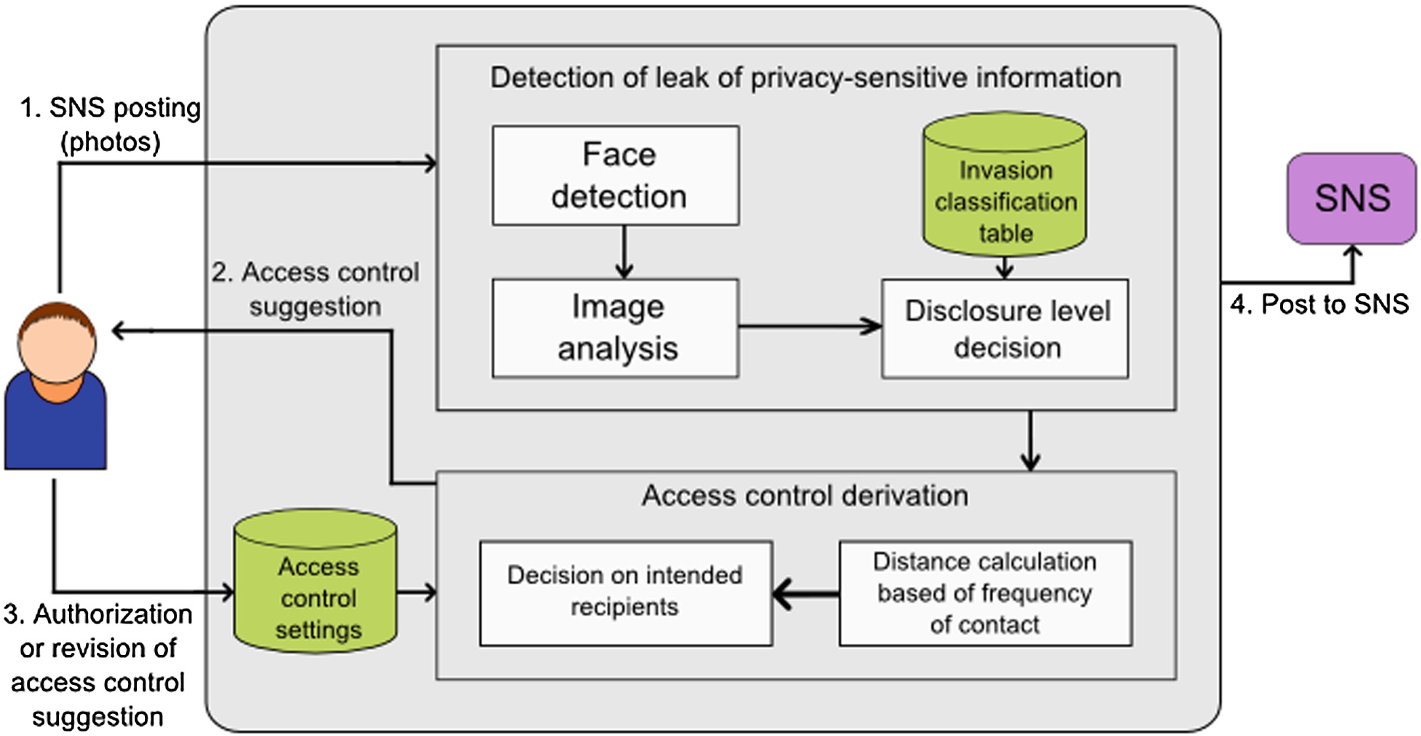
The final contribution is a three-step workflow designed to intervene before a user hits the "post" button:
- Detection: Face detection and semantic image analysis (e.g., detecting "nude" or "location-specific" markers).
- Derivation: Calculating the "social distance" of the user’s friends list based on interaction logs.
- Notification: Warning the user if a sensitive image is being shared too widely and suggesting a stricter Disclosure Level.
Critical Analysis & Conclusion
While the technical implementation of "semantic behavior analysis" (detecting a "criminal act" in a photo) remains a challenge for 2014-era computer vision, the conceptual framework is a major step forward.
Key Takeaways:
- Privacy tools must be proactive, not reactive.
- Contact frequency is a reliable, quantifiable proxy for trust.
- Guidelines must prioritize "Identifiability" of others, not just the user.
Limitations: The study sample (20 people, mostly aged 20-29) is small and potentially biased toward tech-savvy younger users. Future AI-driven systems could automate this classification, but human-in-the-loop verification remains essential for nuanced social contexts.