
Defining the Invisible Boundary: A Scientific Framework for Image Privacy in Social Networks
Definition of Private Information for Image Sharing in Social Networking Services
This paper introduces a systematic classification framework for private information in images shared on Social Networking Services (SNS). By mapping specific image content (e.g., location, behavior, identification) to five hierarchical disclosure levels based on "Dunbar’s circles," the authors propose an automated access control recommendation system to mitigate privacy leaks.
TL;DR
As image sharing becomes the primary mode of social interaction, the risk of "regretful posting" grows. This paper proposes a formal Privacy Invasion Classification Table that maps specific visual content—like your location or social circle—to specific "circles of trust" based on how often you actually communicate with people. The goal is to move beyond the "Friends vs. Everyone" binary toward an automated, nuanced access control system.
Context: The Burden of "All-or-Nothing" Privacy
Most SNS users share images in a "hot state" of emotion, only to realize later that a photo of a glass of wine or a tagged location could jeopardize their professional lives. Current platforms offer "Friends" lists, but these lists are often cluttered with "weak ties"—acquaintances we haven't spoken to in years. The authors identify a critical lack of guidelines that connect what is in an image with who should see it.
The Core Insight: Mapping Content to Dunbar’s Circles
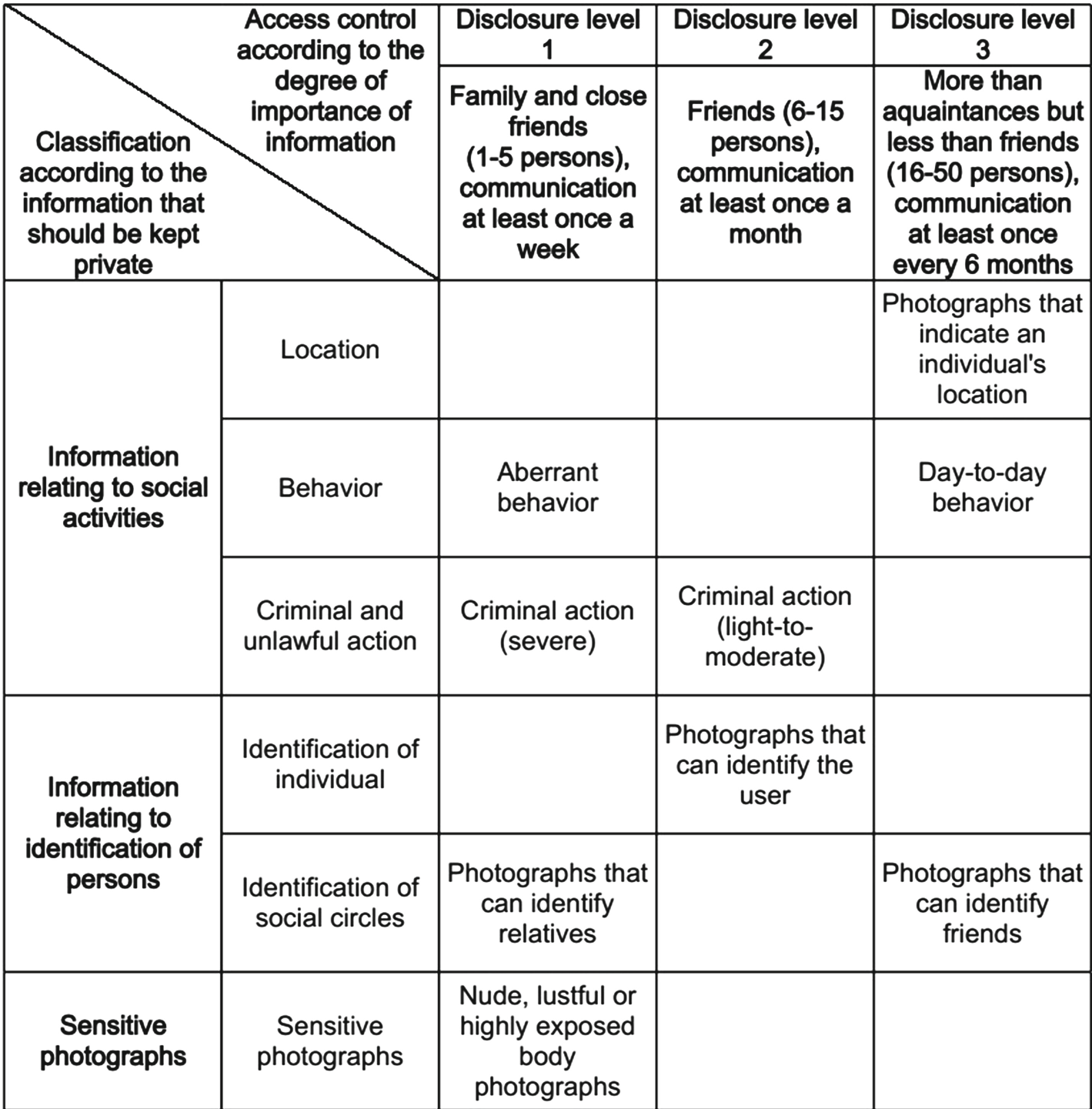
The researchers leverage the sociological concept of Dunbar’s Circles, which suggests humans have cognitive limits on social group sizes. They translate this into five Disclosure Levels based on communication frequency:
- Level 1 (Family/Close Friends): 1-5 people, contacted weekly.
- Level 2 (Friends): 6-15 people, contacted monthly.
- Level 3 (Acquaintances+): 16-50 people, contacted bi-annually.
- ...up to Level 5 (Public/Strangers).
The Privacy Invasion Table
By combining these levels with specific information types, the authors created a regulatory grid for image sharing:
Methodology: Validating Human Intuition
Through an online survey, participants ranked categories like "Criminal Action," "Location," and "Identification of Relatives." The results (visualized via scale values) showed clear psychological thresholds:
- Identification of Relatives is viewed as significantly more private than Identification of Friends.
- Severe Criminal Action and Sensitive/Nude Photos are the only items users felt should be strictly limited to Level 1.
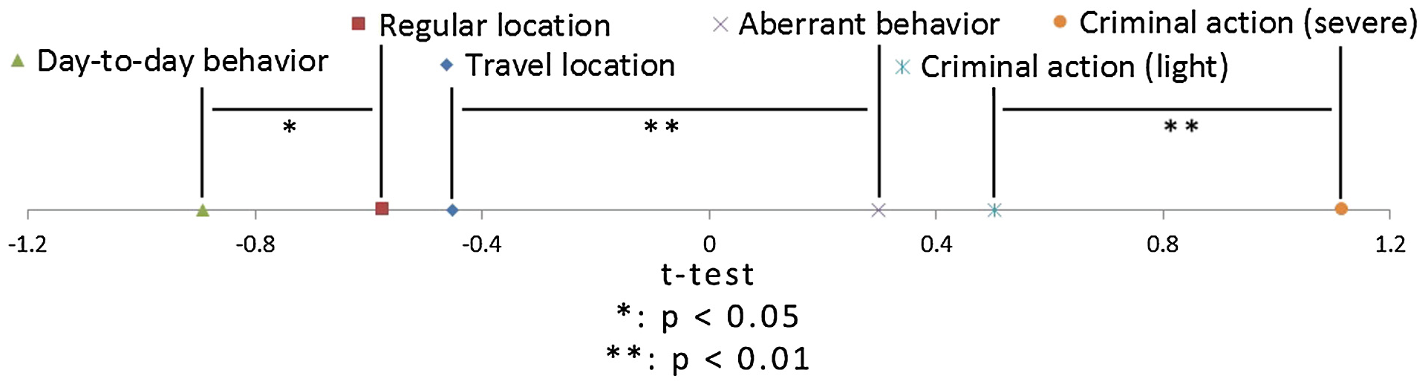 Figure 1: Scale values showing the perceived sensitivity of different social activity types.
Proposed System: Proactive Access Control
The paper doesn't just stop at theory; it proposes a three-step system architecture:
- Detection: Using face detection and semantic analysis to identify what’s in the photo.
- Derivation: Calculating the "social distance" of the user's friends list based on interaction logs.
- Notification: Warning the user before they hit "Post" if the image contains high-risk content (e.g., "This looks like a sensitive photo; we recommend sharing only with Close Friends").
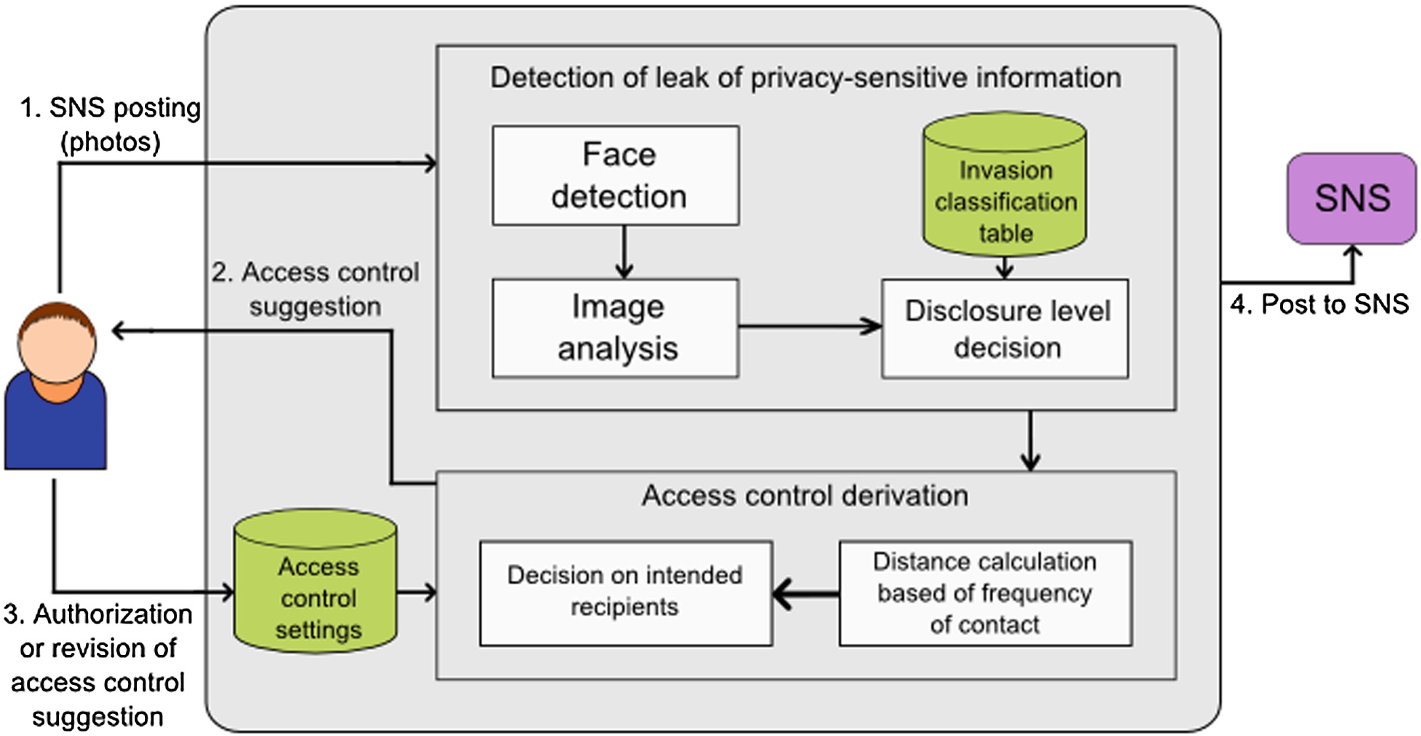 Figure 2: The proposed workflow for an automated privacy-aware posting assistant.
Critical Insight & Limitations
While the guidelines are robust, the authors candidly admit that automated semantic analysis (e.g., distinguishing between a "regular activity" and an "aberrant behavior") remains a technical hurdle. In 2014, machine learning was less advanced than today’s GPT-4V or LLaVA models, which could now potentially implement this framework with high accuracy.
Conclusion
This work provides the "missing link" between sociological trust and digital access control. By quantifying privacy through the lens of contact frequency, it offers a blueprint for future SNS architectures that protect users from their own sharing impulses. The takeaway for the industry is clear: privacy shouldn't be a setting you toggle; it should be an intelligence that understands your social fabric.