
Harnessing the Hierarchy: Probabilistic Tag Recommendation in Social Networks
Probabilistic Approaches to Tag Recommendation in a Social Bookmarking Network
The paper introduces personalized probabilistic algorithms for tag recommendation within social bookmarking networks like Delicious. It proposes two collaborative filtering approaches—Tag-Based and Position-Based—alongside a content-based baseline, achieving significant improvements in tag prediction accuracy by leveraging user-specific tagging histories and structural patterns in tag lists.
TL;DR
Researchers from the University of Tulsa have developed a personalized agent-based system designed to simplify the tagging process on social bookmarking sites like Delicious. By moving from tag generation to tag recognition, the system reduces user effort while improving the emergence of a "folksonomy." Their core finding? The position of a tag in a list is a powerful signal for its relevance, allowing their new algorithm to outperform traditional collaborative filtering by over 60%.
The "Folksonomy" Friction
In an era of information overload, tags are the bridges between browsing and searching. However, manual tagging is cognitively expensive. While "folksonomies"—collaboratively created classification systems—are valuable, they often suffer from inconsistent definitions and sparse data. The authors identify a primary pain point: existing systems don't account for the behavioral nuance of how humans actually tag.
Proving the Hypothesis: Similar Content = Similar Tags
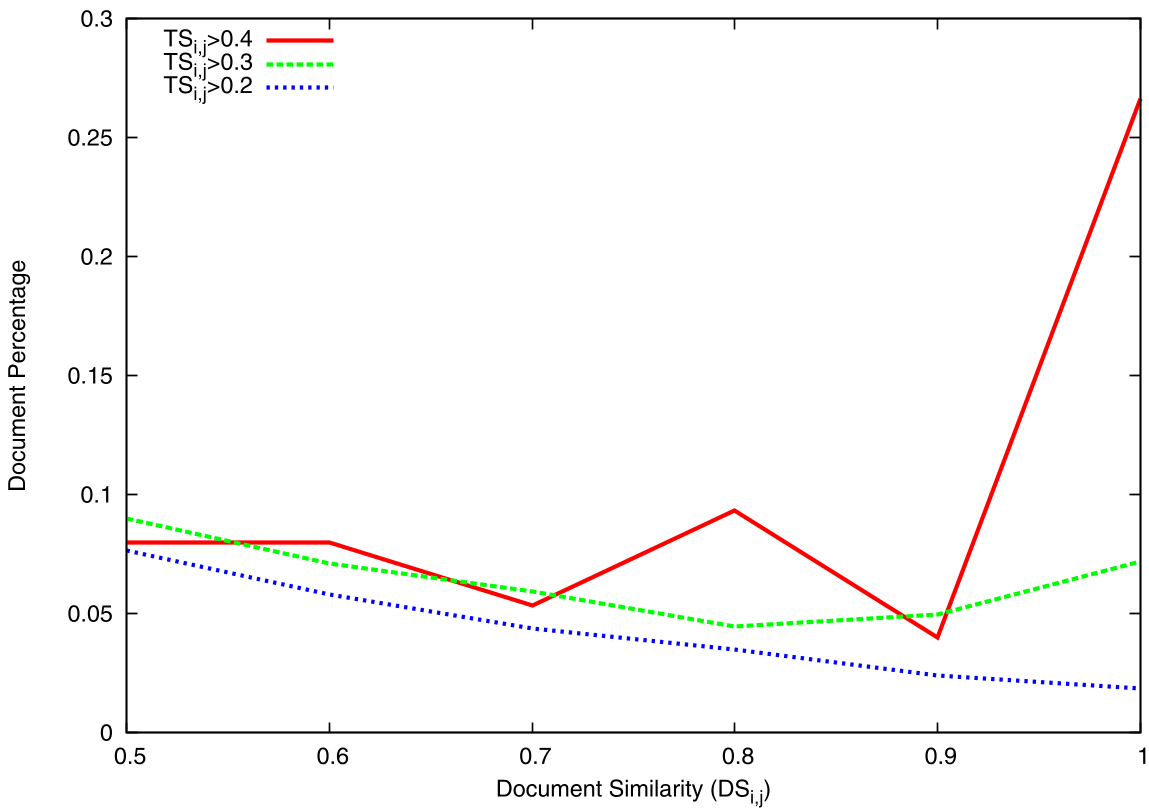
Before diving into the algorithms, the authors validated a crucial intuition: Do similar documents actually share similar tags? Using a Cosine Similarity measure on document vectors (TF-IDF) and comparing it to tag intersection sets, they confirmed a strong correlation. As seen in the figure below, documents with high content similarity (DS > 0.5) consistently show higher tag overlap (TS).
Methodology: From Content to Context
The paper explores three distinct approaches:
- Content-Based: Recommends tags a user has used in the past for similar documents.
- Collaborative Tag-Based: Uses a Bayesian approach to calculate the probability —the likelihood user i uses tag t given that user j (a similar neighbor) used it.
- Collaborative Position-Based (The Breakthrough): This approach posits that tags applied first are often general, while subsequent tags become increasingly specific. It calculates the probability that user i will adopt user j's -th tag.
The Position-Based Intuition
Why does position matter? In social bookmarking, the first tag is often the primary category (e.g., "programming"), while the fifth might be a specific syntax/library (e.g., "python-concurrency"). By weighing these positions using m-estimates to handle low-data scenarios, the agent learns the "rank-aware" preferences of the user.
Performance & Results
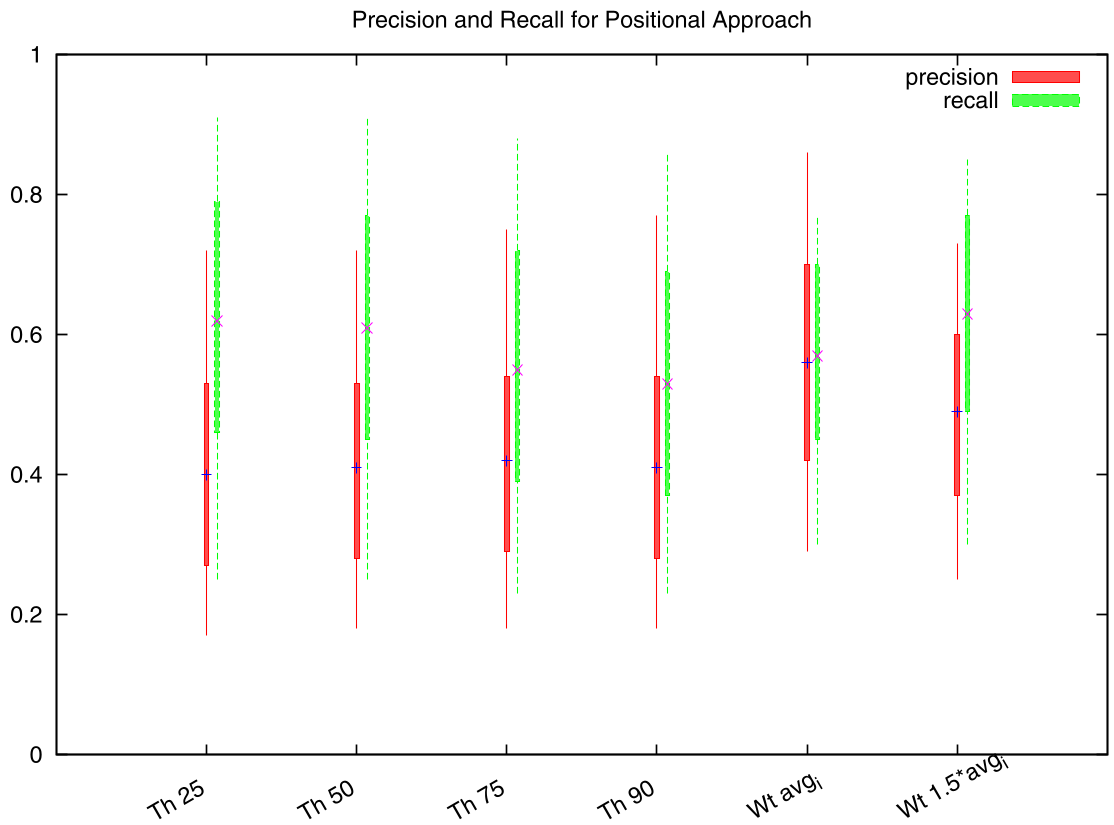
The comparison was conducted using 32 highly active users from the Delicious dataset (November/December 2007). The results were definitive:
| Metric | Content-Based | Collaborative (Tag) | Collaborative (Position) |
|---|---|---|---|
| Precision | 0.15 | 0.34 | 0.56 |
| Recall | 0.31 | 0.36 | 0.58 |
Note: The Position-Based approach offers nearly double the precision of the standard tag-based collaborative method.
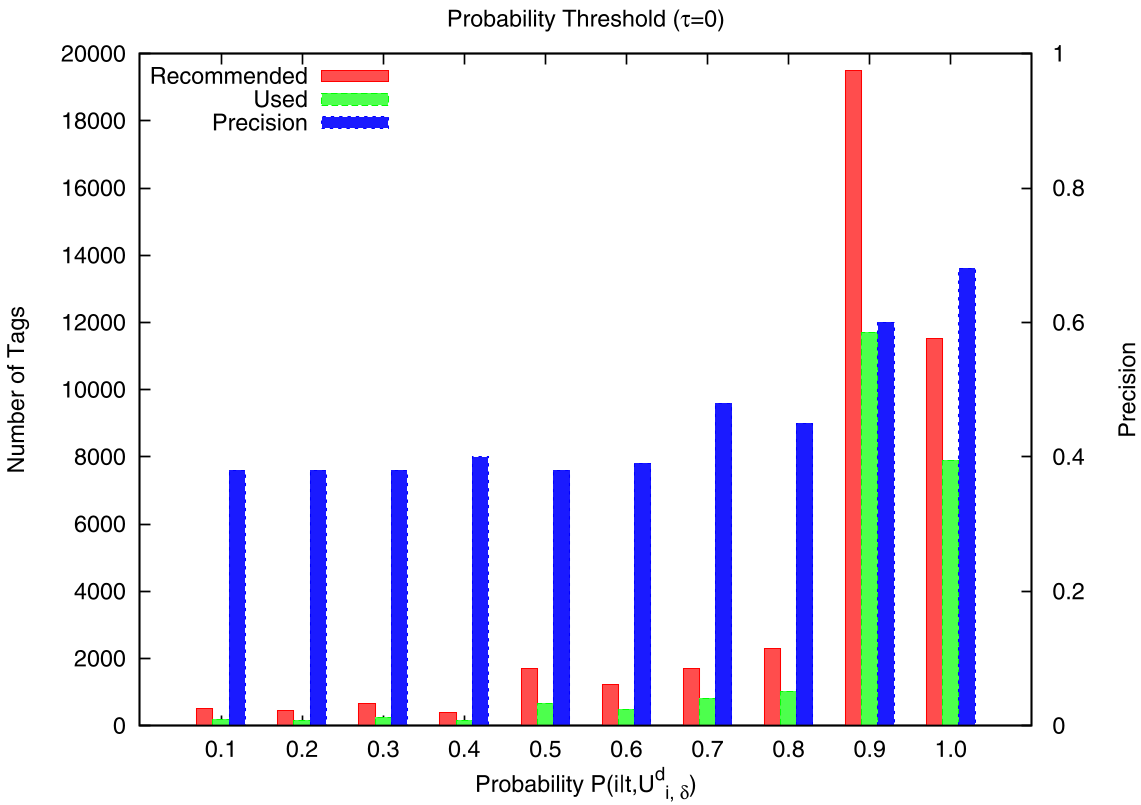
The study also revealed that as the calculated probability increases, the actual adoption of the tag by the user increases linearly, validating the reliability of the probabilistic score.
Critical Insight & Conclusion
The success of the Position-Based approach highlights a critical aspect of Human-Computer Interaction (HCI): user-provided data is rarely just a "bag of words"—it is a sequence. The order of input is a proxy for cognitive importance.
Takeaway for Practitioners: When building recommendation engines for user-generated metadata (tags, reviews, or categories), don't just look at what was entered. Look at when and in what order it was provided. That sequence is the key to unlocking true personalization.
Limitations: The study relied on a dataset of "active" users. The performance on "cold-start" users (those with very few bookmarks) remains an open challenge, as the Bayesian probabilities require an initial history to stabilize.