
SUNNY: Solving the "Trust vs. Certainty" Dilemma in Social Networks
16354_Using probabilistic confidence models for trust inference in Web-based social networks.
The paper introduces SUNNY, a novel trust inference algorithm for Web-based social networks that utilizes probabilistic confidence models. Unlike prior methods that conflate trust and certainty, SUNNY separately estimates trust values and the confidence level in those estimates, achieving SOTA accuracy on the FilmTrust dataset.
TL;DR
Researchers from the University of Maryland have developed SUNNY, a trust inference algorithm that fixes a fundamental flaw in how social networks calculate trust. By explicitly modeling Confidence as a probabilistic variable separate from Trust, SUNNY filters out noisy information and significantly improves the accuracy of recommendations in real-world environments like FilmTrust.
The Problem: When "I Don't Know" Looks Like "I Don't Trust"
In social computing, we often rely on "transitive trust"—if Alice trusts Bob, and Bob trusts Charlie, Alice can infer how much to trust Charlie. However, traditional algorithms like TIDALTRUST often treat distance or lack of data as a reduction in the trust value itself.
From a technical perspective, this is a Signal Processing error. If a path is long or the sources are inconsistent, our certainty should decrease, but the estimated value shouldn't necessarily drop. Prior works conflated these two, leading to "amalgamated" values that are mathematically difficult to evaluate.
Methodology: Bayesian Logic Meets Social Graph
The core innovation of SUNNY is its two-step architecture:
- Probabilistic Mapping: The social graph is transformed into a directed acyclic graph (DAG) where nodes represent the logical proposition: "Does node N believe in the target?"
- Sampling for Bounds: Instead of a single point estimate, SUNNY uses Probabilistic Logic Sampling (based on the Recursive Noisy-OR rule) to find the Lower (P⊥) and Upper (P) bounds of confidence.
 Figure 1: Conceptual overview of trust propagation.
By running iterations of stochastic simulation, the algorithm identifies which nodes provide high-confidence signals. It then prunes the "noisy" or "uncertain" parts of the network, leaving a high-quality backbone for the final trust calculation.
Experimental Results: Precision Matters
The authors tested SUNNY against TIDALTRUST and MoleTrust using data from FilmTrust, a social movie-rating site.
| Algorithm | Mean Absolute Error (MAE) | Standard Deviation |
|---|---|---|
| SUNNY (TIDAL) | 1.769 | 1.43 |
| TIDALTRUST | 1.832 | 1.44 |
| SUNNY (Mole) | 1.814 | 1.49 |
| MoleTrust | 1.857 | 1.47 |
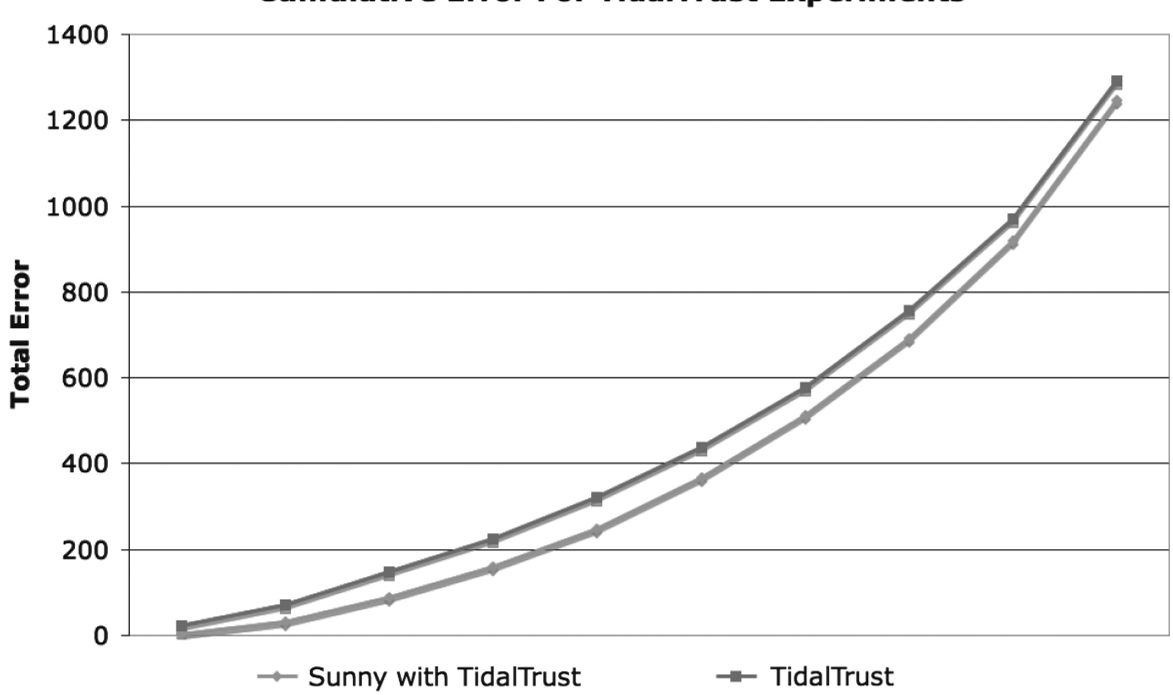 Figure 2: Distribution of error rates across 697 tested edges.
The results show a statistically significant reduction in error. SUNNY effectively "tightens" the predictions, resulting in a higher density of low-error inferences (as seen in the error distribution charts in the paper).
Critical Insight: Why Does Pruning Help?
One might assume that more data equals better results. SUNNY proves the opposite in social trust: Inductive Bias towards high-confidence sources is more valuable than exhaustive graph traversal. By ignoring low-confidence nodes (even if they have high trust values), SUNNY avoids the "averaging-out" effect where a few uninformed nodes pull a trust estimate toward the mean.
Conclusion & Future Directions
SUNNY represents a shift from "calculating trust" to "reasoning about uncertainty." As we move into an era of massive, automated agents and Web3 social graphs, the ability to distinguish between "I trust this agent at 0.5" and "I am only 50% sure about this agent" will be the difference between secure systems and those vulnerable to manipulation.
Future Outlook: The authors suggest integrating SUNNY into real-time military or intelligence workflow systems where conflicting second-hand reports are common. The framework’s flexibility—acting as a "confident subnetwork generator" for other algorithms—makes it a powerful tool for any graph-based recommendation engine.