
Probabilistic Range Monitoring: High-Speed Querying over Uncertain Geostreams
Probabilistic Range Monitoring of Streaming Uncertain Positions in GeoSocial Networks
The paper introduces a probabilistic framework for monitoring streaming uncertain positions in GeoSocial networks using a Bivariate Gaussian model. It proposes an (ε, δ)-approximation algorithm that employs discretized probabilistic verifiers to evaluate continuous range queries in real-time, effectively balancing privacy-aware location obfuscation with query precision.
TL;DR
In the era of GeoSocial networking, users often share "cloaked" or fuzzy locations to protect privacy. This paper presents a robust framework for handling these uncertain positions as Bivariate Gaussian streams. By replacing expensive integral calculus with discretized probabilistic verifiers and smart pruning, the authors enable real-time tracking of friends in moving regions with guaranteed confidence margins.
The Conflict: Privacy vs. Utility
The core challenge in modern Location-Based Services (LBS) is a paradox. Users want "proximity alerts" (e.g., Notify me when a friend is within 500m), but they don't want the server to know their exact coordinates. Privacy-preserving protocols result in uncertain data—instead of a point , the server receives a "probability cloud."
Previous solutions suffered from two extremes:
- Disk-based Indexes (R-trees/U-trees): Too slow for massive streaming updates (rebalancing overhead).
- Monte-Carlo Simulations: Too CPU-intensive for continuous monitoring.
Methodology: The Power of Discretization
The authors propose treating each uncertain object as a Bivariate Gaussian distribution. To avoid complex integration, they approximate the uncertainty region using a 2D grid called a Verifer.
1. The Discretized Verifier
The Minimum Bounding Box (MBB) of a Gaussian distribution (roughly ) is divided into boxes. Each box has a precomputed weight representing the probability that the user is in that specific cell.
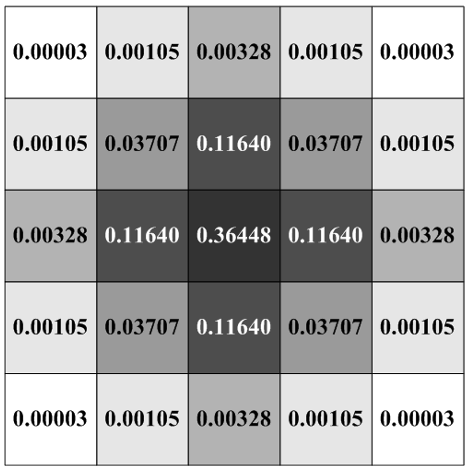 Figure 1: (a) Box weights for ; (b) Verification of an object against a query range.
2. Pruning and Eager Rejection
The real "secret sauce" lies in how the server avoids work:
- Minimal Area Pruning: If the physical overlap between the query and the user's uncertainty region is smaller than a precomputed "threshold area," the user is discarded instantly.
- Spiroid Visiting Order: Instead of scanning the grid row-by-row, the algorithm starts at the center (highest density) and moves outward in a spiral.
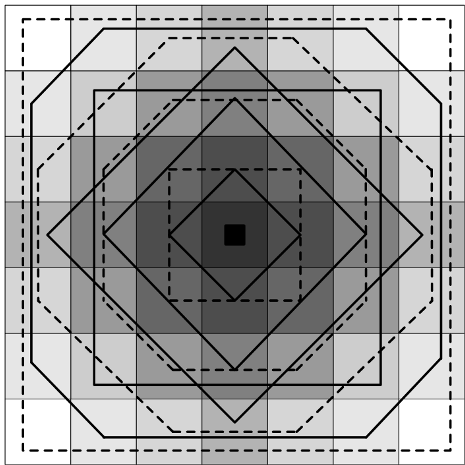 Figure 2: Visiting the most likely cells first allows the system to reach the probability threshold faster, enabling "Eager Rejection" or "Early Qualification".
Experimental Insights
Testing against a road network of Athens with 100,000 objects, the researchers achieved significant performance gains.
- Scalability: The system handles 10,000 concurrent queries in under 30 seconds per cycle.
- Accuracy: The -approximation ensures that errors remain within a 5% margin with 97% confidence.
- Efficiency: The spiroid visiting order (Figure 2) was shown to be vastly superior to naive strategies, particularly as the "certainty threshold" increases.
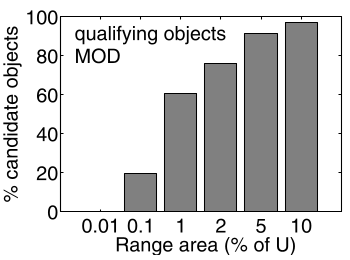 Figure 3: Breakdown of execution cost vs. uncertainty .
Critical Analysis & Takeaways
The brilliance of this paper is the move from geometric indexing to probabilistic discretization. By recognizing that Gaussian weights are independent of (once normalized), the authors created a "one-size-fits-many" lookup table system.
Limitations: The model assumes objects move freely (independence of and ). In highly constrained environments (e.g., a one-way tunnel), the Bivariate Gaussian might not fit, requiring more complex "Distribution Transformation" which would increase the discretization complexity.
Future Outlook: This methodology could be adapted for Multi-modal tracking (combining GPS with Wi-Fi signal strength), where uncertainty is non-Gaussian but can still be discretized into similar probabilistic grids for real-time edge computing.