
Decoding Implementation Failure: A Problem-Centered Framework for Enterprise Social Software
A problem-centered analysis of enterprise social software projects
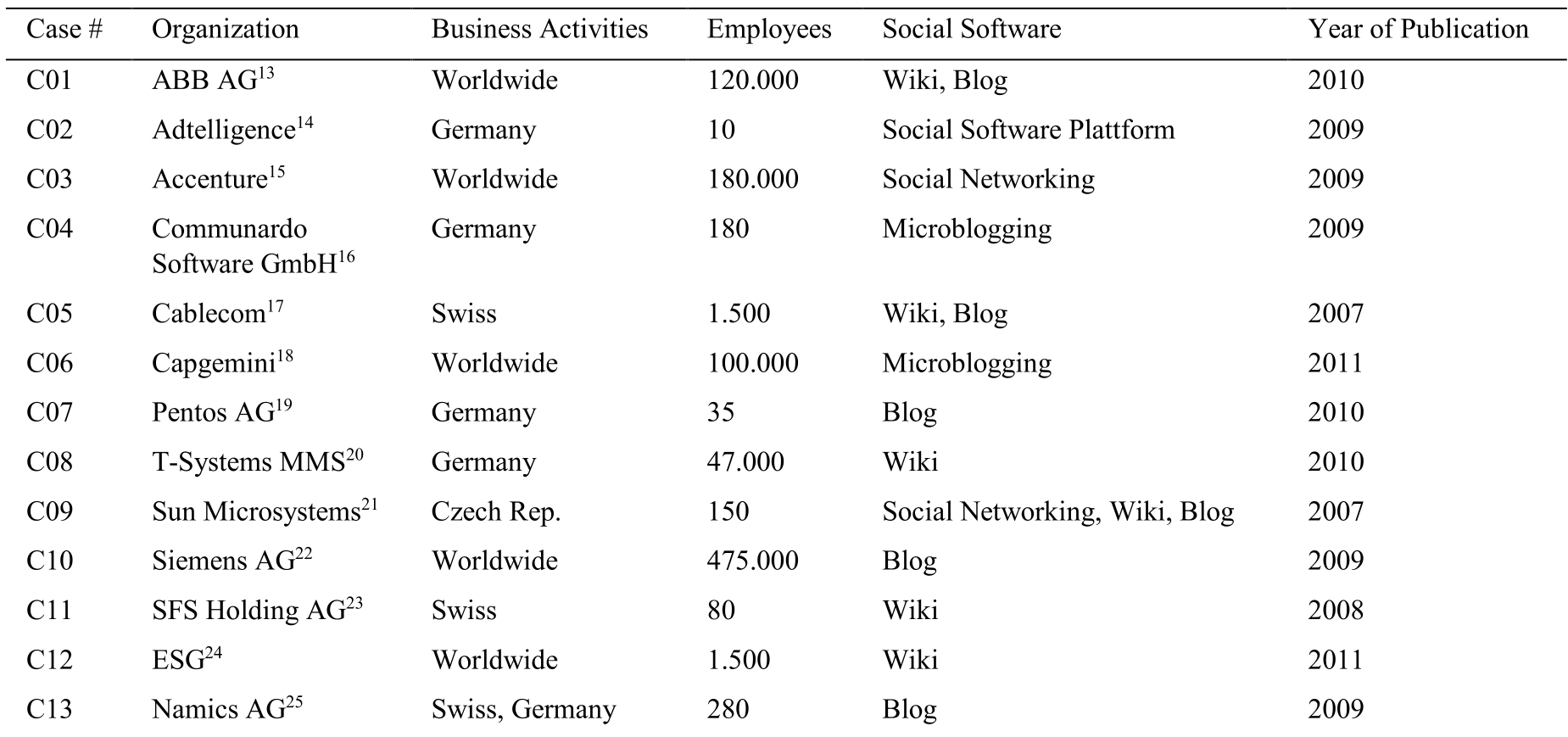
This paper presents a problem-centered analysis of Enterprise Social Software (ESS) projects, identifying 21 critical barriers to successful implementation. Through an inductive qualitative study involving 13 case studies (e.g., ABB, Siemens, Accenture) and 6 expert interviews, the authors developed a framework categorizing these issues into Project Management, Technology, Culture, Management, and Employees.
Executive Summary
TL;DR: Implementation of Enterprise Social Software (ESS)—like Wikis, Blogs, and Social Networks—often fails not because of the tech, but due to human and organizational friction. This paper identifies 21 core problems across five dimensions (Project Management, Technology, Culture, Management, and Employees) by analyzing 13 major corporate case studies and veteran expert interviews.
Academic Context: This work moves beyond the "Pro-Innovation Bias" that dominates IS research. Instead of asking "How do we succeed?", it adopts a "Problem-Centered" lens to map the graveyard of implementation hurdles, providing a robust framework for risk mitigation in Enterprise 2.0 projects.
The "Success Factor" Blind Spot
In Information Systems (IS) research, the spotlight usually shines on Success Factors. However, authors Alexander Forstner and Dietmar Nedbal argue that this creates a dangerous knowledge gap. Organizations often dive into social software projects without understanding the "Why" behind common rejections.
The researchers identified that problems are often only recognized in retrospect, leading to exponential increases in work and costs. Their intuition: By categorizing the barriers, we can create a "pre-flight checklist" for digital transformation.
Methodology: The Two-Fold Qualitative Approach
The study avoids the shallowness of large-scale surveys by using two deep qualitative phases:
- Case Study Analysis: Investigating 13 high-profile implementations (including giants like Siemens, ABB, and Capgemini).
- Problem-Centered Interviews (PCI): Engaging with Innovation Managers and IT leads to uncover "unspoken" failures that standard reports might gloss over.
The Taxonomy of Problems
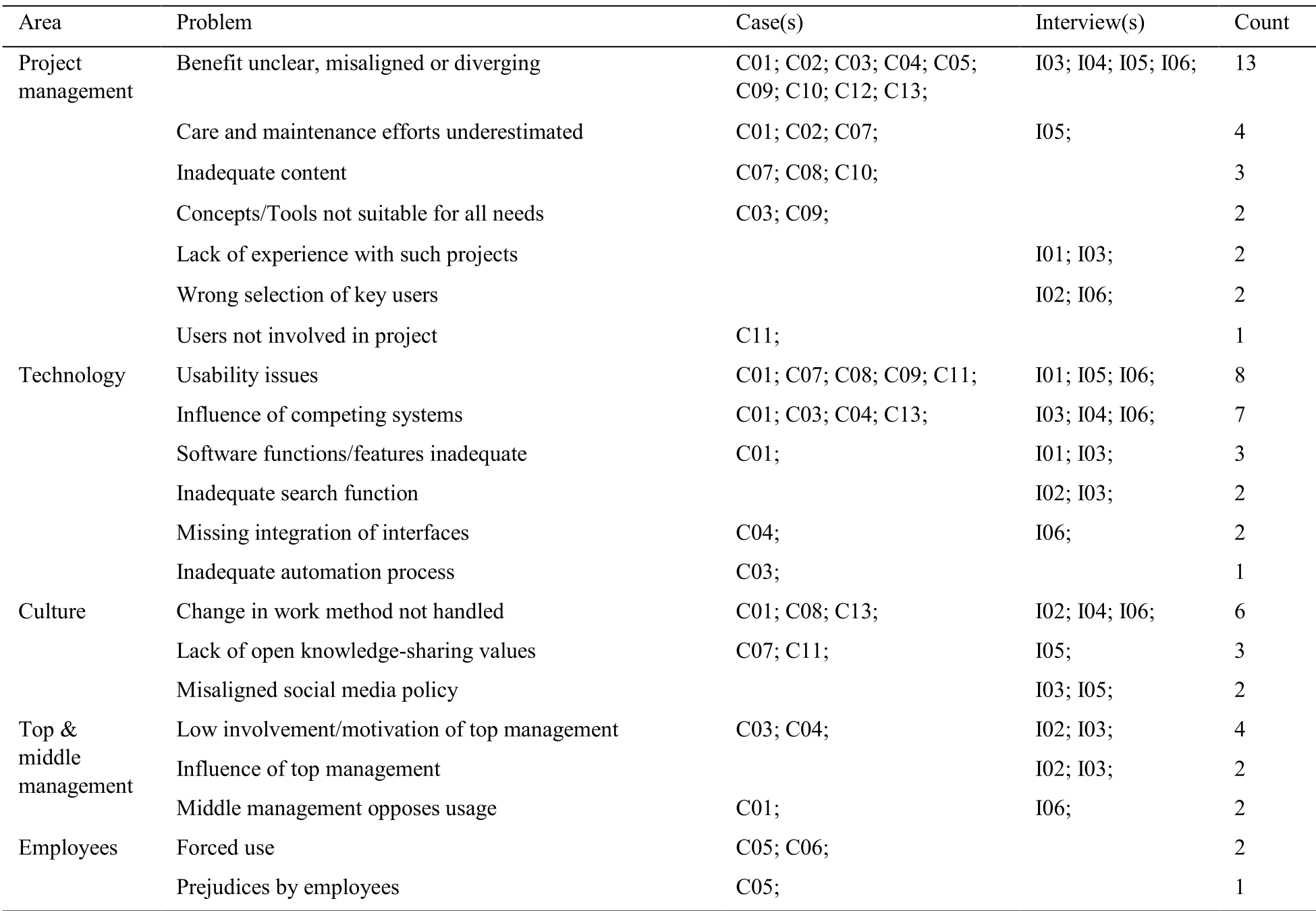
The researchers synthesized their findings into the following framework:
Core Insights: Why Projects Stall
1. The Benefit Vacuum (Project Management)
The most frequent problem (Count: 13) was that benefits were unclear or misaligned. If employees don’t see how a Wiki saves them time immediately, they treat it as "extra work."
- The Fix: Precise definition of use cases and "Idea Contests" to foster organic engagement.
2. The "Pull" Resistance (Culture)
A critical psychological barrier discovered was the Change in Work Method. Traditional corporate communication is "Push" (I send you an email; you must read it). Social software is "Pull" (Information is there; you must seek it). Many employees fail to navigate this transition without explicit change management.
3. The Shadow of Legacy Systems (Technology)
Technological failure rarely stems from a lack of features. Instead, the Influence of Competing Systems (like legacy intranets or entrenched email habits) creates "platform fatigue." If a new tool doesn't replace an old one, it’s just another tab to ignore.
Critical Analysis & Conclusion
Takeaways
The paper successfully shifts the focus from "features" to "flows." It highlights that Project Management issues (7 out of 21 problems) are the primary bottleneck, followed closely by Technology (6 problems). This suggests that even the best UX cannot save a project with a weak maintenance plan or an undefined ROI.
Limitations
- Sample Size: The expert interview phase included only 6 participants, which, while deep, limits statistical generalization.
- Pro-Innovation Bias: Even though the focus was on problems, all analyzed cases eventually achieved adoption. We still lack data on projects that were completely abandoned.
Future Outlook
As we move toward "Enterprise 3.0" involving AI agents and decentralized knowledge, the "Push vs. Pull" conflict identified here will only intensify. Future research must examine how automated content generation (AI) can solve the "Inadequate Content" problem noted in this framework.
Final Thought: If you are planning an ESS rollout, stop looking at the feature list. Start looking at your cultural "Pull" readiness.