
Beyond the Screen: Why We Get Hooked on Live Video Streaming
Problematic use of live video streaming services: Impact of personality traits, psychological factors, and motivations
This research investigates the psychological and behavioral drivers of problematic live video streaming usage. Utilizing an online survey of 338 participants, the study identifies that "neuroticism" and "escapism" are the strongest predictors of addiction to these real-time social platforms.
TL;DR
Is live streaming just the new Facebook, or something more addictive? This study of 338 users reveals that live video streaming addiction is uniquely driven by Escapism, Peeking, and certain personality traits like Neuroticism. Unlike general social media, factors like loneliness don't seem to play a role here—instead, it's about the thrill of the "live" moment and the chance to escape reality.
The "Live" Evolution of Social Media
The digital landscape has shifted from static selfies to real-time broadcasts. While previous research heavily documented the "Facebook effect," the rise of platforms like 17 and Inke (and more recently, Twitch and TikTok Live) introduced a new dynamic: real-time, bidirectional interaction with "Wang Hong" (Internet celebrities).
The authors argue that this isn't just a new medium; it's a new behavioral trap. The ability to buy digital gifts and receive immediate shout-outs creates a feedback loop that differs significantly from traditional social networking.
Methodology: Mapping the Addictive Mind
To understand what drives this "Problematic Use," the researchers utilized a two-step hierarchical regression. They didn't just look at who was using the apps, but why and how their personalities shaped that usage.
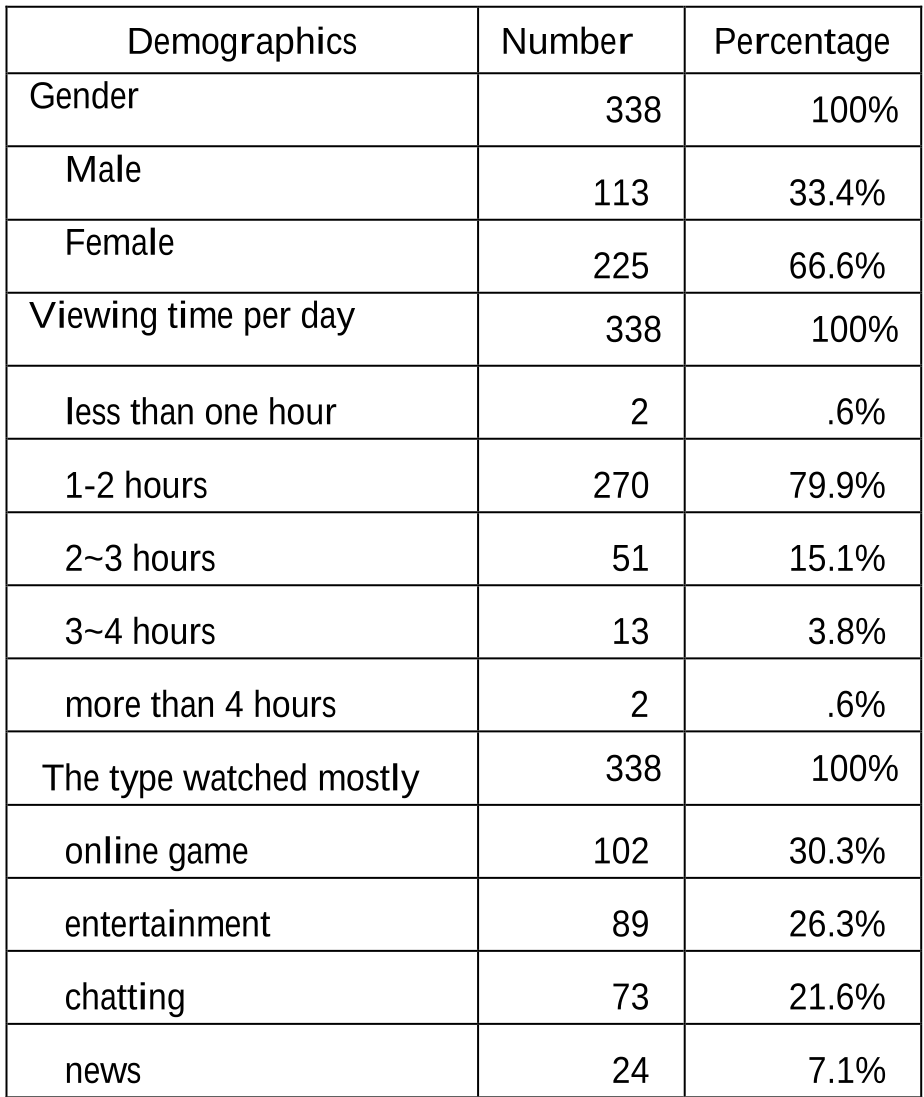
- Sample: 338 participants (66.6% female).
- The Big Five: Tested Openness, Conscientiousness, Extraversion, Agreeableness, and Neuroticism.
- Motivations: Tested Interaction, Information Seeking, Self-presentation, Escapism, and "Peeking" (voyeurism).
Key Insights: Why "Escapism" Wins
The results provide a fascinating look at the hierarchy of addiction drivers:
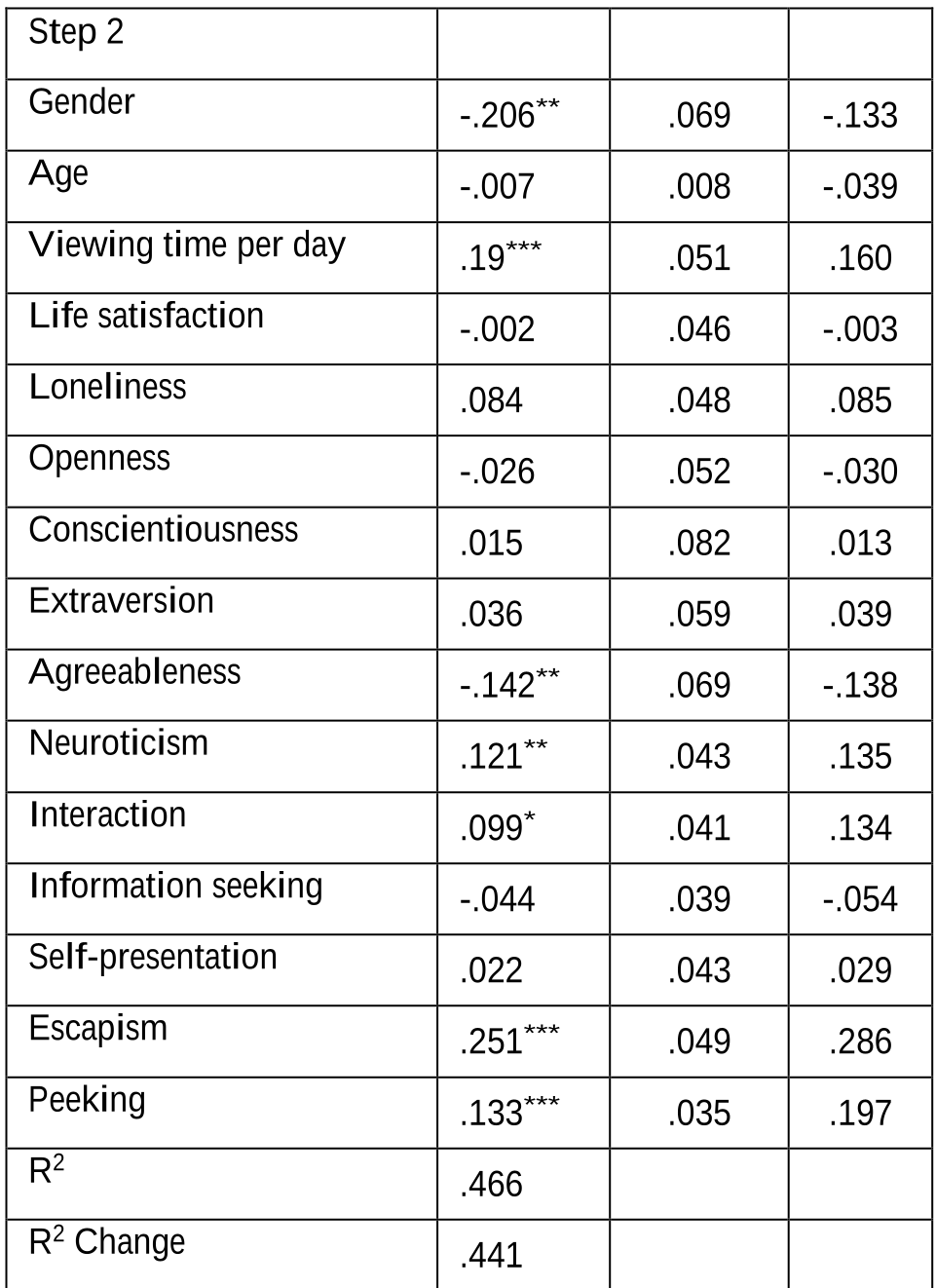
- Personality Matters: People high in Neuroticism (emotional instability) are significantly more likely to become addicted. Conversely, those high in Agreeableness (friendly/compassionate) showed a negative correlation with addiction, perhaps because they utilize the technology for healthy social bonds rather than compulsive consumption.
- The Motivations Gap:
- Escapism (β = .251) was the strongest predictor. Users watch to forget troubles or avoid bad feelings.
- Peeking (β = .133) was a significant unique driver, highlighting the voyeuristic appeal of "living through others."
- Interaction (β = .099) played a role, but surprisingly, Information Seeking and Self-presentation (showing off) had zero impact on addiction.
Challenging the Status Quo
Perhaps the most controversial finding of this study is the absence of a link between loneliness/life satisfaction and addiction. While many assume people watch live streams because they are lonely, this data suggests otherwise. It implies that live streaming is not a "cure" for loneliness that goes wrong, but rather a "distraction" from reality that becomes a habit.
Conclusion & Future Outlook
This work highlights that the "always-on" nature of live streaming caters to specific psychological vulnerabilities. While the study used a convenience sample, its message is clear: the passive motivations—escaping and peeking—are far more dangerous for mental health than active engagement or learning.
Takeaways for the Future:
- Product Safety: Developers should be aware that features promoting "escapism" are the primary drivers of problematic use.
- Gender Trends: The study noted men are slightly more prone to this specific addiction, a trend that warrants deeper investigation into the types of content being consumed (e.g., gaming vs. chatting).
- Dynamic Research: As streaming evolves into the "Metaverse," the psychological "Peeking" instinct will likely become even more central to platform design.